
Motorcycle helmet shell materials directly affect safety performance, weight, durability, production cost, and product positioning. ABS is a practical choice for cost-effective helmets, fiberglass provides a strong balance between performance and price, while carbon fiber delivers premium lightweight performance for high-end motorcycle helmet products.
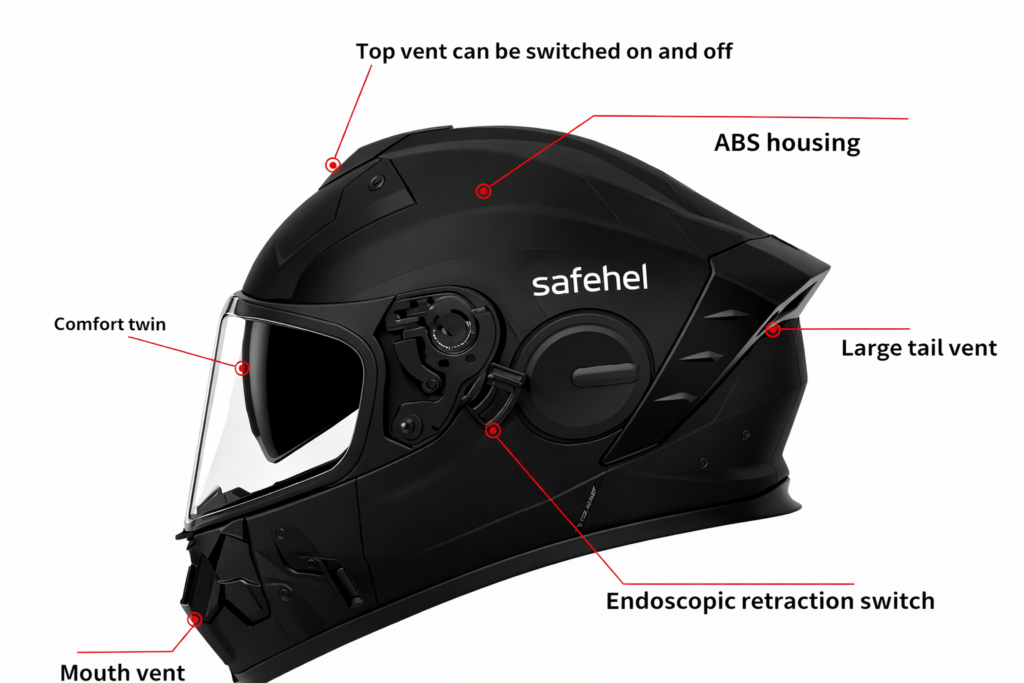
The outer shell is one of the most important structural components of a motorcycle helmet. It works together with the EPS liner and retention system to manage impact energy and protect the rider during an accident.
For motorcycle helmet brands, importers, and distributors, choosing the right shell material is not only a technical decision. It directly affects product positioning, retail price, target customers, and manufacturing strategy.
Different markets have different expectations. Entry-level riders often look for reliable protection at an affordable price, while premium customers expect lightweight construction, advanced materials, and superior riding comfort.
Understanding the differences between ABS, fiberglass, and carbon fiber helps brands select the right material for their product strategy and work more effectively with a professional helmet manufacturer.
What Are the Main Motorcycle Helmet Shell Materials?
Motorcycle helmet shells are commonly produced using ABS plastic, fiberglass composite, and carbon fiber composite materials. Each material has unique characteristics in terms of performance, manufacturing process, and cost.
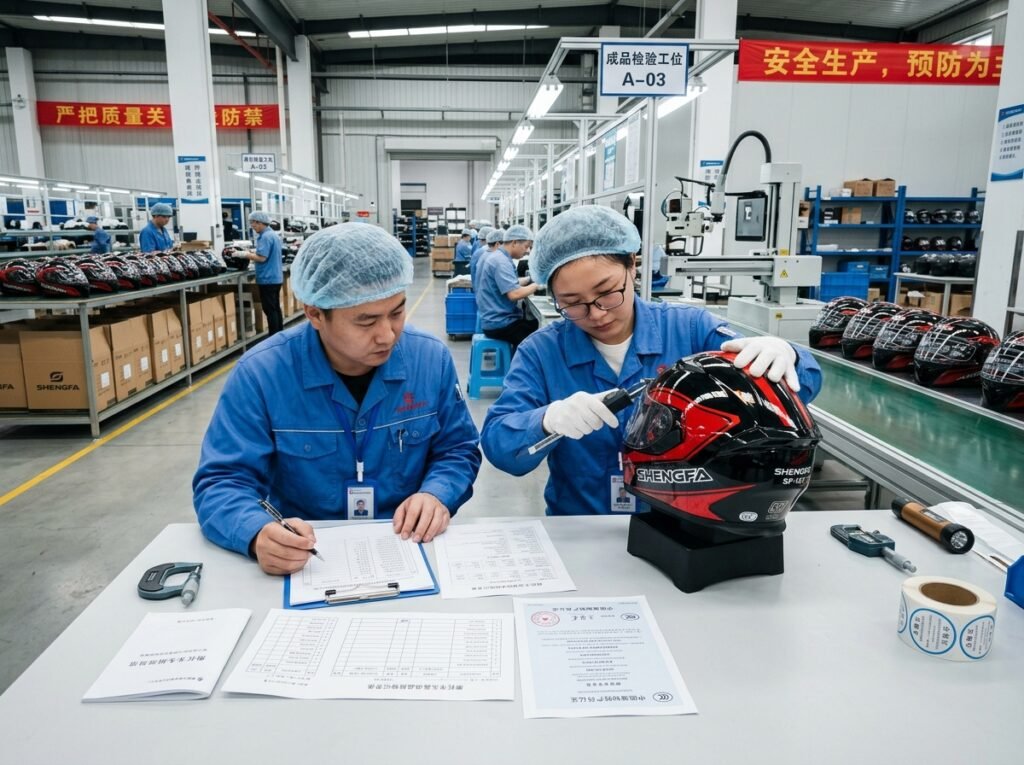
| Shell Material | Main Characteristics | Typical Market Position |
|---|---|---|
| ABS | Durable, economical, easy to manufacture | Entry-level and mid-range helmets |
| Fiberglass | Strong, lightweight, balanced performance | Mid-range and premium helmets |
| Carbon Fiber | Extremely lightweight, high strength | Premium and performance helmets |
The choice of shell material depends on several factors:
- Target market
- Required certification standards
- Product price range
- Expected production volume
- Brand positioning
- Performance requirements
A professional manufacturer evaluates these factors before recommending a material solution. The goal is not simply choosing the most advanced material, but selecting the material that creates the best balance between performance, cost, and market demand.
Why Is ABS Commonly Used in Motorcycle Helmet Manufacturing?
ABS (Acrylonitrile Butadiene Styrene) is one of the most widely used materials in motorcycle helmet production. It is popular because it provides reliable performance, efficient manufacturing, and competitive pricing.
ABS helmet shells offer several advantages:
| Advantage | Benefit |
|---|---|
| Cost efficiency | Suitable for large-volume production |
| Manufacturing flexibility | Easier injection molding process |
| Surface quality | Supports attractive finishes and graphics |
| Durability | Good resistance for daily riding use |
ABS is a thermoplastic material that can be shaped through injection molding. This manufacturing process allows factories to produce consistent helmet shells with high production efficiency.
For brands targeting mass-market customers, ABS helmets are often the preferred solution. They allow competitive retail pricing while maintaining the safety requirements needed for everyday motorcycle riding.
ABS helmets are commonly used for:
- Urban commuting helmets
- Entry-level full-face helmets
- Open-face helmets
- Scooter helmets
- Large-volume retail products
However, ABS generally has a higher weight compared with advanced composite materials. For premium riders who prioritize lightweight performance, other materials may provide stronger market appeal.
A professional manufacturer can optimize ABS shell designs through structural improvements, EPS tuning, ventilation design, and interior comfort solutions to create competitive products.
Why Do Brands Choose Fiberglass Helmet Shells?
Fiberglass is a composite material that provides an excellent balance between strength, weight, and cost. It has become a popular choice for motorcycle brands that need higher performance than ABS without moving into the highest price segment.
Fiberglass helmet shells provide several advantages:
| Advantage | Benefit |
|---|---|
| Strong impact performance | Suitable for professional riding applications |
| Reduced weight | Improved rider comfort |
| Flexible design options | Supports premium product development |
| Balanced cost | Good value for brands |
Unlike ABS, fiberglass uses woven glass fibers combined with resin to create a composite structure. This construction provides excellent strength and allows manufacturers to create lighter helmets.
Fiberglass is commonly selected for:
- Touring helmets
- Adventure helmets
- Premium commuter helmets
- Motorcycle enthusiast products
- Professional riding equipment
For many brands, fiberglass represents the ideal middle ground. It offers stronger performance and better weight control than ABS while keeping production costs more manageable than carbon fiber.
The manufacturing process requires more technical experience because fiber orientation, resin application, and curing processes affect final performance.
A skilled motorcycle helmet manufacturer must carefully control production parameters to ensure shell consistency and maintain reliable quality across different production batches.
Why Are Carbon Fiber Helmets Considered Premium Products?
Carbon fiber is one of the most advanced materials used in motorcycle helmet manufacturing. It is recognized for its excellent strength-to-weight ratio and premium performance characteristics.
The main advantages of carbon fiber include:
| Advantage | Benefit |
|---|---|
| Extremely lightweight | Reduces rider fatigue |
| High structural strength | Supports premium protection performance |
| Advanced appearance | Creates premium product value |
| Performance image | Appeals to professional riders |
Carbon fiber is made from carbon strands combined with resin to create a highly strong composite structure. Compared with traditional materials, it can achieve similar or higher strength with less material weight.
This makes carbon fiber especially attractive for:
- Racing helmets
- Premium touring helmets
- Performance motorcycle products
- Luxury helmet brands
For brands targeting high-end customers, carbon fiber can create a stronger product story. Customers often associate carbon fiber with advanced technology, racing performance, and professional equipment.
More manufacturers are developing premium product lines using advanced composite materials. Brands interested in lightweight performance solutions often explore carbon fiber helmets when developing high-value motorcycle helmet collections.
However, carbon fiber also has higher production costs and requires more specialized manufacturing processes. It may not always be the best choice for large-volume products where price competitiveness is the main priority.
How Should Brands Choose Between ABS, Fiberglass, and Carbon Fiber?
Selecting the right helmet shell material depends on the brand’s market strategy and customer expectations.
| Business Goal | Recommended Material |
|---|---|
| Affordable mass-market helmets | ABS |
| Balanced performance and price | Fiberglass |
| Premium lightweight products | Carbon Fiber |
For new brands entering the motorcycle helmet market, ABS can provide a practical starting point because it supports lower production costs and faster market testing.
For brands building a stronger mid-range product portfolio, fiberglass offers an attractive balance between performance and affordability.
For premium brands focused on technology, racing, or luxury positioning, carbon fiber provides stronger differentiation and higher perceived value.
The material decision should also consider certification requirements. A well-designed helmet using any of these materials can achieve safety certification when developed and manufactured correctly.
What Role Does the Manufacturer Play in Material Selection?
Choosing the right shell material requires more than comparing basic specifications. Manufacturing experience plays an important role in achieving the expected product performance.
A reliable helmet manufacturer should provide:
| Capability | Importance |
|---|---|
| Material knowledge | Recommend suitable solutions |
| Engineering support | Optimize helmet structure |
| Testing experience | Improve certification success |
| Production control | Maintain consistency |
| OEM/ODM ability | Support customized products |
Different materials require different production methods and quality control systems. ABS injection molding, fiberglass layering, and carbon fiber composite production each have unique technical requirements.
An experienced factory can help brands select materials based on:
- Target retail price
- Customer expectations
- Order quantity
- Certification requirements
- Product lifecycle goals
The best helmet solution is not always the most expensive material. It is the material that matches the brand’s business objectives and customer needs.
A professional motorcycle helmet manufacturer can support brands from material selection and product design to certification and mass production, helping create reliable helmets for different market segments.
Conclusion
ABS, fiberglass, and carbon fiber each offer different advantages in motorcycle helmet manufacturing. ABS focuses on cost efficiency, fiberglass balances performance and value, while carbon fiber delivers premium lightweight performance. Choosing the right shell material helps brands create safer, more competitive helmet products.