
Reducing motorcycle helmet production lead time requires better product planning, efficient engineering processes, reliable supply chain management, and strong manufacturing control. Brands can shorten delivery cycles by working with experienced manufacturers, preparing designs early, optimizing production processes, and improving communication between all project teams.
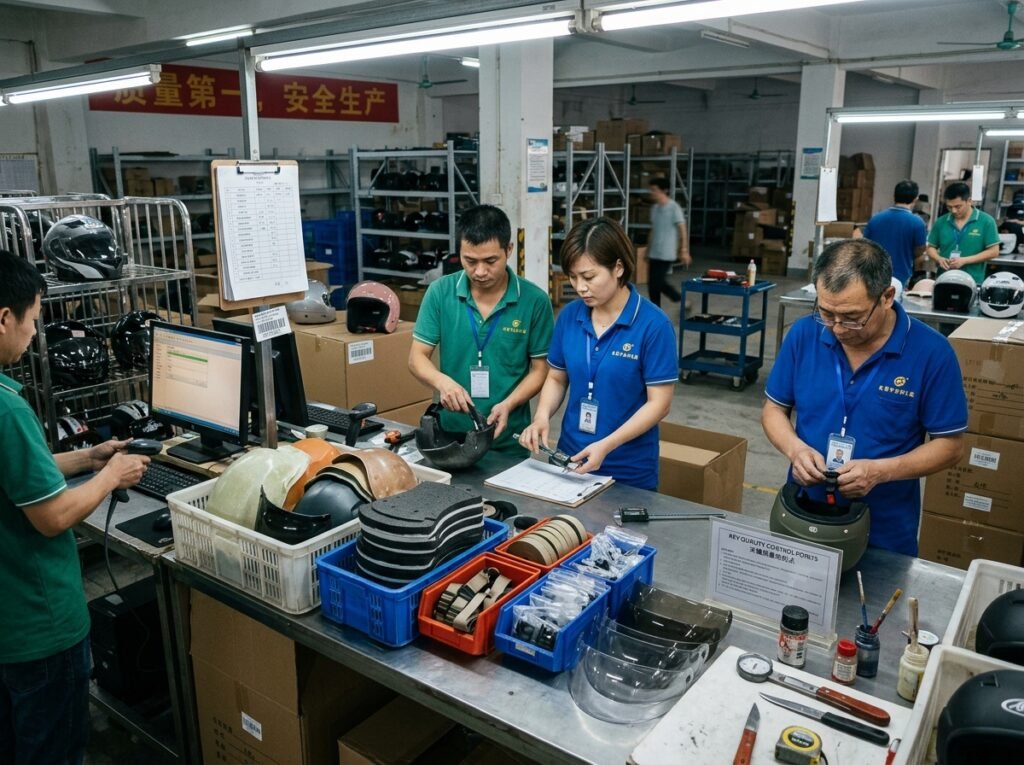
For motorcycle helmet brands, lead time directly affects inventory planning, product launches, and market competitiveness. A delayed shipment can result in missed sales seasons, delayed marketing campaigns, and additional inventory costs.
Unlike simple consumer products, motorcycle helmets require strict safety control, material preparation, certification procedures, and detailed production processes. Reducing lead time does not mean skipping important steps. It means improving efficiency at every stage while maintaining product quality and compliance.
For brands, importers, and distributors, the key is building a manufacturing process that combines speed, reliability, and quality control.
What Factors Affect Motorcycle Helmet Production Lead Time?
Motorcycle helmet production lead time is influenced by multiple factors, including design complexity, material availability, certification requirements, production capacity, and supplier coordination.
The main factors affecting production time include:
| Factor | Impact on Lead Time |
|---|---|
| Product design | New designs require more development time |
| Mold development | New tooling increases initial production time |
| Material preparation | Delayed materials can stop production |
| Certification testing | Required before market launch |
| Production scheduling | Factory capacity affects delivery timing |
| Quality inspection | Necessary before shipment |
Many brands underestimate the time required for product development. A custom helmet involves multiple stages, including design confirmation, engineering review, prototype production, testing, and final approval.
A supplier with limited experience may create additional delays because of unclear communication, repeated modifications, or poor production planning.
An experienced motorcycle helmet manufacturer can reduce unnecessary delays by managing each stage efficiently and providing professional guidance from the beginning.
How Can Better Product Planning Reduce Helmet Development Time?
The fastest way to reduce production delays is to complete detailed planning before manufacturing begins. Many production problems occur because product requirements are unclear during the early development stage.
Before starting production, brands should confirm:
| Planning Item | Required Information |
|---|---|
| Helmet type | Full face, modular, open face, off-road |
| Target market | USA, Europe, Asia, or other regions |
| Certification | DOT, ECE, CPSC, CE requirements |
| Materials | ABS, fiberglass, carbon fiber |
| Design details | Colors, graphics, accessories |
| Packaging | Retail box and branding requirements |
Clear specifications help manufacturers prepare accurate quotations, production schedules, and material requirements.
For example, changing helmet graphics after production preparation has started may delay the entire project. Adjusting shell structures or components after tooling begins can create even longer delays.
Professional brands usually prepare complete product information before contacting manufacturers. This allows engineering teams to review requirements quickly and move into development faster.
A strong OEM partner can also provide suggestions during the planning stage. This helps brands avoid designs that are difficult to manufacture or require unnecessary production time.
How Does OEM/ODM Experience Help Shorten Production Time?
Choosing the right manufacturing model has a direct impact on lead time. OEM and ODM projects follow different development paths, and each has different advantages.
| Manufacturing Model | Lead Time Advantage |
|---|---|
| OEM | Suitable for unique designs with full customization |
| ODM | Faster launch using existing product platforms |
ODM manufacturing can significantly reduce development time because the factory already has tested designs, production experience, and established processes.
This approach is especially useful for brands that want to launch products quickly. Instead of developing every component from the beginning, companies can customize existing helmet platforms with:
- Brand logos
- Colors
- Graphics
- Interior materials
- Visor options
- Packaging designs
OEM manufacturing provides stronger product uniqueness but may require more development time because it often involves new designs, molds, and engineering adjustments.
For brands requiring exclusive products, experienced manufacturers can still reduce lead time by using efficient design review processes, professional engineering teams, and optimized production planning.
The best solution depends on the brand’s goals. Companies focused on fast market entry may benefit from ODM, while brands seeking long-term product differentiation may prefer OEM development.
How Can Efficient Sample Development Speed Up Helmet Production?
Prototype and sample approval is one of the most important stages affecting production schedules. Delays during sampling can directly postpone mass production.
A faster sample process requires:
| Action | Benefit |
|---|---|
| Clear design files | Reduces repeated revisions |
| Professional engineering review | Prevents production problems |
| Fast communication | Speeds up decision-making |
| Digital approval process | Improves efficiency |
Many delays happen because samples require multiple modifications. These changes may involve colors, materials, components, or structural adjustments.
A professional factory can reduce revision cycles by reviewing designs carefully before producing samples.
For custom helmet projects, sample approval should focus on important factors:
- Appearance
- Comfort
- Weight
- Function
- Safety requirements
- Manufacturing feasibility
Once the final sample is approved, it becomes the production standard. Clear approval procedures help ensure that mass production starts without unnecessary interruption.
How Can Supply Chain Management Improve Helmet Delivery Time?
A stable supply chain plays an important role in reducing motorcycle helmet production lead time. Even with strong manufacturing capability, production can be delayed if materials or components are not available.
Important supply chain factors include:
| Supply Chain Area | Management Focus |
|---|---|
| Raw materials | Stable material suppliers |
| Components | Reliable accessory suppliers |
| Inventory planning | Prepare critical materials early |
| Production scheduling | Match demand with capacity |
Helmet production requires many components, including:
- Outer shell materials
- EPS liners
- Visors
- Buckles
- Interior padding
- Packaging materials
A professional factory manages supplier relationships to reduce material shortages and unexpected delays.
For example, premium helmet materials such as carbon fiber require specialized production processes. Proper material planning is especially important for advanced products, including those using solutions such as carbon fiber helmets.
Good supply chain management allows manufacturers to maintain stable production schedules and provide more reliable delivery times.
How Does Quality Control Prevent Production Delays?
Quality control is often seen as a final inspection step, but it also plays an important role in reducing lead time.
Poor quality control can create major delays through:
- Production rework
- Material replacement
- Customer complaints
- Shipment rejection
A professional quality system includes:
| Quality Stage | Purpose |
|---|---|
| Material inspection | Prevent defective materials |
| Production monitoring | Detect problems early |
| Assembly checks | Maintain consistency |
| Final inspection | Ensure shipment quality |
Finding problems early is faster and less expensive than correcting issues after production is completed.
Manufacturers with strong quality systems can maintain stable production flow while reducing unexpected delays.
For brands, reliable quality control also protects customer satisfaction. Faster delivery is valuable only when the products meet expected standards.
Why Is Choosing the Right Motorcycle Helmet Manufacturer Important for Lead Time?
The manufacturer selection has a major influence on production efficiency. A reliable factory can help brands reduce development time, avoid production risks, and maintain stable delivery schedules.
A capable partner should provide:
| Capability | Lead Time Benefit |
|---|---|
| Engineering support | Faster problem solving |
| OEM/ODM experience | Efficient product development |
| Production capacity | Reliable delivery |
| Quality management | Fewer production delays |
| Export experience | Smoother shipment process |
A professional motorcycle helmet manufacturer can support brands throughout the entire production process, from design confirmation and certification preparation to mass production and shipment.
The goal is not simply producing helmets faster. The goal is creating a predictable manufacturing system that allows brands to launch products on time while maintaining safety and quality.
Conclusion
Reducing motorcycle helmet production lead time requires efficient planning, experienced manufacturing support, strong supply chain management, and strict quality control. The right manufacturing partner helps brands achieve faster delivery without compromising product performance.