
Carbon fiber and fiberglass helmets both provide strong protection, but they have different advantages. Carbon fiber helmets are lighter, stronger, and often positioned as premium products, while fiberglass helmets offer excellent durability and a more cost-effective solution for many motorcycle riders and brands.
Material selection is one of the most important decisions when developing a motorcycle helmet. The shell material affects helmet weight, safety performance, production cost, riding comfort, and market positioning.
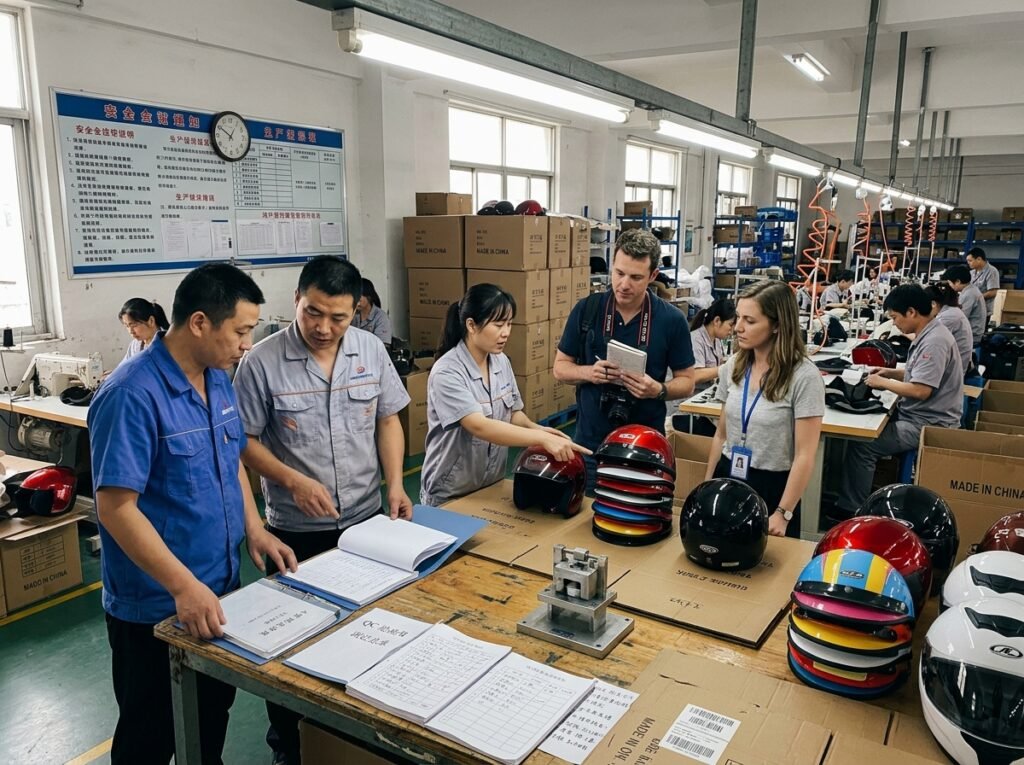
For motorcycle helmet brands, importers, and distributors, choosing between carbon fiber and fiberglass is not only a technical decision. It also affects product pricing, customer expectations, and brand value.
Many premium helmet brands use advanced materials to create lightweight and high-performance products, while other brands focus on achieving a balance between safety, quality, and competitive pricing. Understanding the differences between carbon fiber and fiberglass helps businesses select the right solution for their target market.
What Is the Difference Between Carbon Fiber and Fiberglass Helmets?
Carbon fiber and fiberglass are both composite materials used in motorcycle helmet shells. They provide strong protection while offering different performance characteristics.
The main differences include:
| Feature | Carbon Fiber Helmet | Fiberglass Helmet |
|---|---|---|
| Weight | Extremely lightweight | Lightweight |
| Strength | Very high strength-to-weight ratio | Excellent strength |
| Price | Higher | More affordable |
| Market Position | Premium and performance-focused | Mid-range and professional |
| Manufacturing Process | More complex | More flexible |
| Target Customers | Racing and premium riders | Daily riders and enthusiasts |
Carbon fiber is made from thin carbon strands combined with resin to create a strong composite structure. Its biggest advantage is achieving high strength while keeping weight low.
Fiberglass uses glass fibers combined with resin. It has been widely used in motorcycle helmets for many years because it provides reliable protection, good impact resistance, and better cost control.
Both materials can be engineered to meet safety standards such as DOT and ECE when properly designed and manufactured.
Why Are Carbon Fiber Helmets Popular in Premium Markets?
Carbon fiber helmets have become popular among racing riders, professional users, and premium motorcycle brands because of their lightweight performance.
The main advantages of carbon fiber helmets include:
| Advantage | Benefit |
|---|---|
| Lightweight structure | Less neck fatigue during long rides |
| High rigidity | Strong protective performance |
| Premium appearance | Higher brand value |
| Advanced technology | Appeals to performance-focused customers |
Weight is one of the biggest concerns for motorcycle riders. A heavy helmet may create pressure on the neck and shoulders, especially during long-distance riding.
Carbon fiber allows manufacturers to reduce helmet weight without sacrificing structural strength. This makes it especially attractive for touring riders, racing customers, and premium motorcycle communities.
For brands, carbon fiber also creates a strong marketing advantage. The material itself represents technology, performance, and premium quality. Many customers associate carbon fiber products with professional racing equipment and advanced engineering.
Manufacturers specializing in advanced helmet materials can help brands develop lightweight products with customized designs, including shell structures, graphics, and premium finishes. Carbon fiber helmet solutions are often selected by companies looking to create higher-end product lines with stronger market differentiation.
More information about premium carbon fiber helmet solutions can be found through carbon fiber helmets, where brands can explore how advanced materials are used in modern helmet development.
However, carbon fiber production requires more advanced manufacturing techniques and stricter quality control. This results in higher production costs compared with traditional materials.
For brands targeting premium customers, the additional investment may create better product positioning and stronger profit margins.
Why Do Many Brands Choose Fiberglass Helmets?
Fiberglass helmets remain a popular choice because they provide a strong balance between safety, performance, and cost.
Fiberglass helmets offer several advantages:
| Advantage | Business Value |
|---|---|
| Reliable protection | Meets professional safety requirements |
| Lower production cost | Suitable for wider markets |
| Flexible design options | Supports different product styles |
| Proven technology | Long history of application |
Fiberglass has been used in helmet manufacturing for decades. It provides excellent impact resistance and allows manufacturers to create strong helmet shells with controlled production costs.
For many motorcycle brands, fiberglass is the practical choice because it allows competitive pricing while maintaining professional safety performance.
This makes fiberglass helmets popular in:
- Touring helmet categories
- Adventure riding products
- Mid-range motorcycle equipment
- Daily commuting helmets
- Distributor product lines
For businesses selling to a broad customer base, fiberglass can provide a better balance between product quality and retail price.
A reliable motorcycle helmet manufacturer can adjust fiberglass structures, resin systems, and reinforcement designs to achieve different performance levels based on market requirements.
Fiberglass helmets are also easier to customize for larger production volumes. Brands can develop different colors, graphics, and configurations without significantly increasing product costs.
Which Helmet Material Is Better for OEM Motorcycle Helmet Production?
The better material depends on the brand strategy, target customers, and product positioning.
For OEM helmet projects, manufacturers usually evaluate several factors:
| Consideration | Carbon Fiber | Fiberglass |
|---|---|---|
| Premium branding | Excellent | Good |
| Cost control | Limited | Excellent |
| Lightweight requirement | Excellent | Good |
| Large volume production | More challenging | Easier |
| Racing products | Excellent | Good |
| Daily riding products | Good | Excellent |
Premium motorcycle brands often choose carbon fiber because it supports higher pricing and creates a stronger performance image.
For example, a racing helmet designed for professional riders may prioritize minimum weight and maximum technical performance. Carbon fiber is usually the preferred material for this type of product.
On the other hand, brands targeting everyday riders may prefer fiberglass because it provides strong protection with better cost efficiency.
Experienced OEM manufacturers can also recommend hybrid solutions. Some helmet designs combine different materials to achieve a balance between weight, strength, and price.
The right choice depends on the product goal rather than simply choosing the most advanced material.
What Should Brands Consider Before Choosing Carbon Fiber or Fiberglass?
Material selection should match the complete business plan. Choosing a helmet shell material requires consideration of certification, customer expectations, production capacity, and market positioning.
A professional helmet manufacturer should evaluate:
| Evaluation Area | Key Questions |
|---|---|
| Target market | Who are the main customers? |
| Price position | Premium or mass market? |
| Certification | Which safety standards are required? |
| Production volume | What is the expected order quantity? |
| Brand image | What product value should be communicated? |
One common mistake among new brands is selecting materials based only on appearance. A premium material does not automatically guarantee better market performance.
Successful helmet products require a combination of:
- Proper shell design
- Reliable safety testing
- Comfortable interior structure
- Stable manufacturing quality
- Attractive product positioning
The manufacturing partner plays an important role in balancing these factors.
A factory with OEM and ODM experience can help brands choose suitable materials, develop prototypes, complete certification preparation, and maintain quality consistency during mass production.
Carbon Fiber vs Fiberglass Helmets: Which One Should Brands Choose?
Carbon fiber helmets are the better choice for premium brands that focus on lightweight performance, advanced technology, and higher market positioning. Fiberglass helmets are ideal for brands seeking reliable protection, competitive pricing, and wider customer acceptance.
The best material depends on the product strategy. With the right manufacturing partner, both carbon fiber and fiberglass helmets can become successful products in different market segments.
Conclusion
Carbon fiber offers lightweight premium performance, while fiberglass provides excellent value and durability. Choosing the right helmet material helps brands create products that match customer needs, market goals, and business growth plans.