The OEM process for a custom DOT/ECE certified helmet includes design development, engineering evaluation, prototype testing, certification preparation, mass production, and quality inspection. A professional helmet manufacturer helps brands transform product ideas into certified helmets that meet safety requirements and market expectations.
Developing a custom motorcycle helmet is not only about creating an attractive appearance. For brands selling in regulated markets, the product must also meet strict safety requirements, maintain consistent quality, and provide reliable performance during mass production.
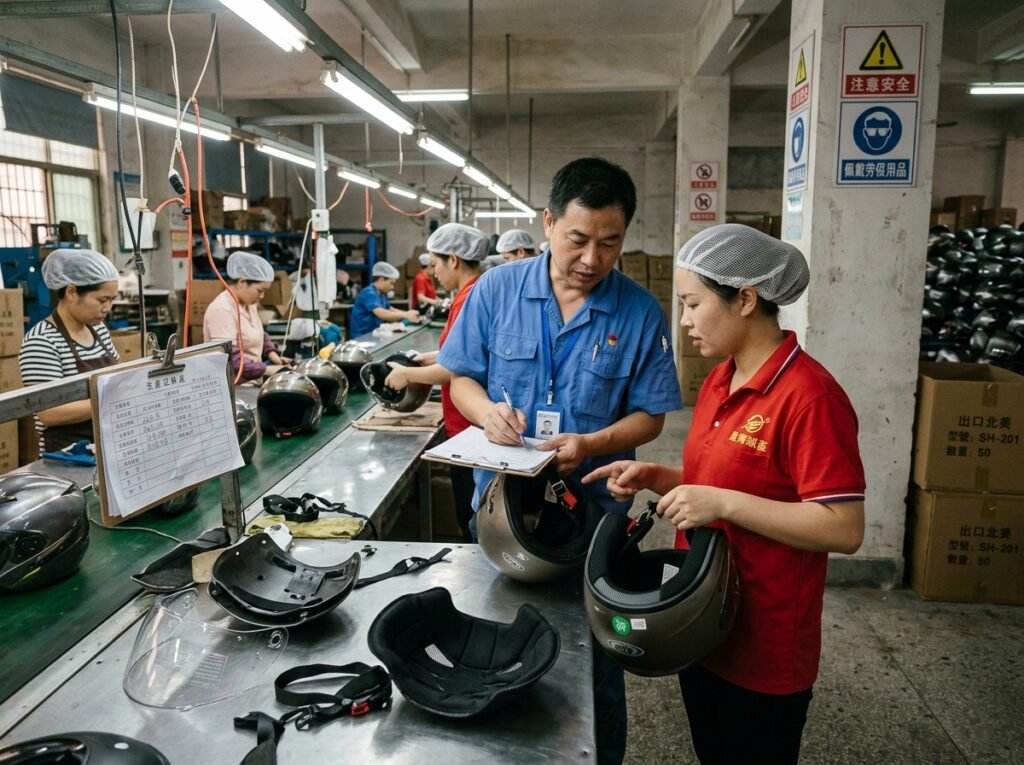
Many motorcycle equipment brands, importers, and distributors choose OEM manufacturing because it allows them to create unique products under their own brand identity. However, a successful OEM helmet project requires careful planning from the initial concept to final delivery.
A reliable OEM partner should provide support throughout the entire process, including design development, material selection, testing preparation, certification support, production management, and quality control.
How Does the OEM Process Start for a Custom DOT/ECE Helmet?
The OEM process begins with product planning and requirement confirmation. Before creating a prototype, manufacturers need to understand the brand’s market position, target customers, and technical expectations.
At the beginning of an OEM project, brands usually define several key requirements:
| Project Requirement | Details to Confirm |
|---|---|
| Helmet type | Full face, modular, open face, off-road, racing |
| Target market | USA, Europe, Asia, or other regions |
| Certification | DOT, ECE, CPSC, CE requirements |
| Materials | ABS, fiberglass, carbon fiber, composite materials |
| Design style | Sport, touring, urban, premium, adventure |
| Quantity | Trial order and mass production volume |
A professional manufacturer evaluates these requirements before starting development. This step helps avoid problems later, especially when certification standards, production costs, and product performance need to be balanced.
For example, a helmet designed for the US market may require DOT compliance, while European markets usually require ECE certification. Each standard has different testing requirements, including impact performance, retention system strength, field of vision, and labeling requirements.
Early technical communication helps ensure that the final product can meet both brand expectations and regulatory requirements.
How Are Design and Engineering Developed During OEM Helmet Production?
After product requirements are confirmed, the next stage is design and engineering development. This stage transforms an idea or concept into a manufacturable helmet structure.
The OEM development process usually includes:
| Development Stage | Main Activities |
|---|---|
| Industrial design | Appearance, shape, and brand identity |
| Structural design | Shell, EPS liner, ventilation, assembly |
| Material selection | Performance and cost evaluation |
| Prototype development | Sample creation and testing |
| Design adjustment | Improvement based on test results |
A professional factory does not only focus on appearance. Helmet design must consider safety performance, rider comfort, production efficiency, and long-term durability.
The shell structure, EPS energy absorption layer, ventilation channels, visor system, and retention system all affect the final riding experience.
For premium helmet projects, material selection becomes especially important. Lightweight materials such as carbon fiber are often used for high-performance applications because they can provide strong protection with reduced weight. Brands developing advanced helmet products may consider solutions such as carbon fiber helmets when creating premium product lines.
Engineering experience is essential during this stage because some designs may look attractive but create challenges during manufacturing or certification testing. Experienced OEM manufacturers can identify these issues early and provide practical improvements.
How Does DOT/ECE Certification Testing Work During OEM Production?
Certification is one of the most important parts of custom helmet manufacturing. A helmet cannot successfully enter many international markets without meeting the required safety standards.
Different markets require different certifications:
| Certification | Main Market | Main Focus |
|---|---|---|
| DOT FMVSS 218 | United States | Impact and safety requirements |
| ECE 22.06 | Europe and many international markets | Advanced impact testing and helmet performance |
| CPSC | United States bicycle helmet market | Bicycle helmet safety |
| CE | European product compliance | Product safety requirements |
During certification preparation, manufacturers usually review:
- Helmet structure
- Shell strength
- EPS liner performance
- Retention system
- Visor performance
- Weight requirements
- Product labeling
The biggest concern for many buyers is whether the mass-produced helmets will match the certified sample. A reliable factory must control production consistency to ensure that commercial products maintain the same structure and performance as tested samples.
Professional OEM manufacturers typically establish quality checkpoints throughout production. These controls reduce the risk of certification problems, customer complaints, and product returns.
What Happens During Mass Production of Custom Certified Helmets?
After the design is approved and certification requirements are confirmed, the project moves into mass production.
The production process usually includes:
| Production Step | Quality Focus |
|---|---|
| Raw material inspection | Material consistency |
| Shell production | Shape accuracy and strength |
| EPS molding | Density and energy absorption |
| Painting and graphics | Appearance quality |
| Assembly | Component accuracy |
| Final inspection | Overall performance |
A professional helmet manufacturer must maintain strict production control because even small differences can affect product quality.
Common production problems that brands want to avoid include:
- Color differences between batches
- Loose accessories
- Poor visor installation
- Incorrect packaging
- Inconsistent interior materials
- Delayed delivery
For importers and distributors, these issues can create additional costs and damage customer trust. Stable production capability is often more valuable than a lower initial quotation.
Factories with their own production facilities, experienced engineering teams, and complete quality systems can provide better control over OEM projects. This is especially important for brands that require regular replenishment and long-term cooperation.
How Does Quality Control Protect OEM Helmet Brands?
Quality control is the final protection before products reach the market. For safety equipment like motorcycle helmets, inspection cannot be treated as an optional step.
A complete quality control system may include:
| Inspection Stage | Purpose |
|---|---|
| Incoming inspection | Check raw materials |
| Production inspection | Monitor manufacturing accuracy |
| Assembly inspection | Verify component installation |
| Finished product inspection | Confirm final quality |
| Packaging inspection | Prevent shipping issues |
Professional manufacturers understand that brand reputation depends on every helmet delivered to customers.
For OEM buyers, the goal is not only to receive products. The goal is to build a reliable supply chain that supports continuous business growth.
A strong manufacturing partner provides transparent communication, clear production schedules, professional problem-solving, and long-term technical support.
Why Choose an Experienced OEM Motorcycle Helmet Manufacturer?
Custom DOT/ECE certified helmet development requires more than production equipment. It requires engineering knowledge, certification experience, quality control systems, and the ability to support brand customization.
An experienced motorcycle helmet manufacturer can help brands manage the complete OEM journey, from the first design discussion to final shipment.
The right manufacturing partner helps reduce development risks, improve product quality, and create helmets that meet both safety standards and market demands.
Conclusion
The OEM process for a custom DOT/ECE certified helmet includes design, engineering, certification, production, and quality control. Working with an experienced manufacturer helps brands create reliable, compliant, and market-ready helmet products.