The OEM helmet manufacturing process moves through a structured path: design briefing, technical development, prototype review, testing, certification alignment, pilot production, mass production, and final inspection. A reliable process matters because helmet buyers do not only need a supplier that can make samples. They need a factory that can turn approved ideas into stable, repeatable bulk orders.
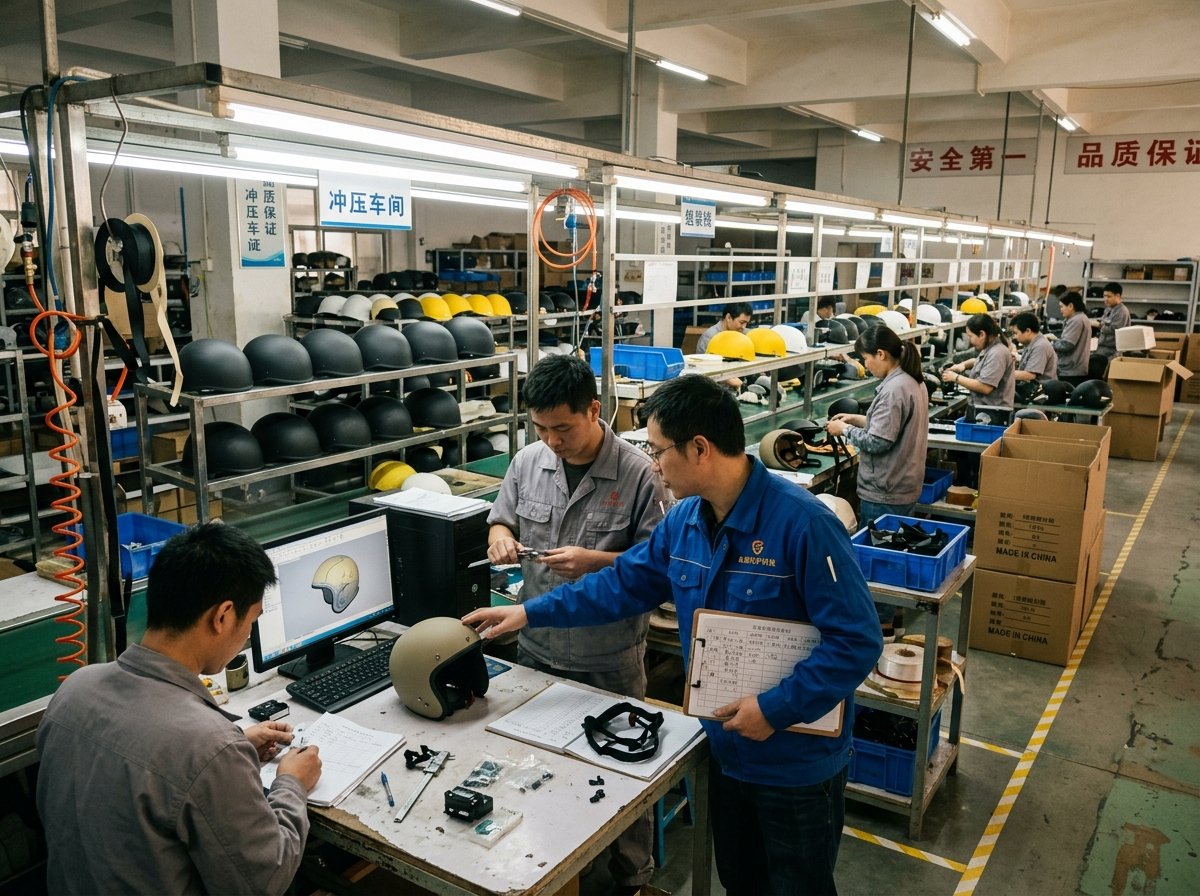
In the helmet industry, many market problems can be traced back to weak process control. A helmet may look polished in the first sample, but the final shipment may show wind noise issues, visor fogging, pressure points, strap discomfort, unstable liner quality, poor packaging, or inconsistent finishing. Public feedback across helmet categories keeps repeating the same pain points. That is why the OEM process must be handled as a full development and manufacturing system, not as a simple shell-making job.
For brands, importers, and distributors working with a professional helmet manufacturer, the value of OEM production lies in turning market needs into a product that is safe, manufacturable, commercially practical, and stable in mass production. This is especially important for motorcycle helmets, bicycle helmets, off-road helmets, open-face helmets, modular helmets, and children’s helmets, where the expected fit, styling, certification route, and user experience can vary a lot.
Why does the OEM helmet manufacturing process need a structured flow?
Helmet development is not a one-step project. Every stage affects the next one. If the design brief is vague, the prototype becomes unstable. If the prototype is not validated correctly, mass production creates complaints. If production control is weak, the product may pass sample review but fail in the market.
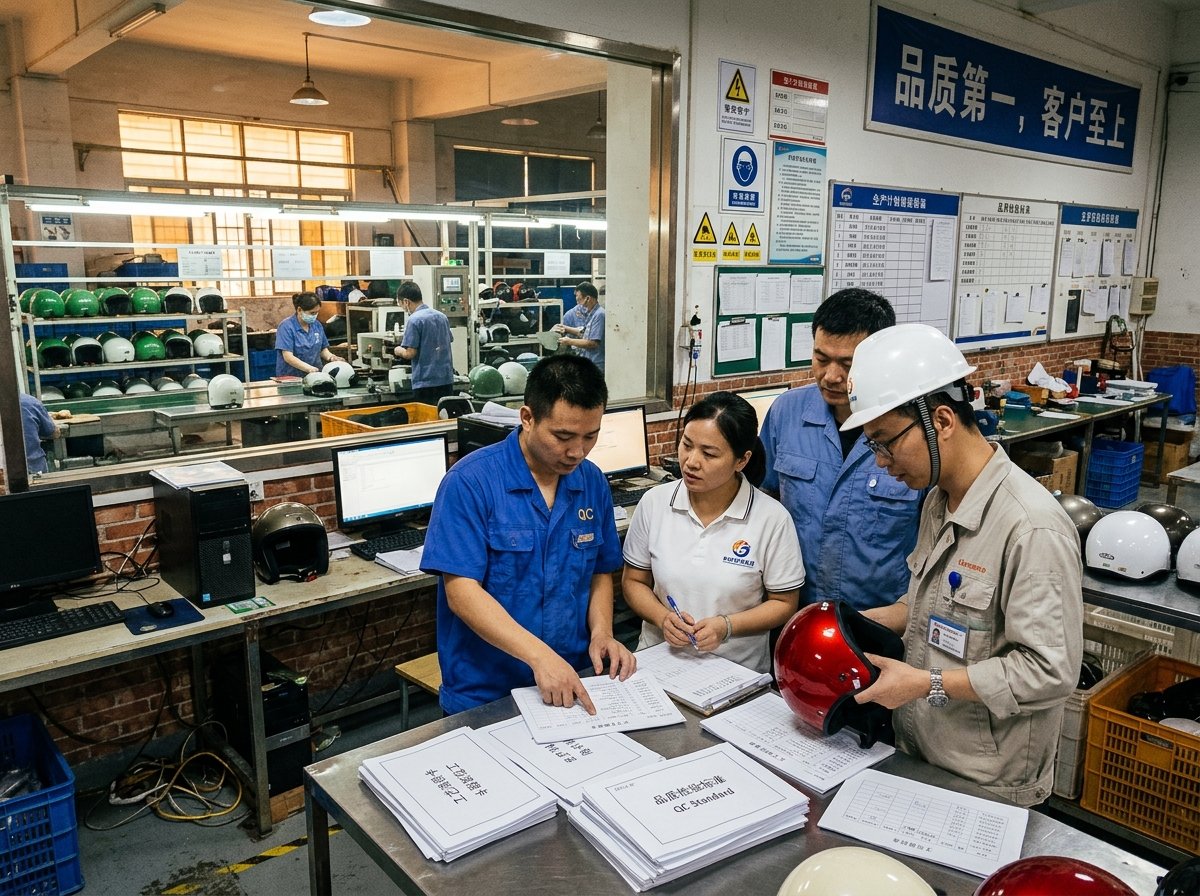
A structured OEM process reduces risk by making each step clear before the next one begins. It helps align the shell design, EPS structure, fit system, retention system, visor parts, packaging details, and target certification requirements. Without this structure, factories often end up solving problems too late, after tooling cost, testing cost, or bulk production cost has already increased.
This matters because helmets are highly sensitive products. Riders quickly notice whether a helmet feels too heavy, too noisy, too tight in the wrong place, or poorly ventilated. They also quickly notice when the visor scratches easily, the inner liner loses support, the strap geometry feels awkward, or the labels and packaging do not match what was approved. These issues are not separate from the OEM process. They are direct results of how carefully each stage was managed.
How does the process start from design brief to prototype?
The first stage of OEM helmet development starts with the design brief. This brief should define the product type, target market, intended use, fit direction, shell style, accessory needs, target price range, and expected safety standard path. A clear brief saves time later because it reduces revision loops and helps the engineering team make better structural decisions early.
The design brief should also include practical market expectations. For example, a commuter helmet may need lighter weight, stronger ventilation, and simple styling. A premium touring motorcycle helmet may need better aerodynamic control, lower wind noise, stronger visor sealing, and more refined liner comfort. An off-road helmet may focus more on peak stability, airflow, lower weight, and compatibility with goggles.
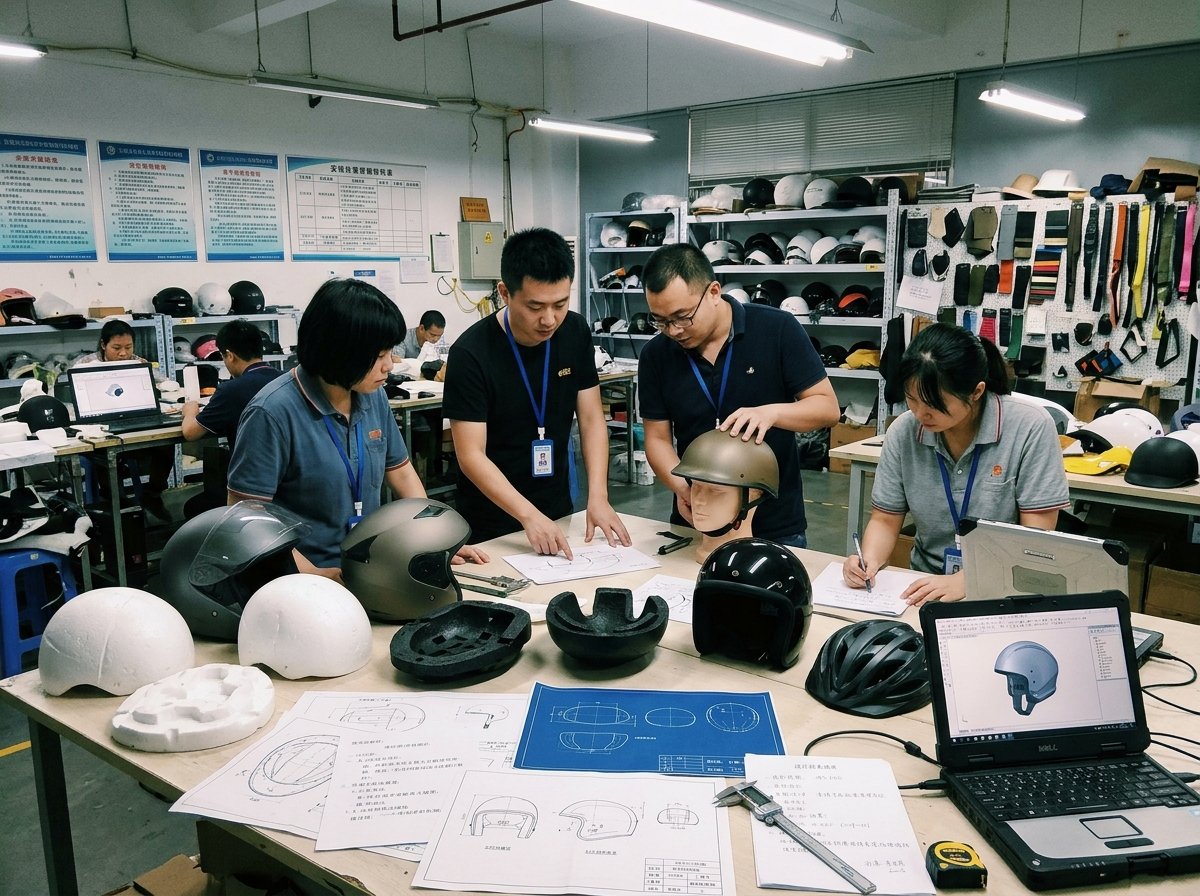
Once the brief is confirmed, the factory usually moves into concept design and technical evaluation. This includes shell form study, internal space planning, EPS layout, visor or accessory structure planning, and fit profile development. At this stage, the goal is not only to make the helmet look attractive. The goal is to make it manufacturable and commercially realistic.
Prototype development comes next. Early prototypes are used to check shell proportions, internal volume, fit, feature integration, and design balance. This is also where many practical issues begin to appear. If the shell looks compact but the mouth-box space becomes too tight, the design may need adjustment. If the visor angle creates sealing risk, that must be corrected before tooling is locked. If the fit creates forehead pressure or cheek compression, liner and EPS revision may be needed.
This stage is especially important because many real market complaints can already be prevented here. Pressure points, strap discomfort, oversized shell feel, unstable balance, and poor ventilation often begin as design-stage decisions, not factory-floor accidents. A capable helmet manufacturer uses the prototype stage to catch these problems early, before the project moves into expensive tooling and certification work.
What happens during helmet testing, certification, and validation?
Once the prototype and structure are closer to approval, the project enters testing and validation. This is one of the most important stages in the OEM helmet manufacturing process because it connects design intent to real performance.
Testing and validation usually include structural checks, retention system checks, visor or accessory function checks, fit review, and target-market safety standard preparation. Depending on the product category and destination market, certification planning may involve different standards and different technical file requirements. The key point is that the helmet being tested must match the final intended production version as closely as possible.
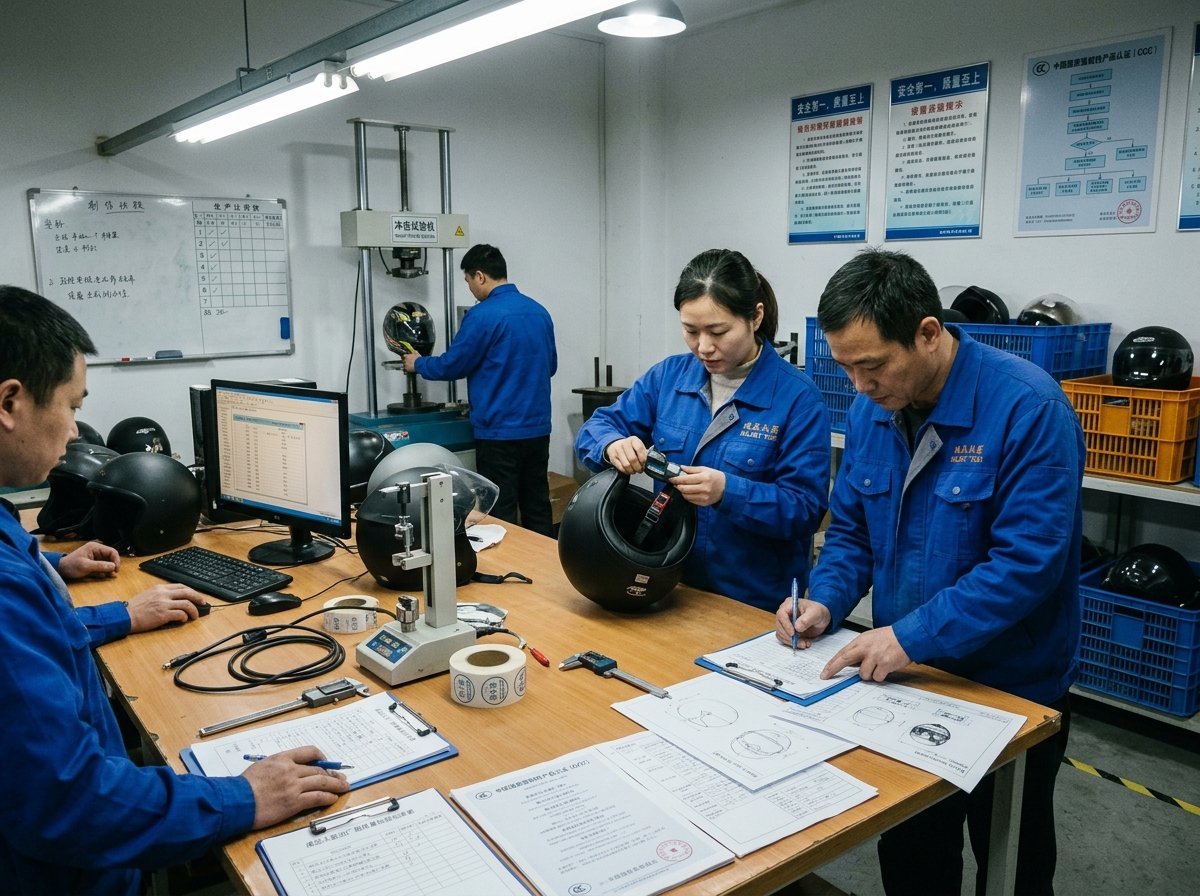
Validation should not stop at compliance. A helmet can meet the required standard and still perform poorly in daily use. That is why a strong OEM process also includes practical validation for user experience. This may cover visor operation, anti-fog performance, ventilation path effectiveness, liner comfort, buckle convenience, and long-wear stability. Public helmet complaints repeatedly show that passing certification alone is not enough. Buyers and riders also care about noise, fogging, comfort, weight balance, durability of liner attachment points, and how the helmet feels after hours of use.
This is where a factory’s engineering depth becomes important. If the testing stage only focuses on passing a minimum requirement, the final product may still suffer in the market. A stronger OEM process uses validation to improve both safety and commercial performance. It checks whether the tested helmet is also practical, comfortable, durable, and ready for repeat mass production.
How is the transition made from validated sample to mass production?
After testing and validation, the project moves toward tooling confirmation, material locking, and pilot production. This transition stage is critical because many helmet projects fail between sample approval and actual production.
The main goal here is to lock the approved version. That means the shell structure, EPS construction, liner specification, strap parts, visor components, decoration details, labels, and packaging content should all be confirmed. If too many changes continue after validation, the project loses stability. This often leads to the classic problem where the approved sample is strong, but the shipped goods feel different.
Pilot production helps reduce this risk. It gives the factory a chance to test actual production flow before scaling up. At this stage, the team checks molding stability, trimming consistency, paint or coating quality, assembly rhythm, part matching, and packaging logic. Pilot production also reveals weak spots in the process, such as visor fit variation, strap positioning inconsistency, liner attachment weakness, or poor control of cosmetic finishing.
This stage matters because the most damaging market complaints often come from inconsistency, not from total product failure. One batch may feel stable, while the next batch feels rougher, louder, or less comfortable. A disciplined OEM process uses pilot production to reduce that gap before large orders begin.
What are the key steps in helmet mass production?
Mass production begins only after the validated version is locked and the pilot stage is accepted. At this point, the factory moves from development focus to process stability.
The mass production stage usually includes raw material preparation, shell manufacturing, EPS processing, trimming, painting or surface finishing, hardware fitting, liner assembly, function checks, label application, cleaning, packaging, and carton control. Each of these steps affects the final result.
Shell manufacturing must stay dimensionally stable. EPS processing must remain consistent. Trimming should be clean. Surface finishing should match the approved appearance standard. Strap routing, buckle function, visor movement, and liner installation must all be repeatable. This sounds basic, but many public complaints prove how often these details are missed. A helmet may look attractive in photos while still creating problems such as loose visor screws, visor leakage, uncomfortable strap angles, weak snap buttons, padding collapse, or poor-looking finishing after delivery.
Mass production also depends on strong material control. If liner foam, visor coating, webbing, trim materials, or adhesives change in quality, the helmet may still look similar at first glance but perform differently in use. This is one reason a stable OEM partner matters so much. A serious helmet manufacturer controls both production steps and incoming materials so the final product stays aligned with the approved sample.
How are final inspection and shipment control handled?
Final inspection is the last barrier before the helmet reaches the buyer, but it should not be the first time the product is truly checked. A mature OEM process uses final inspection to confirm what earlier process control has already protected.
Final inspection usually covers appearance, accessories, strap and buckle function, visor operation, liner attachment, labels, size marking, carton details, and packing completeness. It should also confirm that the correct model, color, size ratio, barcode, manual, and warning information are packed for the right market.
This stage is more important than many buyers realize. Public complaints often mention wrong boxes, wrong labels, missing accessories, damaged packaging, old stock, or mismatched product details. These are shipment-control failures, not only manufacturing failures. A strong OEM process treats packaging and shipment accuracy as part of product quality, not as a separate warehouse problem.
Final inspection should also support batch traceability. If a field complaint appears later, the factory should be able to trace the shipment, materials, and production records connected to that batch. This makes corrective action faster and more reliable.
Why does the OEM process matter for long-term helmet business?
The OEM helmet manufacturing process shapes more than one shipment. It shapes the long-term reputation of the product line. If the process is disciplined, the brand gains stronger market trust. If the process is weak, the same problems keep returning in every order cycle.
A strong OEM process helps reduce noise complaints, fit complaints, fogging problems, liner failures, and packaging mistakes before they become public reviews. It also improves internal efficiency because fewer problems need to be corrected after production. That protects both margin and customer confidence.
For importers, distributors, and private-label brands, the real value of OEM manufacturing is not only the ability to customize graphics, logos, packaging, or shell shape. The deeper value is the ability to build a helmet program that stays consistent across testing, production, inspection, and repeat orders.
Conclusion
The OEM helmet manufacturing process is a full system that starts with a clear design brief and moves through prototype development, validation, testing, pilot production, mass manufacturing, and final inspection. Each stage affects the next, and weak control in one stage often becomes a real market complaint later.
A reliable OEM process helps prevent the most common helmet problems by solving them early. Better fit development reduces pressure points. Better visor and sealing control reduces fogging and leakage risks. Better material and assembly control improves liner durability, strap comfort, and overall finish consistency. Better final inspection reduces shipment mistakes and retail problems.
For brands and buyers, the strongest results usually come from working with a factory that can manage both engineering and production discipline. That is what turns a helmet design into a commercially successful, repeatable product instead of a short-term sample success.