Choosing a reliable helmet manufacturer is one of the most important steps before launching a new product line or placing repeat bulk orders. The right factory does more than make samples look good. It keeps safety standards under control, maintains stable quality in mass production, manages documents clearly, and reduces the risk of returns, complaints, and shipment delays.
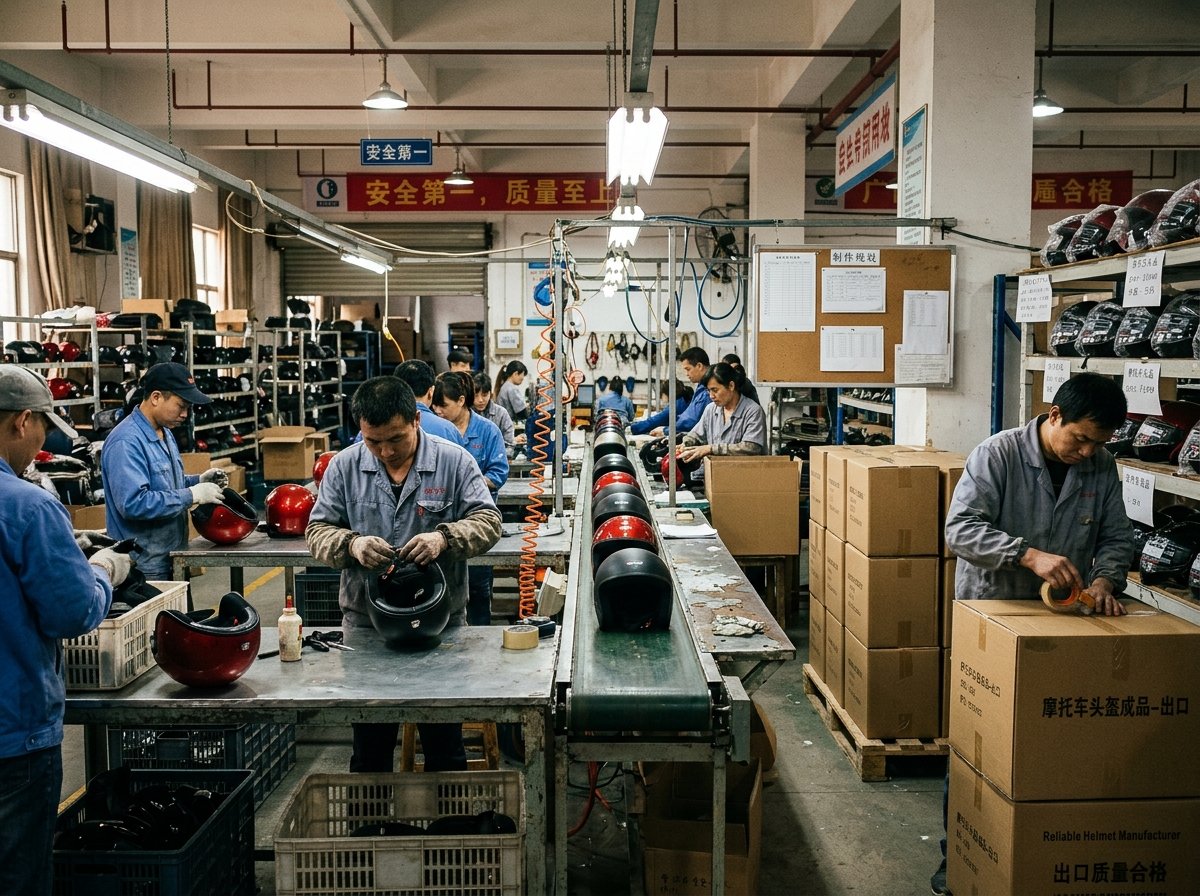
In the helmet industry, many problems do not start in the market. They start much earlier, inside the factory. A sample may look clean, but bulk production may show different fit, weaker padding, unstable visor parts, poor strap comfort, or wrong packaging details. Market feedback across helmet categories keeps repeating the same pain points: wind noise, visor fogging, pressure points, poor ventilation, heavy shell feel, liner durability issues, scratched visors, and loose or unreliable functional parts. These problems are useful because they show what a manufacturer must be able to control before a large order is ever shipped.
What makes a helmet manufacturer reliable?
A reliable manufacturer is one that can keep quality, compliance, and delivery stable from development stage to bulk shipment. Reliability is not only about factory size. It is about whether the factory can repeat approved quality without losing control when volume increases.
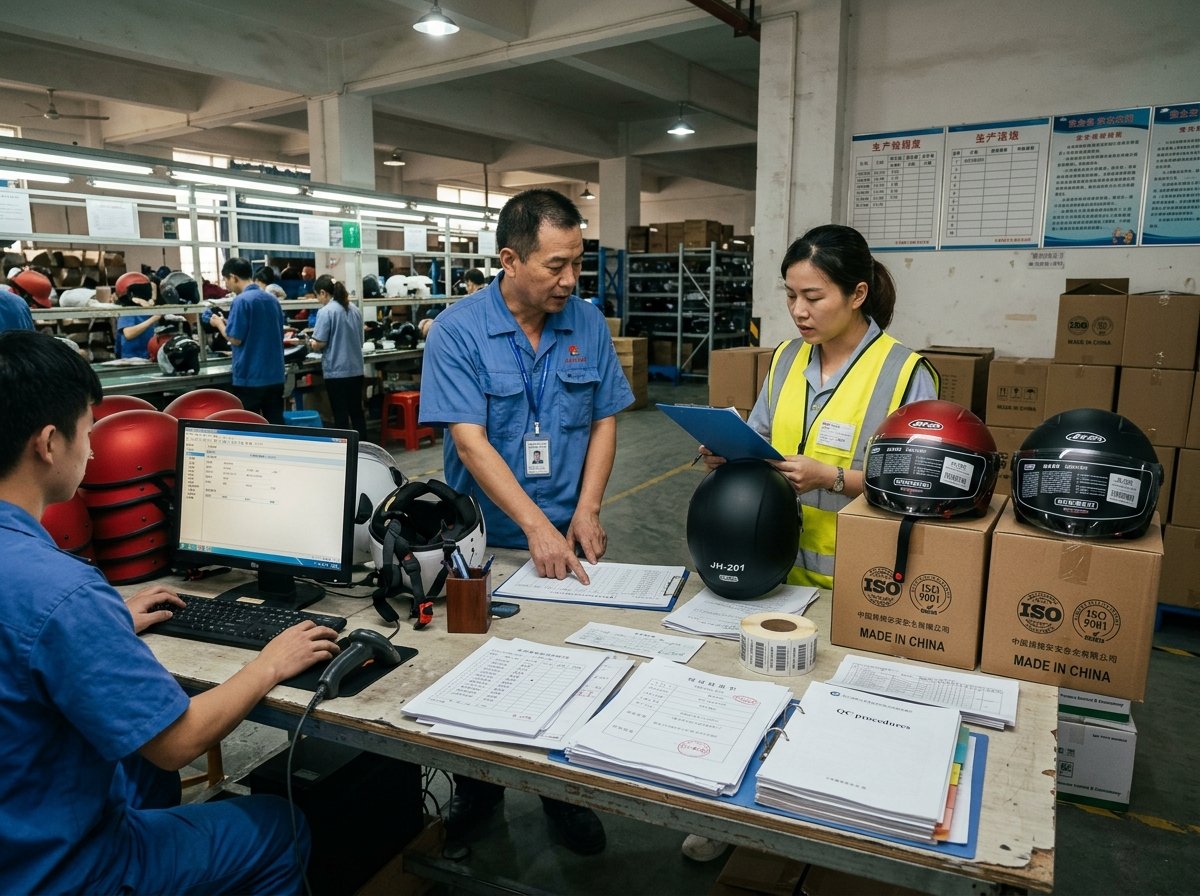
A strong helmet manufacturer usually has several common traits. The first is process control. Shell forming, EPS processing, trimming, painting, assembly, inspection, and packing should be managed through clear standards rather than informal experience alone. The second is consistency. A good supplier should be able to keep the same fit, finish, and function from the first approved sample to the final batch. The third is transparency. A reliable factory can explain how materials are approved, how defects are tracked, how labels are controlled, and how quality issues are corrected.
This matters because helmets are not simple products. They combine structural parts, comfort parts, visual parts, and compliance requirements in one item. A factory may produce a shell that looks good from the outside while still failing in the details that actually affect rider satisfaction. If the strap digs into the neck, the visor leaks, the padding collapses, or the fit changes between sizes, the product will quickly lose trust in the market.
How to evaluate helmet safety certifications when choosing a manufacturer?
Safety certification should be checked as part of the real product, not as a separate sales document. Many suppliers can show reports or certificates, but the important question is whether those files truly match the exact helmet being offered.
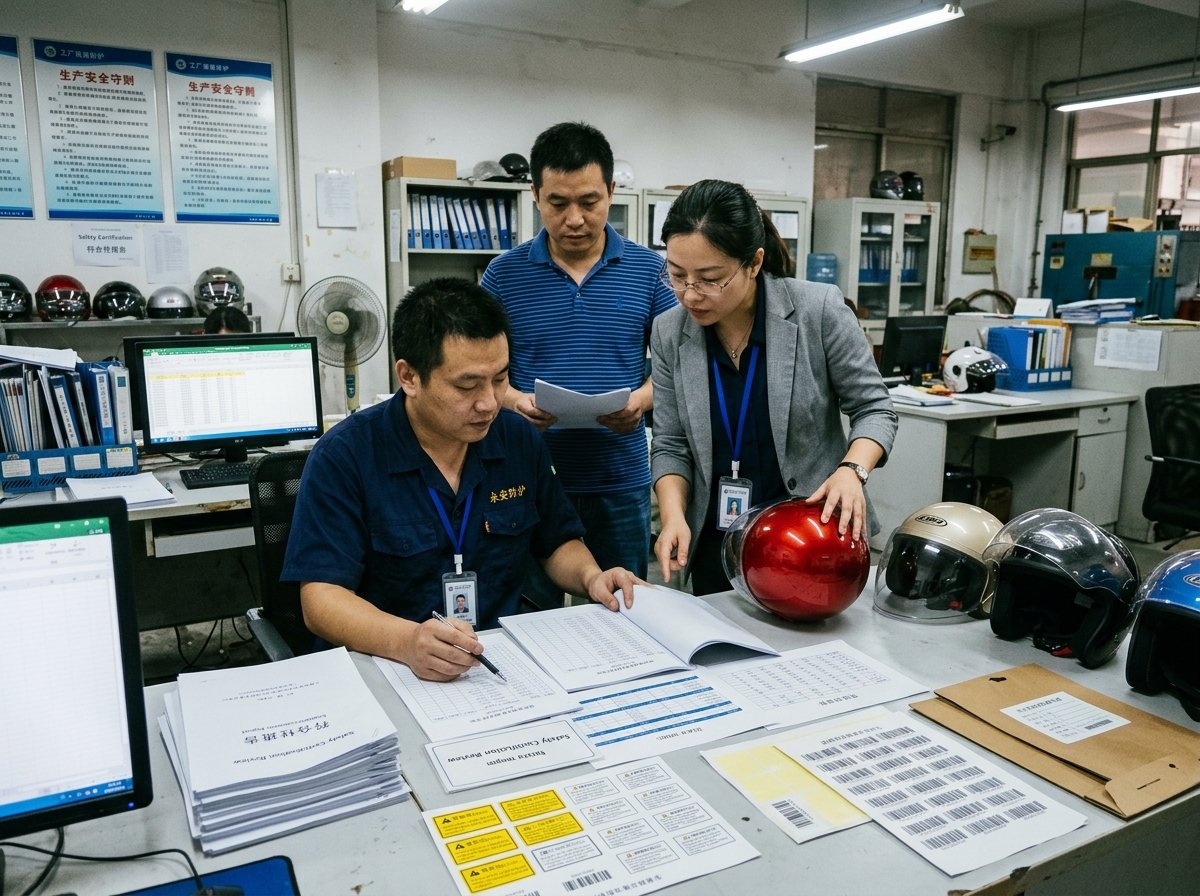
The first checkpoint is model matching. The certification should match the shell type, size range, structure, and configuration of the product under discussion. If the report refers to a different visor setup, different shell construction, or different size group, the file may not fully support the actual order. The second checkpoint is market matching. Different sales regions require different standards, warning labels, and compliance details. A factory that understands export work should be able to explain which standard applies to which product and how the mass production version stays aligned with the tested version.
The third checkpoint is control after certification. A certificate only has value when the production process stays consistent. If a supplier changes foam density, strap parts, visor material, or liner construction without proper control, the original report no longer gives enough confidence. This is why manufacturer selection should not stop at “certificate available.” It should go further into document accuracy, revision control, and whether the certified configuration is really protected during normal production.
For this reason, the evaluation of a helmet manufacturer should always include both technical files and factory process review. A supplier that only shows paperwork but cannot explain production control is usually not strong enough for serious long-term orders.
Which quality control points matter most in helmet manufacturing?
Helmet quality control starts long before final inspection. If weak materials or unstable assembly methods enter the line early, final inspection can only catch part of the damage. The strongest factories control the process from incoming materials to final shipment.
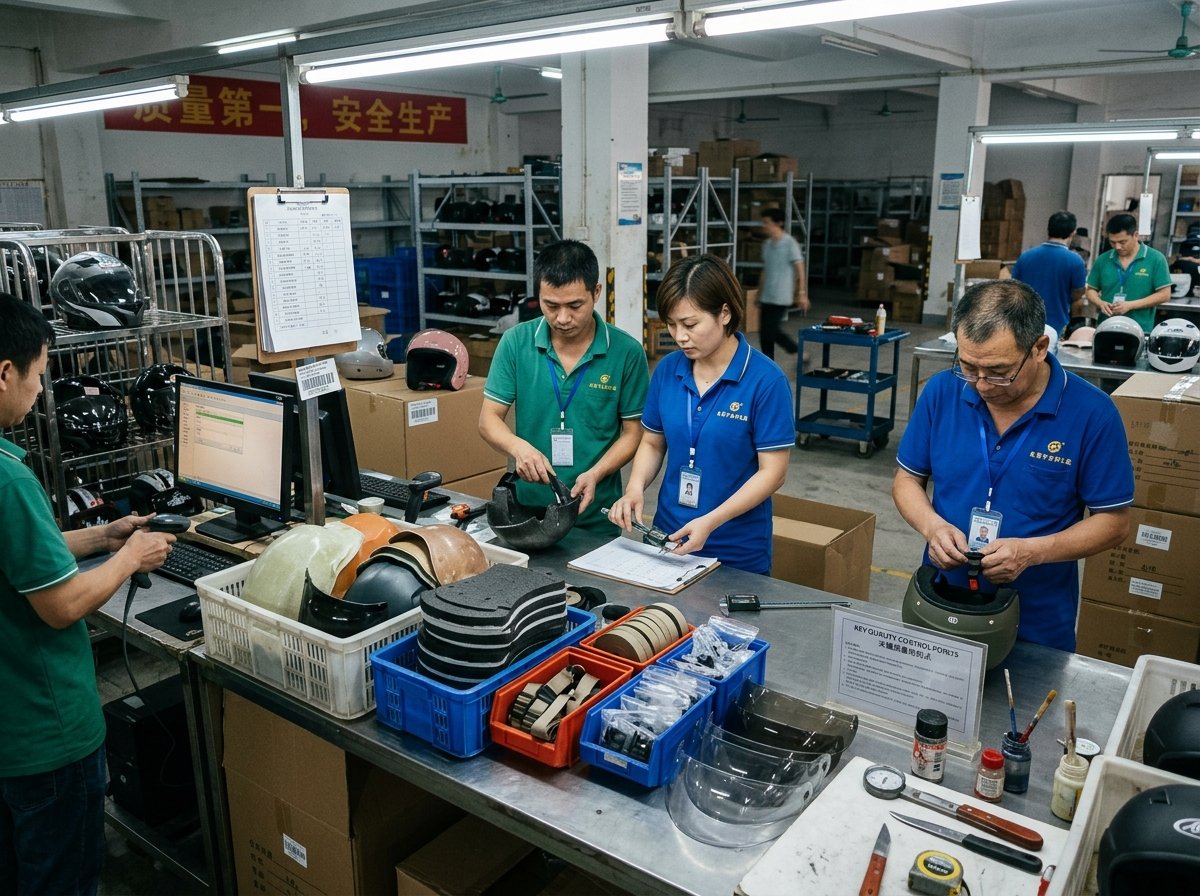
Incoming material control is the first key point. Shell materials, EPS parts, straps, buckles, visor components, paints, adhesives, and liners should all be checked before entering production. Many market complaints come from weak material choices or weak incoming inspection. Scratched visors, cheap-feeling trim, loose hardware, or padding that falls apart are often signs that the supplier did not control materials carefully enough.
Shell and EPS consistency is the second key point. If shell dimensions shift, trimming is rough, or EPS fit changes by batch, the finished helmet may feel bulky, unstable, or uncomfortable. This links directly to common market complaints such as heavy shell feel, pressure points, poor balance, and long-term wearing discomfort.
Assembly control is the third key point. Visor installation, strap routing, buckle function, liner fixation, edge finishing, and decorative trim must all be consistent. A helmet may appear acceptable at first glance, but small assembly errors can lead to real complaints later. Loose visor screws, padding snaps pulling out, leaking seals, and poor strap positioning usually come from weak assembly discipline rather than from design alone.
Final inspection remains important, but it should confirm quality, not create it. A mature factory uses final inspection to verify appearance, function, labels, packaging, and carton accuracy after earlier checkpoints have already controlled the product.
What should buyers ask before selecting a helmet OEM partner?
Strong questions make weak suppliers uncomfortable. That is useful. The right questions quickly show whether a factory truly understands helmet production or only knows how to quote aggressively.
One important question is which production steps are handled in-house and which are outsourced. This helps reveal real control. Hidden outsourcing often leads to unstable quality, longer lead times, and confusion when a problem appears. Another important question is how approved samples are locked before bulk production. A serious factory should be able to explain sample approval, BOM control, material version control, and golden sample use during manufacturing.
Questions about fit control are also critical. Many helmet problems in the market come from forehead pain, cheek pressure, jaw discomfort, or unstable retention. The supplier should be able to explain shell size strategy, liner thickness options, fit testing, and whether different head shapes are considered during development. When these answers are vague, future fit complaints are likely.
Questions about packaging and documents matter just as much. Wrong barcodes, wrong color labels, missing tags, old inventory, and mixed accessories create major problems in retail and import channels. A reliable OEM partner should be able to explain how labels, manuals, cartons, and accessories are checked before shipment.
Finally, the most revealing question is often how the factory handles field complaints. A dependable supplier should have traceability by batch, a corrective action process, and clear support for replacement parts or remake decisions. A weak supplier often avoids specifics and focuses only on winning the order.
How can production consistency be judged before placing large orders?
Large orders create pressure that small sample runs do not. This is why many helmet projects look smooth early and become difficult later. The ability to make one good sample is not the same as the ability to produce one thousand stable units.
Production consistency can be judged by looking at line organization, operator skill, inspection records, rework habits, and how clearly the factory separates approved goods from rejected goods. A strong factory usually has cleaner workflow, clearer work instructions, and stronger control over parts and semi-finished goods. A weak factory often shows mixed components, random handwritten labels, visible rework, or unclear storage between accepted and rejected items.
Batch consistency should also be judged through the details riders notice most. If padding hardness changes, visor action becomes looser, strap feel becomes rougher, or paint quality drops from one shipment to the next, the market notices quickly. These are exactly the kinds of problems that public helmet reviews often expose. That is why factory selection should include attention to the same weak points: comfort, noise control, fit, anti-fog performance, liner durability, visor durability, and finish stability.
The strongest helmet manufacturer is usually the one that can show discipline in both engineering and production, not one that only performs well during quotation and sampling.
Why do common market complaints matter when choosing a manufacturer?
Repeated market complaints are one of the best tools for supplier evaluation. They show which issues damage customer satisfaction most often and which factory controls need the most attention.
Wind noise complaints point to weak shell aerodynamics, sealing, neck roll design, and vent structure. Fogging complaints point to poor visor sealing, weak anti-fog design, or poor airflow management. Pressure-point complaints point to poor fit development, limited shell sizing, or weak liner design. Padding durability problems point to foam quality, glue systems, and repeated use resistance. Strap discomfort points to geometry, webbing feel, and anchor position. Wrong packaging or mixed stock points to weak warehouse and shipment discipline.
These patterns matter because a manufacturer that does not understand them is likely to repeat them. A stronger factory already treats these issues as part of normal product development and QC planning. That gives better protection not only for end-user satisfaction but also for brand reputation and repeat business.
How should the final manufacturer decision be made?
The final decision should not be made by quotation alone. The safest choice usually comes from balancing certification control, process stability, communication quality, and production consistency against price. A lower price can look attractive at the start, but it often becomes expensive later if the supplier cannot keep quality stable or handle problems quickly.
A final review should compare the supplier’s technical response speed, document clarity, audit performance, fit understanding, QC discipline, and bulk-order readiness. The strongest factory is not always the one with the biggest claims. It is usually the one with the clearest systems and the fewest weak links between sample approval and actual shipment.
Conclusion
Choosing a reliable helmet manufacturer means looking beyond sample appearance and unit price. The right partner should be able to control certifications, manage stable materials, maintain fit and comfort consistency, protect functional part quality, and keep documents and packaging accurate across repeat orders.
In helmet manufacturing, the real risks are already visible in the market: wind noise, fogging, poor fit, strap discomfort, liner wear, scratched visors, wrong labels, and inconsistent bulk quality. These are not minor problems. They are signs of how strong or weak the factory really is. A dependable manufacturer reduces these risks through better engineering, stronger process control, and more disciplined production.
For importers and brands, the safest choice is usually the factory that can keep sample quality and mass production quality aligned without relying on excuses later. That is what makes a manufacturer reliable, and that is what supports stronger long-term growth in the helmet business.