Private label helmet production helps brands launch helmet products faster by using proven manufacturing platforms with custom branding, packaging, and selected feature changes. It is a practical way to enter the market with lower development risk while still building a distinct brand identity.
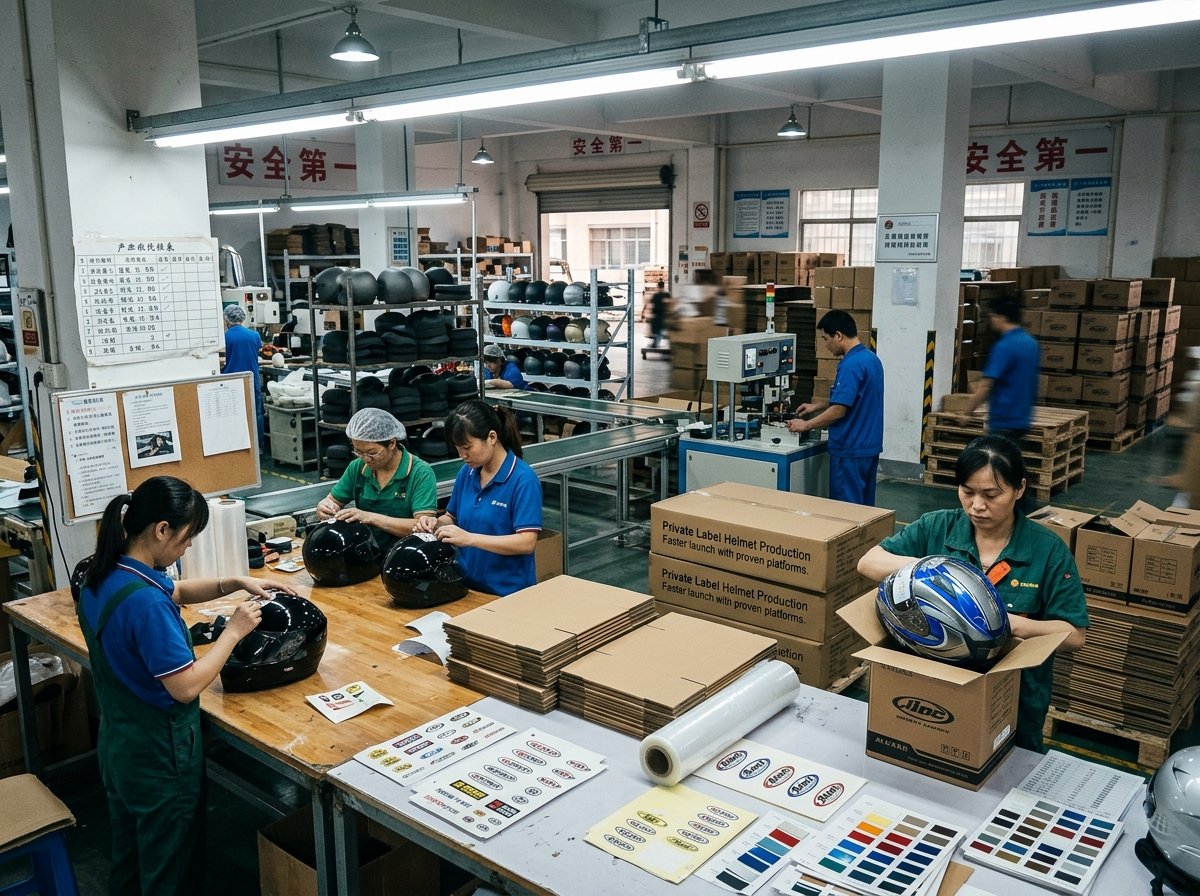
For many helmet brands, the real challenge is not only finding a factory. It is finding a production model that balances speed, cost, customization, compliance, and long-term brand control. In public market feedback, the same product problems appear again and again: poor fit, loud wind noise, weak visor durability, liner wear, fogging, strap discomfort, wrong labels, and inconsistent bulk quality. These repeated complaints show why private label helmet production must be managed carefully from product selection to packaging approval.
Why do many brands start with private label helmet production?
Starting a helmet line from zero takes time, tooling cost, testing cost, and a higher risk of delay. For growing brands, that path is often too heavy in the first stage. Private label production offers a faster route because it starts from an existing helmet platform that is already more mature in structure, fit, and production flow.
Private label production works well for brands that want to test the market, launch seasonal collections, expand into new channels, or build a product range without waiting through a full custom development cycle.
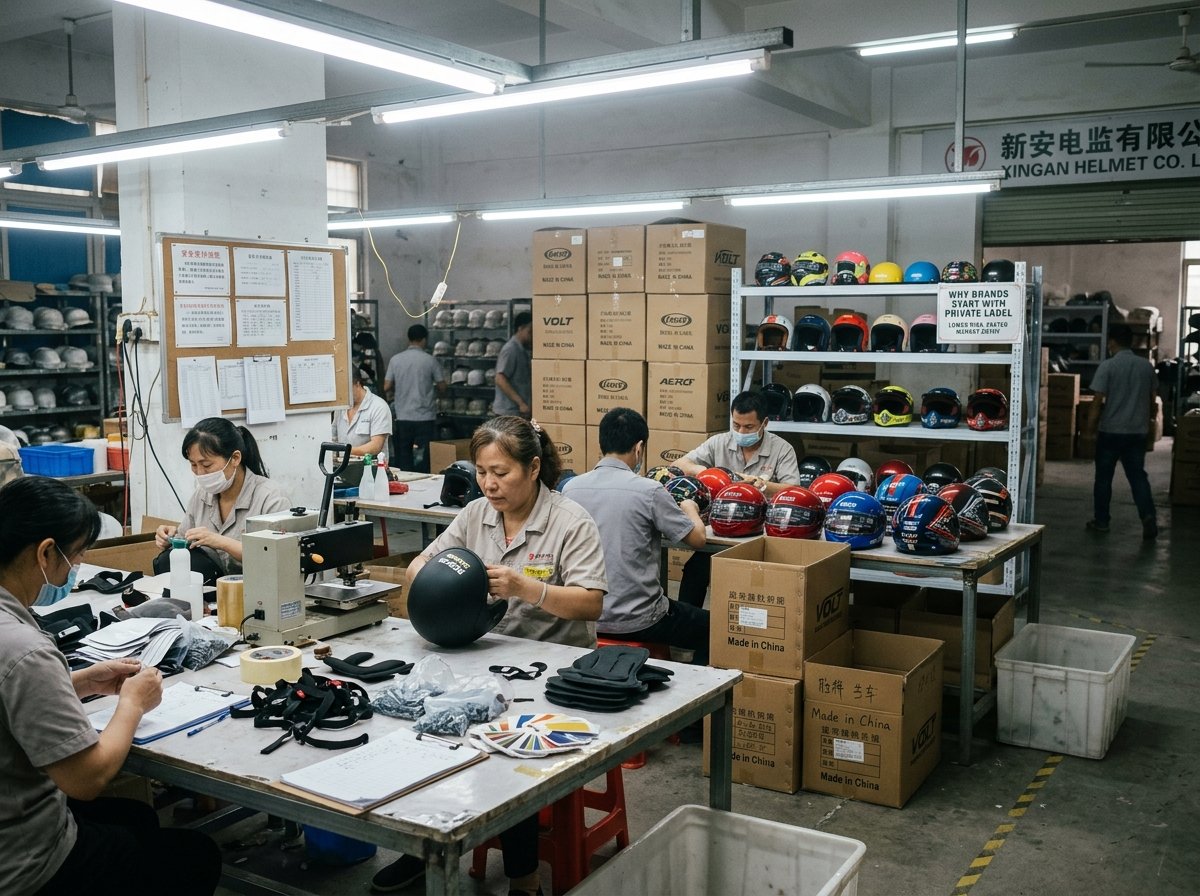
This model is especially attractive when speed matters. A factory with existing shell platforms, proven assembly flow, and stable supply chain support can shorten the path from concept to order. That helps brands focus on product positioning, design style, sales channels, and packaging presentation instead of spending too much time on early engineering from scratch.
At the same time, private label does not mean low value. A well-chosen helmet manufacturer can support strong branding through color development, logo placement, trim selection, visor options, liner details, packaging design, and market-specific compliance support. That gives the brand room to look distinctive without carrying the full burden of new mold development at the start.
Private Label vs OEM Helmets: Which model fits your brand strategy?
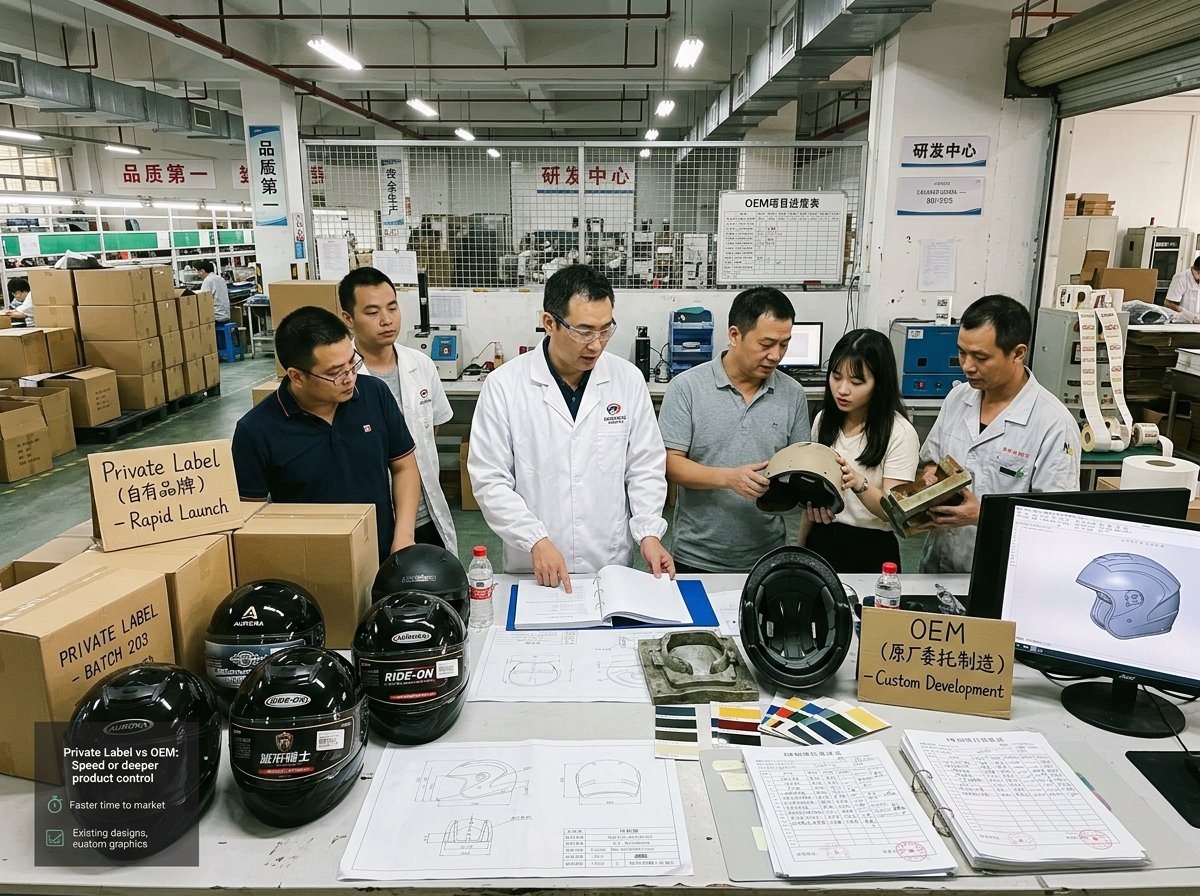
Private label and OEM are close, but they are not the same in commercial use. The best choice depends on how much control the brand wants, how fast the launch needs to be, and how much development budget is available.
Private label is usually the better fit for brands that want faster market entry with lower development cost. OEM is usually more suitable when the brand wants more product-level control, stronger technical differentiation, or a long-term platform built around its own specifications.
Private label model
In a private label project, the factory already has the basic helmet platform. The brand adds its own logo, graphics, packaging, labels, and selected option changes. This is the faster and simpler route. It usually reduces tooling cost, lowers development time, and makes small or mid-volume launch planning easier.
This works well for brands that want to build presence first, then expand later. It is also useful for importers or distributors that want to test market response before committing to deeper customization.
OEM model
In an OEM project, the brand often has more control over specification, component selection, fit changes, accessory structure, and visual direction. OEM can still use an existing base platform, but it usually goes deeper than a typical private label job. It may involve custom visor details, shell changes, fit tuning, packaging systems, or selected structural modifications.
This route gives stronger product differentiation, but it also asks for more time, more approvals, and better project management.
Which one is the better strategic fit?
If the brand goal is quick entry, easier MOQ planning, and lower first-stage risk, private label is often the stronger choice. If the goal is long-term exclusivity, stronger margin protection, and more visible product distinction, OEM may fit better. In both cases, the final result still depends on whether the helmet manufacturer can keep bulk production aligned with the approved sample and support the brand with stable quality over time.
What customization options are available in private label helmet production?
Many buyers think private label only means printing a logo on an existing shell. In reality, good private label projects offer much more than that. The level of customization depends on the factory platform, the project budget, and the production volume.
Private label customization often includes shell color, painting style, graphics, logo application, liner material, strap details, visor options, trim parts, packaging, manuals, and label sets.
Visual customization
The most common starting point is external appearance. This includes color matching, gloss or matte finish, graphic placement, decal style, brand logo, and retail presentation details. These choices shape first impression and help the product look like part of a real collection instead of a generic sourced item.
Comfort and fit-related adjustments
Depending on the factory platform, private label projects may also include selected liner materials, cheek pad thickness options, comfort padding variations, strap cover details, or retention-system choices. This matters because many public complaints around helmets come from poor fit, pressure points, rough strap feel, or padding that loses support too quickly. Even in private label work, these details can affect whether the product wins repeat orders.
Functional option changes
Some private label programs allow visor upgrades, anti-fog options, replacement visor packs, sun visor variations, vent trim changes, buckle style choices, peak options, or accessory kit combinations. These are useful because riders often judge helmet quality through practical use details, not only through shell shape. A comfortable visor action, better anti-scratch performance, or cleaner buckle feel can strongly improve perceived value.
Brand system customization
Strong private label projects usually go beyond the helmet itself. They build a small brand system around the product. That may include hangtags, brand story cards, care instructions, carton marks, user manuals, size stickers, barcode labels, and retail-ready packaging. These details make the product feel complete and more trustworthy in both store and online channels.
How should packaging, labeling, and compliance be handled for private label helmets?
Many brands spend time on shell graphics and forget how important packaging and labels are. In reality, packaging and compliance details can decide whether the product enters the market smoothly or creates problems after shipment.
Packaging, labeling, and compliance should be treated as part of the helmet product itself. They need to match the target market, the approved configuration, and the final branding plan.
Public feedback around helmets shows repeated frustration with wrong boxes, missing tags, unclear labels, old inventory, damaged packaging, and documentation that does not match the product. These issues damage trust quickly, especially in gift markets, retail displays, and import distribution.
For private label helmets, the packaging stage should confirm product name, size marks, barcodes, logo consistency, warning labels, user manual language, and carton information. If the project is for export, market-specific compliance marks and documentation should be checked carefully before production is closed. This is not a small detail. A helmet that looks correct but carries the wrong label or incomplete documentation can still create retail rejection or customs trouble.
A strong private label program should also control date coding, batch traceability, accessory pack accuracy, and packaging protection. Scratched visors, crushed boxes, mixed manuals, or missing spare parts often become avoidable complaints when shipment control is weak.
What factory capabilities matter most in private label helmet projects?
Private label projects move faster than deep OEM projects, but that does not mean factory capability matters less. In fact, factory strength becomes even more important because the brand is relying on the supplier’s existing platform, process maturity, and production discipline.
The most important capabilities are stable product platforms, consistent materials, strong painting and assembly control, document accuracy, and reliable final inspection.
A strong factory should already understand where helmet problems usually happen. Wind noise often links to shell form and sealing. Fogging links to visor design and airflow management. Pressure points link to fit development and liner control. Padding failure links to foam quality and assembly method. Packaging complaints link to warehouse discipline and carton review.
This matters because the brand may not be changing the shell platform heavily, but it is still trusting the factory to deliver a product that feels stable, safe, and commercially ready. A capable helmet manufacturer supports that by controlling the full chain from approved sample to bulk shipment, including labels, packaging, and replacement part consistency.
How can brands avoid common mistakes in private label helmet production?
The biggest private label mistake is treating the project as a simple decoration job. A helmet is not only a branding surface. It is a technical product with fit, function, compliance, and durability expectations.
Another common mistake is approving the look without checking the full selling condition. Brands should review the helmet together with visor setup, liner feel, buckle action, labels, carton marks, manuals, and packaging protection. They should also confirm that the approved sample represents the real bulk version rather than a specially prepared presentation piece.
It is also important to check how the factory handles replacement parts, repeat orders, and batch stability. Many market complaints appear not in the first order, but in later replenishment cycles when one batch feels different from the previous one. Stable private label success depends on consistency over time, not just on a good launch.
Conclusion
Private label helmet production is a practical route for brands that want faster market entry, lower development risk, and a solid balance between customization and speed. It works especially well when the brand wants to build market presence through strong graphics, packaging, and brand presentation without starting from a fully custom helmet platform.
The best private label projects succeed because they treat the helmet as a full product system. Product platform choice, comfort details, visor options, packaging, labels, and compliance all need to work together. Repeated market complaints already show what happens when these points are ignored: poor fit, weak durability, wrong packaging, and unstable user experience.
For brands choosing between private label and deeper OEM development, the right decision depends on launch speed, product strategy, and desired differentiation. In both cases, long-term success depends on working with a factory that can keep approved quality stable from first sample to repeat bulk production.