
The three most common outer shell materials used in bicycle helmets are polycarbonate, ABS, and composite materials such as fiberglass or carbon fiber. Each one offers a different balance of weight, cost, appearance, durability, and market positioning, so the right choice depends on the product category and target customer.
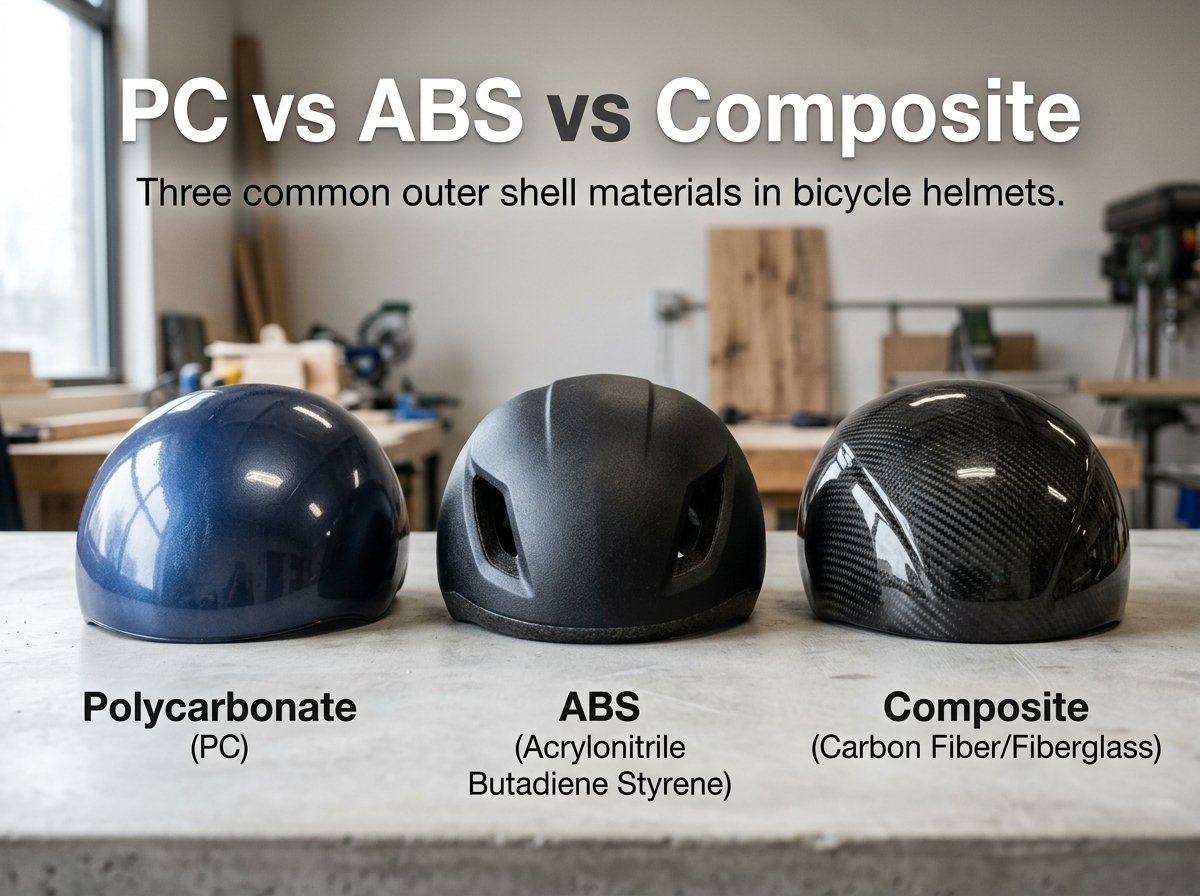
In bicycle helmet manufacturing, outer shell material affects much more than the first look of the product. It shapes cost, surface quality, structural feel, weight perception, and the kind of market the helmet can enter. Buyers often focus first on style, ventilation, or safety claims, but shell material quietly influences all of these. It affects how the helmet looks on the shelf, how durable it feels in daily handling, and how well the product fits a specific price band.
This is important because helmet market feedback often follows a clear pattern. Positive comments usually mention light weight, comfort, good fit, strong build quality, and a product that feels worth the money. Negative feedback often points to bulky construction, cheap-looking material, poor finish, early wear, and a product that feels weaker than expected for the price. That is why shell material is not only an engineering choice. It is also a commercial choice.
Why Does Outer Shell Material Matter So Much in Bicycle Helmet Manufacturing?
Outer shell material matters because it influences weight, appearance, durability, molding method, cost structure, and the overall market position of the helmet.
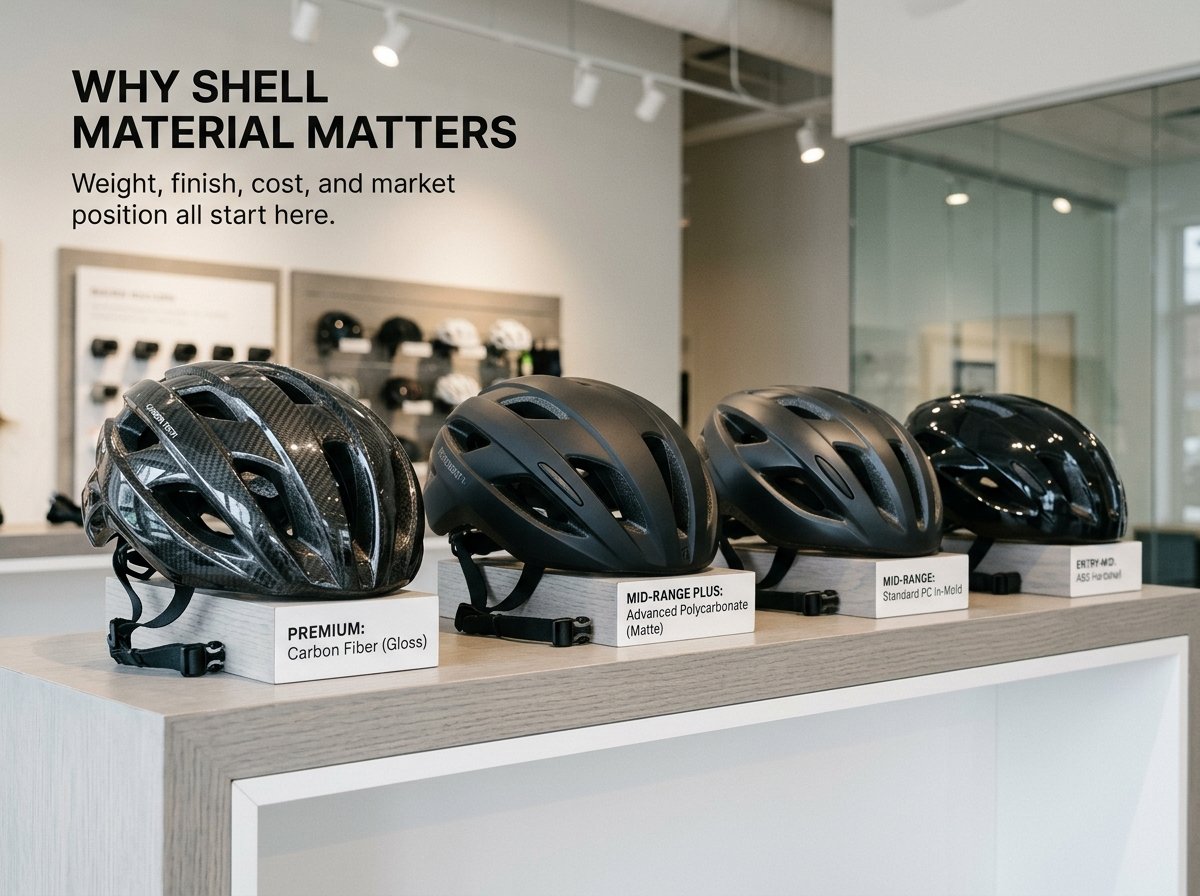
The outer shell is one of the first things a buyer notices. It affects surface finish, perceived quality, and how compact or bulky the helmet looks. In many bicycle helmet categories, users want products that feel light, look clean, and still give confidence in daily use. Even before the helmet is worn, the shell material affects that first impression.
The shell also plays a practical role in production. Different materials require different molding methods, finishing standards, and quality-control approaches. Some materials support lower-cost volume production. Others support lighter, more premium products with stronger visual value. This means shell material directly affects manufacturing efficiency and the price level the factory can realistically target.
Why shell material changes product direction
| Product factor | Why shell material matters |
|---|---|
| Weight perception | Lighter shells improve comfort image |
| Surface quality | Better material and finish support stronger shelf appeal |
| Cost structure | Material choice affects both tooling and unit cost |
| Durability feel | Shell rigidity and finish affect user trust |
| Market positioning | Different materials fit different price bands |
This is why shell material selection should be made early, before the product concept is locked.
Common Outer Shell Materials Used in Bicycle Helmet Manufacturing?
The most common outer shell materials used in bicycle helmet manufacturing are polycarbonate, ABS, and composite materials such as fiberglass or carbon fiber.
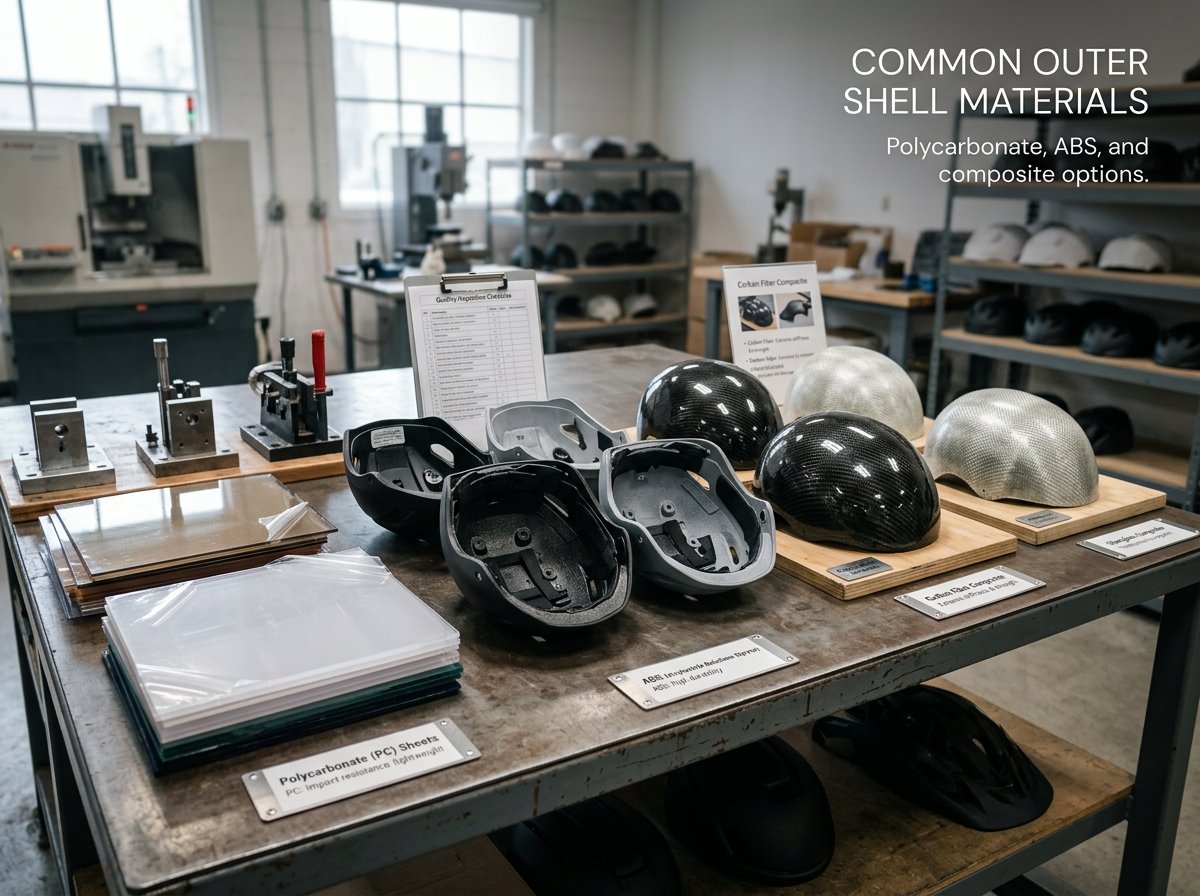
These three material groups appear again and again in bicycle helmet production because they cover most market needs, from entry-level value products to higher-end premium models.
1. Polycarbonate
Polycarbonate is one of the most common shell materials in modern bicycle helmets. It is widely used in in-mold construction, where the shell and EPS are formed together during production. This makes it especially popular in road, urban, commuter, and lightweight sport helmets.
Polycarbonate works well because it supports relatively light products, clean surface appearance, and efficient production at scale. It is often the most practical option for brands that want a balance of weight, cost, and visual quality.
2. ABS
ABS is commonly used in bicycle helmets that need stronger visible shell presence, lower manufacturing cost in some product types, or a more robust everyday feel. It is often seen in skate-style helmets, urban helmets, children’s helmets, and products designed for more casual or impact-tolerant daily use.
ABS helmets may look slightly bulkier, but they often give users a stronger “solid shell” impression. This can be useful in categories where the customer values durability and visible toughness more than ultra-light performance.
3. Composite materials
Composite shell materials, including fiberglass and carbon fiber, are used in more premium helmet segments. These materials support lighter and more advanced shell structures, stronger premium image, and better opportunities for high-end positioning. In bicycle helmets, this is more common in performance-oriented products where lower weight and higher perceived quality matter more.
Basic material overview
| Material | Typical market use | General position |
|---|---|---|
| Polycarbonate | Road, commuter, sport, urban | Mainstream |
| ABS | Skate, kids, casual urban, value models | Entry to mid-level |
| Fiberglass / Carbon fiber composite | Premium performance models | High-end |
Each material has a place. The best choice depends on product goal, not only on technical preference.
How Does Polycarbonate Perform in Bicycle Helmet Production?
Polycarbonate performs well when the goal is lightweight construction, clean appearance, scalable production, and balanced cost-to-performance.
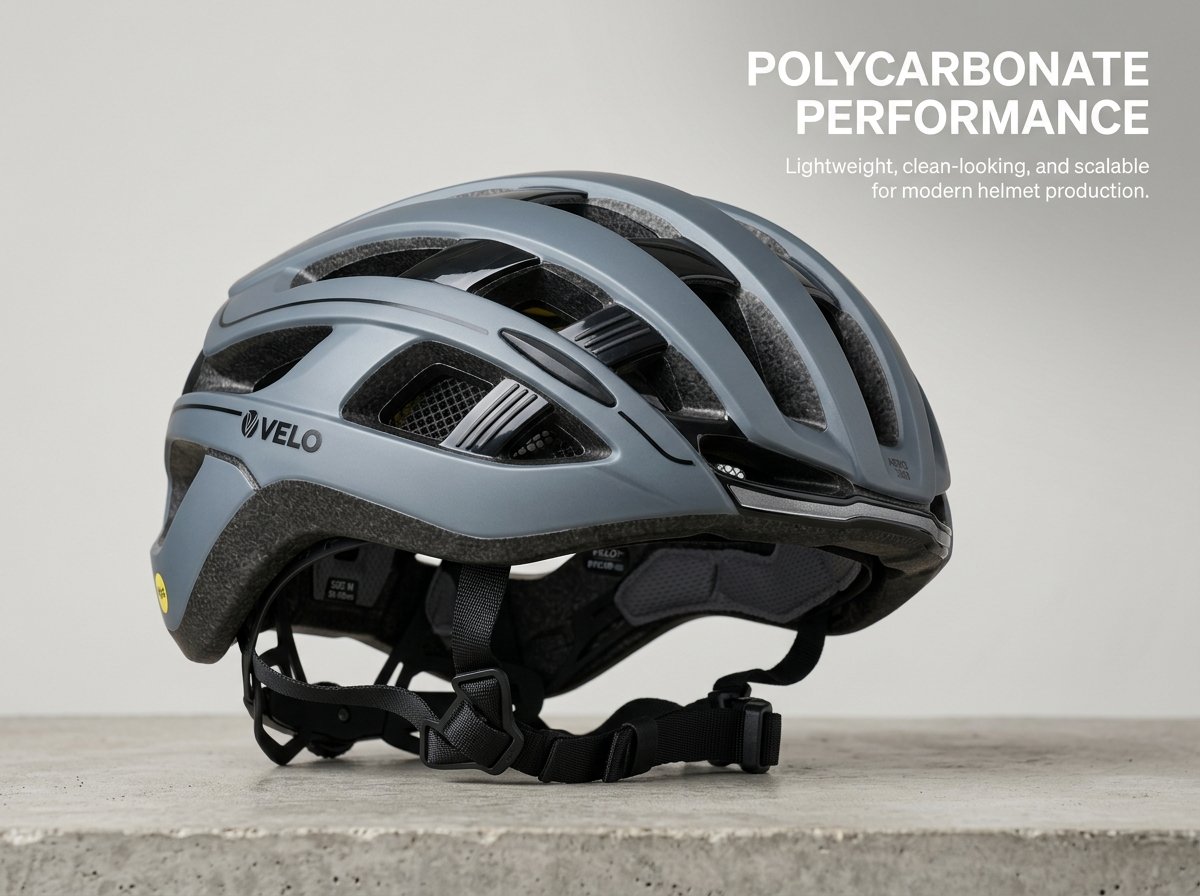
Polycarbonate is widely favored because it supports modern lightweight bicycle helmet design. In many categories, especially road and commuter products, users respond strongly to helmets that feel light, ventilated, and easy to wear for long periods. Polycarbonate helps support that direction.
It also works well in products where brands want a more refined and streamlined look. The shell can give the product a cleaner, more integrated feel, which supports stronger shelf appeal in mid-range and upper-mid-range lines.
Polycarbonate strengths and limits
| Area | Strength | Limitation |
|---|---|---|
| Weight | Good for lightweight designs | Not the most premium material story |
| Appearance | Clean and modern | Less “high-end exotic” image |
| Production | Efficient at scale | Depends heavily on tooling quality |
| Market fit | Broad and flexible | May not stand out enough for flagship positioning |
For many bicycle helmet programs, polycarbonate is the safest all-around commercial choice.
How Does ABS Perform in Bicycle Helmet Production?
ABS performs well when the goal is practical durability, visible shell toughness, and a cost structure that fits entry-level or casual-use markets.
ABS has a different role from polycarbonate. It is usually less focused on ultra-light performance and more focused on practical robustness and value. This makes it useful in helmet categories where users expect a stronger shell presence, simpler styling, or a more affordable product.
In skate-style and urban helmets, this can be a very good fit. Many buyers in these segments care more about everyday durability, style, and simple wearability than about shaving every gram of weight. ABS can support that product story well.
ABS strengths and limits
| Area | Strength | Limitation |
|---|---|---|
| Cost | Good for value-oriented products | Less suited to premium lightweight image |
| Durability feel | Strong and solid appearance | Can feel bulkier |
| Market fit | Good for casual, skate, and kids lines | Less attractive for top-end sport products |
| Production style | Familiar and practical | Finish quality still depends on process control |
ABS works best when the product does not need to compete mainly on “ultra-light” positioning.
How Do Composite Materials Perform in Bicycle Helmet Production?
Composite materials perform best in premium bicycle helmets where low weight, stronger prestige value, and a more advanced product story are important.
Composite materials such as fiberglass and carbon fiber are not the standard choice for every bicycle helmet line, but they can be powerful in the right product category. These materials support premium storytelling because they are associated with lighter weight, advanced construction, and higher-end design.
This matters in performance segments, where customers are more willing to pay for meaningful product gains. In these categories, users often respond well to helmets that feel noticeably lighter and more refined. That said, composite shells also bring higher cost and more complex production control. If the rest of the helmet does not support the premium price, the shell material alone will not protect the product from disappointment.
Composite strengths and limits
| Area | Strength | Limitation |
|---|---|---|
| Weight | Strong premium advantage | Higher cost |
| Brand image | Supports flagship positioning | Narrower market reach |
| Product differentiation | Strong | More demanding manufacturing |
| Value perception | High when executed well | Risky if other details feel average |
Composite shells work best when the whole helmet is built to match the higher positioning.
How to Choose the Right Bicycle Helmet Shell Material for Different Market Needs?
The right shell material depends on whether the market needs lower cost, lighter weight, stronger durability feel, or higher premium appeal.
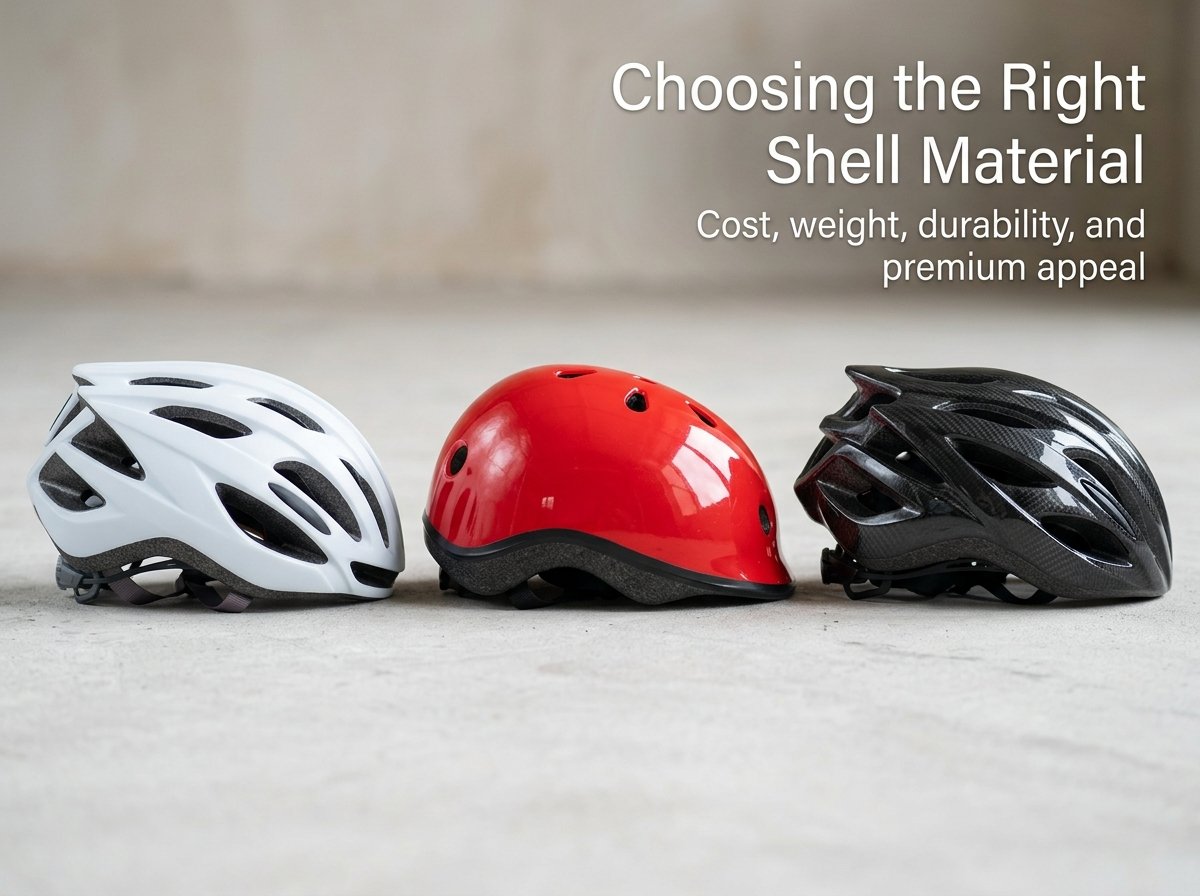
Material choice should follow the product’s market role. This is where many sourcing decisions become clearer. If the goal is a broad-market road or commuter helmet with a modern look and competitive weight, polycarbonate is often the best fit. If the goal is a more affordable, robust helmet for casual, skate, or kids categories, ABS often makes more sense. If the goal is a flagship performance product, composite materials may justify the higher complexity.
Material choice by market need
| Market need | Best-fit material | Reason |
|---|---|---|
| Mainstream sport or commuter | Polycarbonate | Good balance of weight, appearance, and cost |
| Entry-level casual or skate | ABS | Better value and practical shell feel |
| Premium high-performance | Composite | Stronger lightweight and premium story |
| Kids and youth helmets | ABS or polycarbonate | Depends on style, cost, and product target |
| Urban premium | Polycarbonate or composite | Depends on price band and visual concept |
The right material is the one that helps the helmet win in its intended market, not the one that sounds most advanced on paper.
Performance and Cost Differences Between Bicycle Helmet Shell Materials?
Polycarbonate usually offers the best balance of performance and cost, ABS often offers stronger value for casual categories, and composites offer the highest premium potential at the highest cost.
When comparing shell materials, buyers should not think only in terms of raw material price. The real cost difference includes production method, tooling, finish quality, reject rate, and the retail expectations that come with each material.
Polycarbonate is often the most commercially balanced option because it supports modern design, competitive weight, and broad market reach. ABS may cost less or fit simpler production logic in the right category, especially where the product does not need a premium lightweight image. Composite materials cost more not only because of the material itself, but also because of their more demanding process and the higher quality expectations attached to them.
Cost and performance comparison
| Material | Weight tendency | Cost tendency | Best commercial role |
|---|---|---|---|
| Polycarbonate | Light | Medium | Broad mainstream and mid-range |
| ABS | Moderate to heavier | Low to medium | Value, casual, skate, kids |
| Composite | Lightest or most premium feel | High | Premium performance and flagship |
The strongest business decision usually comes from matching shell material to the target customer’s real priorities.
What Should Buyers Check Beyond the Shell Material Name?
Buyers should also check finish quality, consistency, molding execution, weight balance, and whether the total helmet experience matches the promise of the shell material.
Shell material is important, but it is not everything. A helmet can use a premium material and still disappoint if the finish looks weak, the fit feels poor, or the final product feels heavier or less refined than expected. Market feedback shows this clearly. Users often judge the whole experience, not only the material label.
That means buyers should review the shell as part of a complete product package. The quality of molding, surface finish, integration with EPS, consistency across sizes, and overall balance all affect how the market sees the helmet.
Key checks beyond material name
| Checkpoint | Why it matters |
|---|---|
| Surface finish | Affects first impression and premium feel |
| Weight and balance | Influences comfort perception |
| Size consistency | Important for multi-size product lines |
| Integration quality | Shows factory process maturity |
| Price-to-feel match | Helps avoid “not worth the money” reactions |
The best shell material choice becomes valuable only when the factory can turn it into a strong finished helmet.
Conclusion
The three most common outer shell materials used in bicycle helmets are polycarbonate, ABS, and composite materials such as fiberglass or carbon fiber. Each material supports a different product strategy. Polycarbonate is often the best all-around choice for mainstream performance, commuter, and urban helmets because it balances weight, appearance, and cost well. ABS is often the better fit for skate, kids, casual, and value-focused helmets where visible shell toughness and practical cost matter more. Composite materials are better suited to premium products where low weight and advanced image support a higher selling price.
For buyers and product planners, the main lesson is simple. The right shell material is not the one with the most impressive name. It is the one that best matches the target market, the product category, and the expected retail value. A well-positioned shell material helps the helmet feel more convincing, more competitive, and more consistent with customer expectations.
In bicycle helmet manufacturing, shell material should always be chosen as part of the full product strategy. Weight, style, finish quality, market segment, and cost target all need to move together. When they do, the shell material becomes more than a technical choice. It becomes a strong part of the product’s commercial success.