A bump cap protects against minor bumps and scrapes in low-risk environments, while a hard hat is designed for more serious workplace hazards such as falling objects, impact, and in some cases electrical exposure. The right choice depends on the hazard level, the work setting, and the required safety standard.
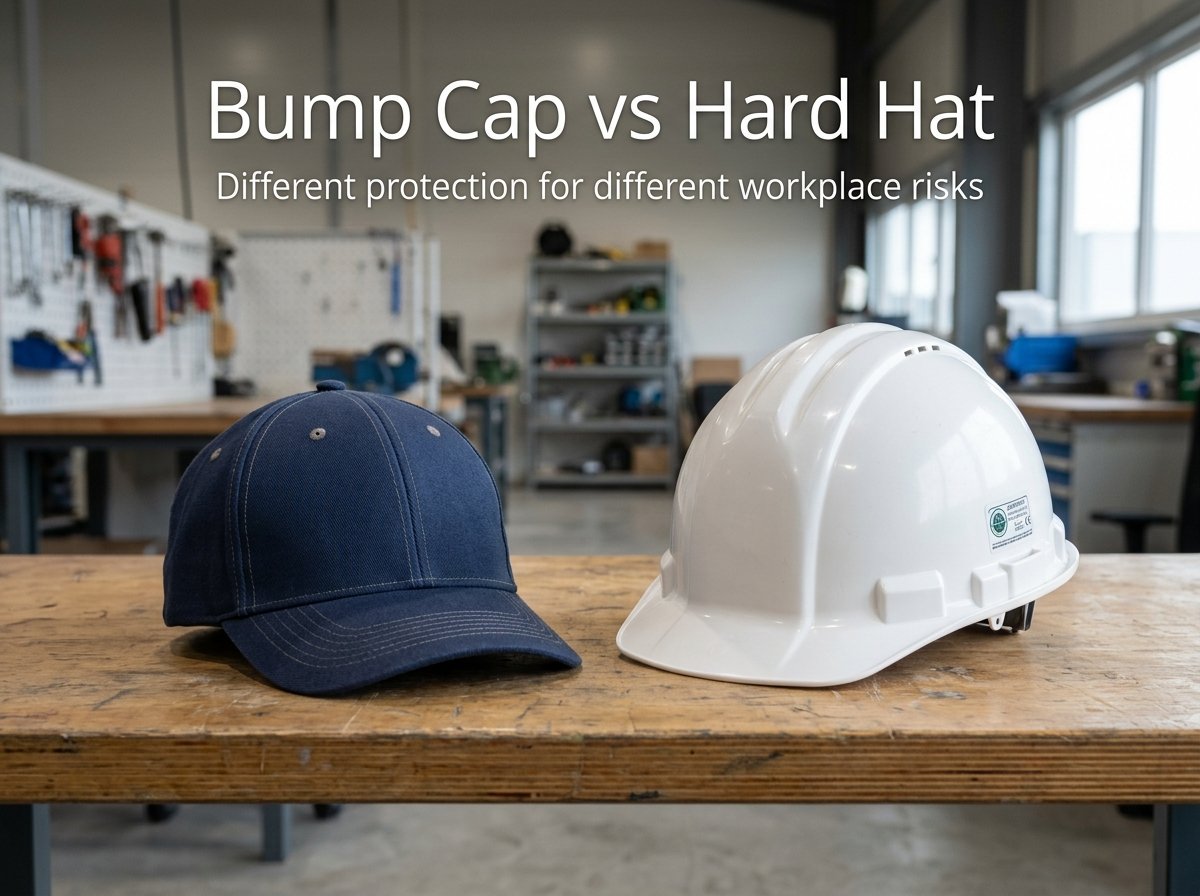
Head protection decisions often look simple on the surface, but the wrong choice creates real risk. In industrial markets, comfort matters, but protection level matters more. Product feedback across protective headgear categories shows a similar pattern again and again. Users like equipment that feels light, comfortable, and easy to wear for long shifts. At the same time, they quickly criticize products that feel heavy, hot, poorly balanced, or uncomfortable. That is why bump caps and hard hats are often compared. Both sit on the head. Both aim to reduce injury risk. But they are built for very different hazard levels, and they should never be treated as direct substitutes.
What Is the Main Difference Between a Bump Cap and a Hard Hat?
The main difference is the level of protection. A bump cap is for minor contact hazards, while a hard hat is for more serious overhead and impact hazards in industrial settings.
A bump cap is usually lighter, softer in feel, and more similar in appearance to a cap-style product. It is designed for areas where workers may hit their heads on fixed objects such as pipes, beams, machine edges, shelves, or low ceilings. It helps reduce cuts, scrapes, and minor bumps. It is not the right product for falling-object hazards.
A hard hat is built for a higher level of industrial protection. It has a rigid shell, an internal suspension or liner system, and a structure intended for more serious impact conditions. Depending on the design, it may also offer additional protection features such as electrical classification or side-impact coverage in newer helmet-style formats.
Basic comparison
| Feature | Bump Cap | Hard Hat |
|---|---|---|
| Main purpose | Minor bump protection | Industrial impact protection |
| Typical use area | Low-clearance indoor work | Construction, heavy industry, utilities, logistics |
| Structure | Light shell with cap-style form | Rigid protective shell with internal system |
| Protection level | Limited | Higher |
| Overhead falling-object use | Not suitable | Suitable when correctly specified |
This difference matters because confusion at the buying stage can lead to product misuse in the field.
Bump Cap vs Hard Hat: Key Differences in Protection and Industrial Use Cases?
The key difference is that bump caps address minor contact hazards, while hard hats are selected for workplaces where the head may be struck by falling, flying, or heavier impact sources.
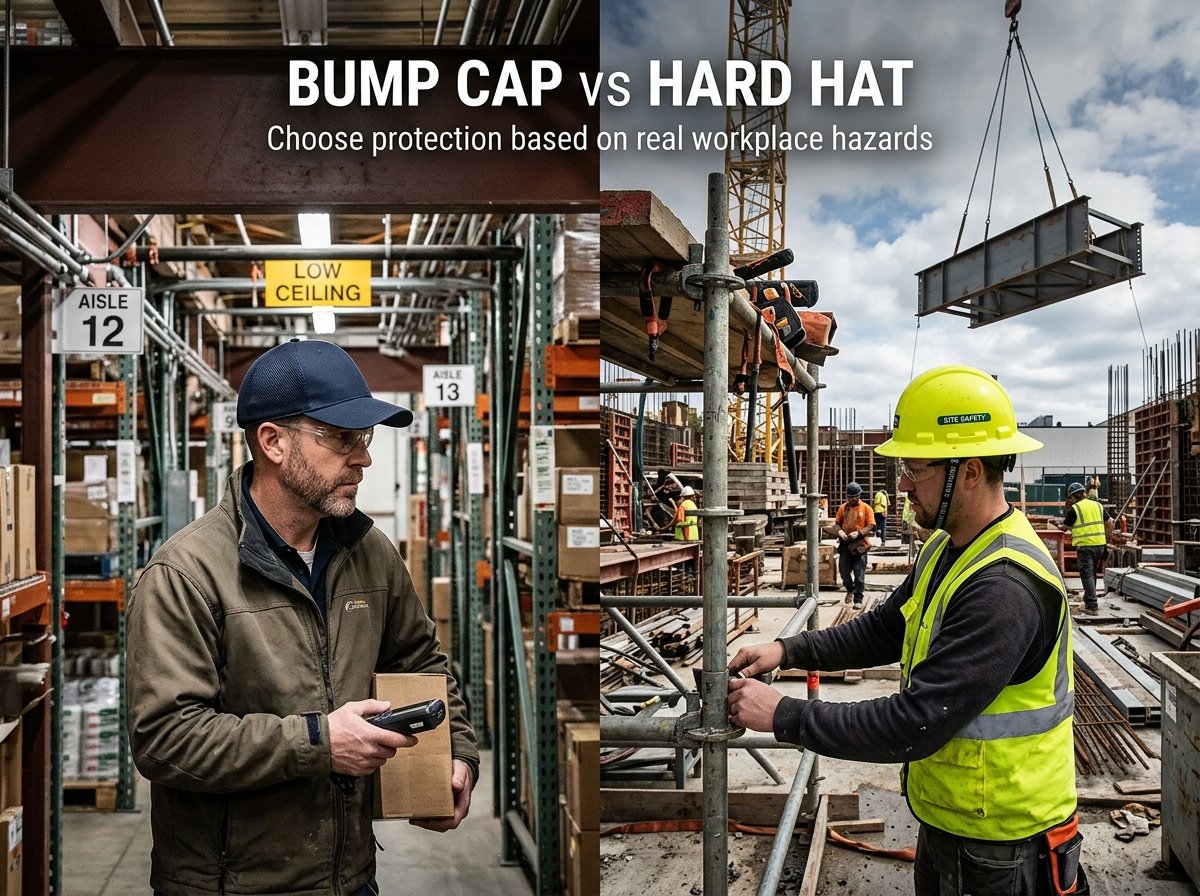
The use case should always follow the hazard. In low-clearance maintenance areas, warehouse aisles with fixed steel structures, service tunnels, vehicle interiors, and some assembly lines, a bump cap may be enough when the risk is mainly head contact with stationary objects. In these environments, workers often want lighter and cooler headgear because they wear it for long hours and move frequently in tight spaces.
In construction, industrial plants, energy sites, manufacturing zones with overhead activity, and any area with dropped-tool or falling-material risk, a hard hat is the safer and more appropriate option. This is where protection needs rise above comfort preference. Buyers may hear workers ask for lighter products, but the answer cannot be to reduce protection below the actual hazard level.
Typical use scenarios
| Work situation | Better choice | Reason |
|---|---|---|
| Warehouse with low beams | Bump cap | Minor bump hazard, high movement |
| Equipment maintenance in tight spaces | Bump cap | Protection from contact with fixed objects |
| Construction site | Hard hat | Falling-object and impact risk |
| Factory overhead lifting area | Hard hat | Higher industrial hazard |
| Electrical work zones | Hard hat with proper rating | Added hazard beyond simple bump contact |
The best buying decision comes from matching the product to the real work environment, not from choosing only by weight or appearance.
When to Choose Lightweight vs Full Protection Headgear for Workers?
Choose lightweight headgear when the hazard is limited to minor bumps against fixed obstacles. Choose full protection headgear when the risk includes falling objects, significant impact, or regulated industrial exposure.
This is where many purchasing mistakes happen. Lightweight products are attractive because they are easier to wear, look less bulky, and often improve worker acceptance. That can be a real advantage in facilities where head contact happens often but severe impact hazards do not. A lighter product can improve compliance when workers feel less burdened during long shifts.
Still, lightweight should never replace full protection where full protection is needed. In many industrial settings, the true decision is not bump cap versus hard hat as equal options. The real decision is whether the worksite hazard is low enough to permit a bump cap at all.
Decision logic for buyers
| Question | If yes | Likely choice |
|---|---|---|
| Is the risk mainly from low beams, pipes, or fixed edges? | Minor contact hazard | Bump cap |
| Is there risk of dropped objects or overhead work? | Serious impact hazard | Hard hat |
| Is electrical exposure part of the environment? | Added protection need | Hard hat |
| Is worker comfort important for long wear? | Yes, but hazard stays first | Choose the lightest product within the correct protection class |
The strongest suppliers usually help buyers separate comfort needs from protection requirements instead of trying to force one product into every environment.
Safety Standards Governing Bump Caps and Hard Hats?
Bump caps and hard hats are governed by different standards and market expectations because they are meant for different hazard levels.
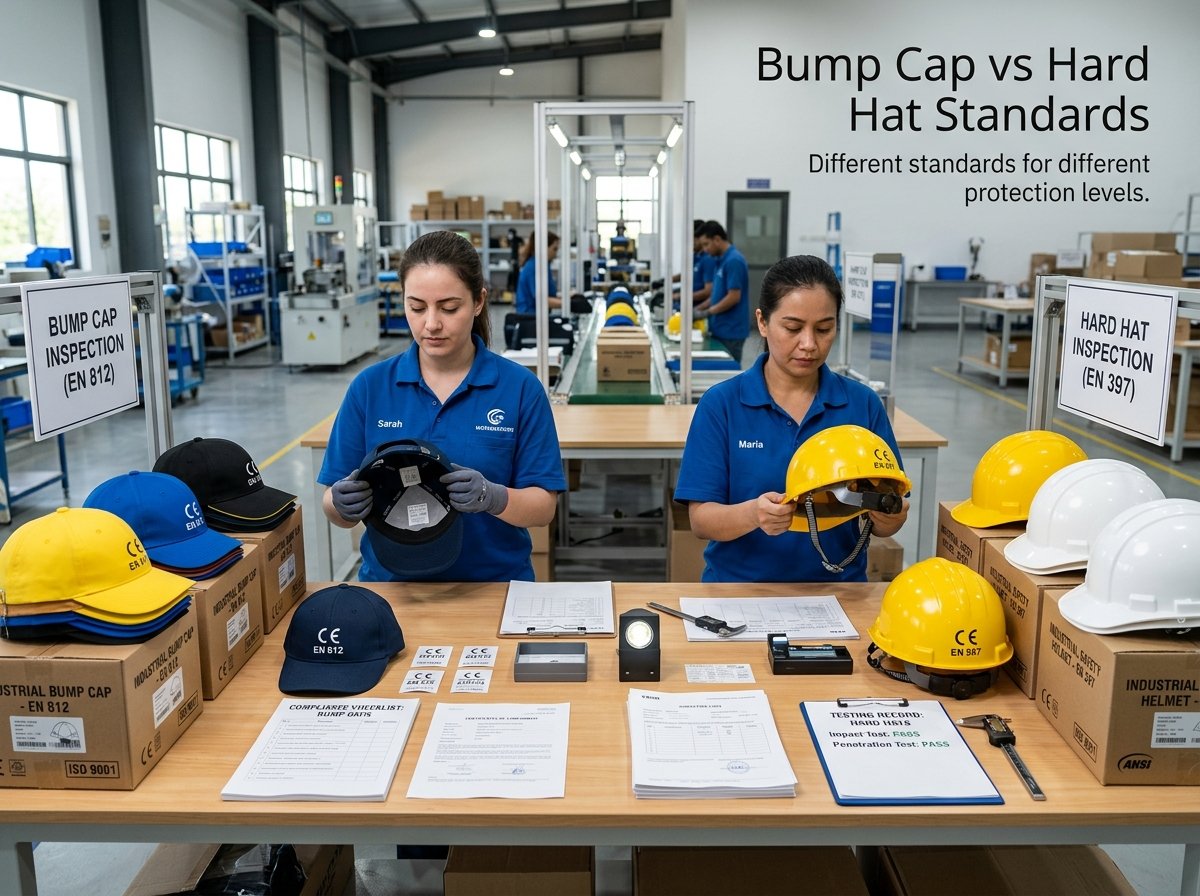
In the U.S. industrial market, hard hats are commonly linked to ANSI/ISEA Z89.1. In the UK and many European markets, industrial bump caps are commonly linked to EN 812, while harder-shell industrial head protection is governed under different protective-helmet frameworks. The key point is not only the standard name. The key point is that a bump cap standard reflects a lower protection category than a full hard hat or industrial safety helmet standard.
For commercial buyers, this has two major implications. First, product labeling and certification claims must match the target market. Second, workers and distributors should not be led to believe that a bump cap is a direct hard hat replacement when the hazard assessment says otherwise.
Standard-related buying focus
| Buying point | Why it matters |
|---|---|
| Correct market standard | Ensures product fits the destination market |
| Clear marking and labeling | Reduces misuse and compliance confusion |
| Proper user instructions | Helps prevent wrong product selection on site |
| Honest positioning | Protects brand credibility and reduces liability risk |
In practical terms, the standard is not just a document issue. It shapes what the product is allowed to promise.
How Do Comfort, Weight, and Wearability Affect Product Choice?
Comfort, weight, heat build-up, and fit strongly affect worker acceptance, but they should refine the final choice, not override the hazard level.
User feedback in protective headgear markets consistently shows that comfort drives daily compliance. Products that feel too heavy, too hot, badly balanced, or irritating on pressure points are less likely to be worn properly through the full shift. This is why lightweight bump caps are popular in many indoor applications. They reduce fatigue and often feel more natural in fast-moving work environments.
Hard hats, however, do not need to lose this comparison completely. Better suspension systems, improved sweat management, lighter shell construction, and balanced design can all improve all-day wearability. In many industrial product lines, the real competitive difference comes from reducing the “heavy and uncomfortable” feeling without giving away the required level of protection.
Wearability factors buyers should compare
| Factor | Why it matters in use |
|---|---|
| Total weight | Affects neck fatigue over long shifts |
| Heat and ventilation | Affects comfort in warm environments |
| Fit adjustability | Affects stability and worker acceptance |
| Pressure distribution | Reduces forehead and crown discomfort |
| Compatibility | Important with eyewear, hearing protection, and face shields |
A better head protection product is not just safer on paper. It is also more likely to stay on the worker’s head correctly through the entire task.
What Should Buyers Check Before Choosing a Supplier?
Buyers should check product positioning, standard claims, labeling accuracy, comfort design, durability, and whether the supplier clearly distinguishes bump-cap use from hard-hat use.
This matters because poor supplier communication creates preventable mistakes. A supplier may market a bump cap with strong language around safety and impact resistance, but if the product is intended only for minor bumps, that message can create dangerous misunderstanding. The reverse problem also happens. Some hard hats meet the right protection needs but lose acceptance because the fit system, sweatband, or overall balance is poorly developed.
Supplier review checklist
| Checkpoint | Why it matters |
|---|---|
| Clear protection category | Prevents misuse in the field |
| Accurate standard labeling | Supports compliance and trust |
| Good fit range | Helps worker acceptance across teams |
| Durability of shell and suspension | Reduces replacement and complaint rates |
| Honest product documentation | Protects brand and distributor credibility |
Strong suppliers usually make the difference very clear: bump caps are for minor contact hazards, while hard hats are for more serious industrial head protection.
Which Product Is Better for Different Market Segments?
Bump caps are better for light industrial and indoor contact-risk environments, while hard hats are better for construction, utilities, heavy manufacturing, and any market with meaningful impact risk.
The best product depends on the work setting and buyer priorities. For warehousing, service, maintenance, transport interiors, and selected light-industrial operations, bump caps can be a smart category because they combine easier wearability with enough protection for minor contact hazards. In these segments, appearance, comfort, and low burden can improve worker acceptance.
For construction, mining, utilities, plant operations, infrastructure work, and industrial contracting, hard hats remain the core product category. Buyers in these markets usually care about compliance, durability, suspension quality, accessory compatibility, and clear protective performance. Comfort still matters, but only within the correct protection level.
Segment fit summary
| Segment | Better fit | Main reason |
|---|---|---|
| Warehousing | Bump cap | Frequent minor bump risk, long wear |
| Maintenance in confined areas | Bump cap | Low-clearance contact protection |
| Construction | Hard hat | Serious site hazard profile |
| Utilities and electrical | Hard hat | Higher impact and task risk |
| Heavy manufacturing | Hard hat | Overhead and moving-object exposure |
This is why product planning should start with hazard type first, then comfort and styling second.
Conclusion
Bump caps and hard hats may look similar in broad product catalogs, but they serve very different safety roles. A bump cap is designed for minor bumps against fixed objects in lower-risk environments. A hard hat is designed for more serious industrial hazards, including overhead impact risks and other jobsite conditions where stronger protection is required. The difference is not small. It affects worker safety, compliance, product liability, and buyer credibility.
For purchasing teams, the most important step is to separate wearability from protection level. Comfort, lighter weight, and a less bulky profile can improve user acceptance, and that makes bump caps attractive in the right environments. Still, those advantages only matter when the hazard level truly allows that product category. Where falling objects, overhead work, or more serious impact risk exist, a hard hat is the correct direction even if it is heavier or less casual in appearance.
The strongest product strategies usually do not try to force one answer into every workplace. They build the range around real use cases. That means offering bump caps for low-clearance, low-impact environments and hard hats for full industrial protection scenarios, while making both categories more wearable, better fitted, and more clearly labeled. In the market for industrial head protection, the best product is not the lightest one or the toughest-looking one. It is the one that matches the real hazard and performs honestly in daily use.