
Carbon fiber and fiberglass helmets can both deliver strong protection when the shell, EPS, fit, and manufacturing quality are engineered well. Carbon fiber usually brings lower weight and a more premium feel. Fiberglass often offers a better balance of protection, durability, and cost for broader market use.
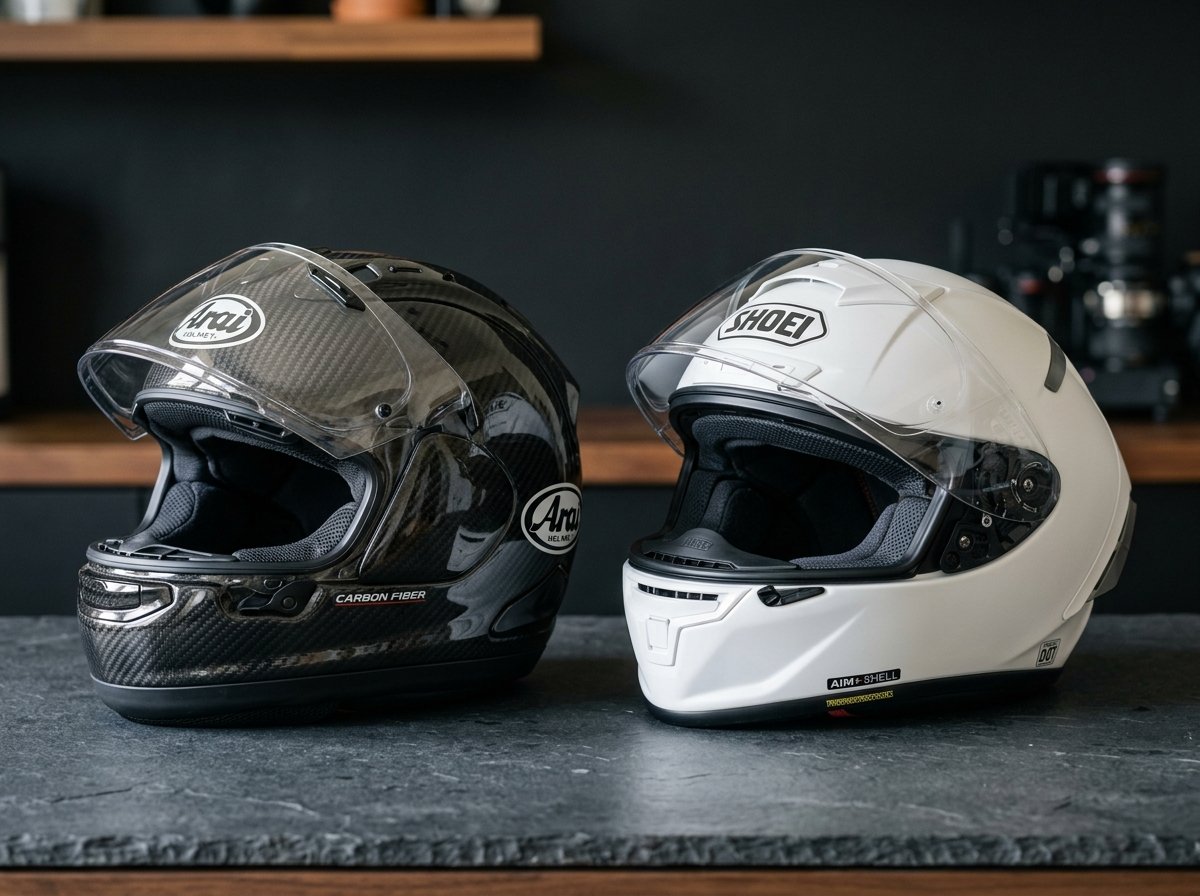
Helmet buyers rarely judge protection by lab theory alone. Real market feedback shows a different pattern. Riders praise helmets that feel light, comfortable, quiet, stable, and well built. They complain about products that feel heavy, noisy, hot, painful after one hour, or cheap in long-term use. That matters because shell material affects more than impact behavior. It influences weight, comfort, fit tolerance, shell size perception, premium positioning, and long-ride fatigue. Carbon fiber and fiberglass both have a place in helmet development, but they serve different priorities. The better choice depends on the target price band, the rider profile, and how the full helmet system is designed around the shell.
Why Do Buyers Compare Carbon Fiber and Fiberglass So Often?
Buyers compare these two materials because both sit above entry-level shell options and both are linked to stronger safety expectations, but they create different product experiences.
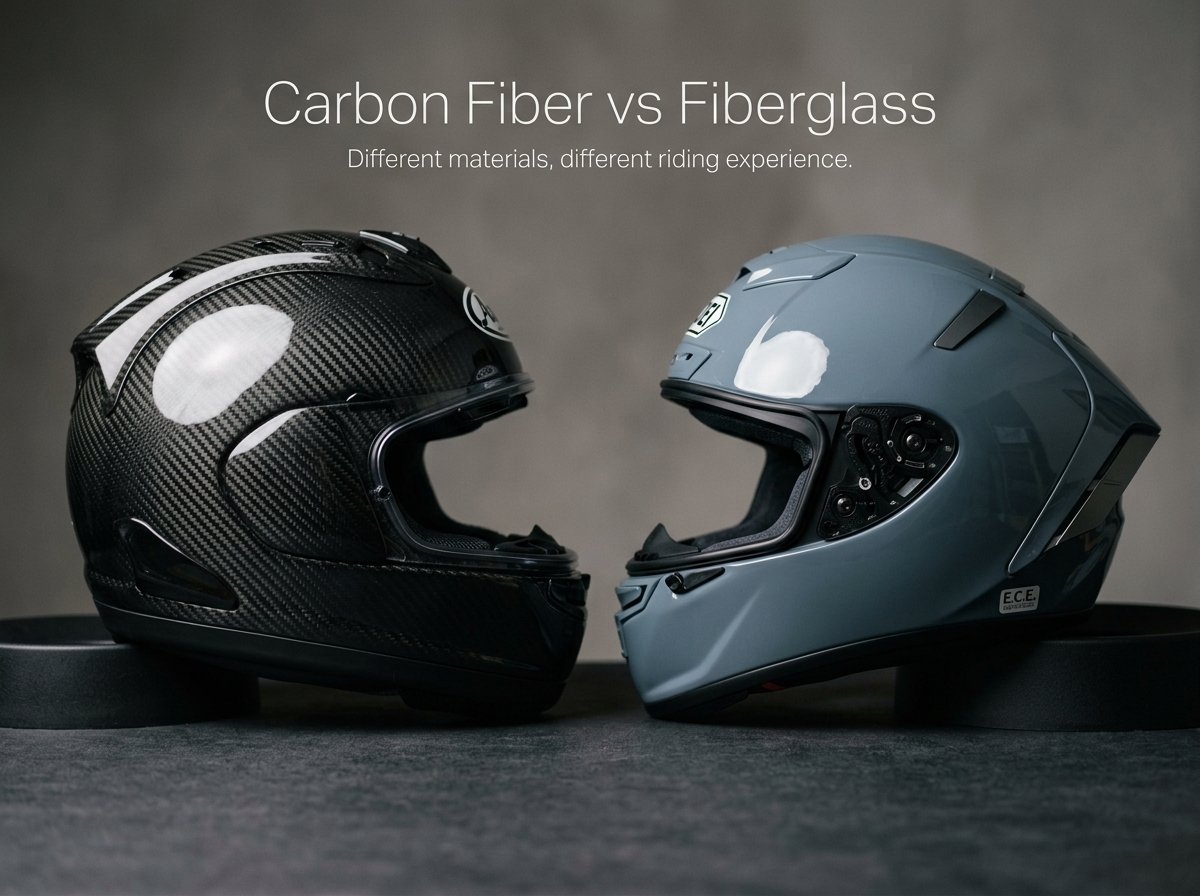
In the helmet market, shell material is one of the first things buyers notice on a product page or spec sheet. Carbon fiber signals high performance, light weight, and premium value. Fiberglass signals solid construction, dependable protection, and a more accessible upgrade from basic plastic shells. This is why the comparison appears so often in premium street, touring, sport-touring, and modular segments.
The interest is not only technical. It is also emotional and commercial. Riders often connect carbon fiber with advanced engineering and motorsport styling. Fiberglass, by contrast, is often seen as proven, practical, and more cost-efficient. The market insights reflect this clearly. Positive feedback often centers on helmets that are quiet, light, comfortable, and stable at speed. Negative feedback usually targets weight, pressure points, noise, poor visor durability, fogging, and worn-out liners. Material choice does not solve every one of these issues, but it strongly affects how easily the product team can solve them.
Why the comparison matters in commercial development
| Buyer concern | Why shell material matters |
|---|---|
| Protection confidence | Material affects shell behavior and product perception |
| Weight and fatigue | Lighter shells improve long-ride comfort |
| Price positioning | Material choice shapes retail tier and margin structure |
| Build image | Premium materials support stronger brand storytelling |
| Product line strategy | Different materials fit different target segments |
The real comparison is not just carbon fiber against fiberglass. It is premium lightness against broader value balance.
Carbon Fiber vs Fiberglass Helmets: Performance, Weight, and Cost Comparison for Buyers?
Carbon fiber usually wins on weight and premium positioning, while fiberglass often offers a stronger cost-to-performance balance for a wider range of helmet programs.
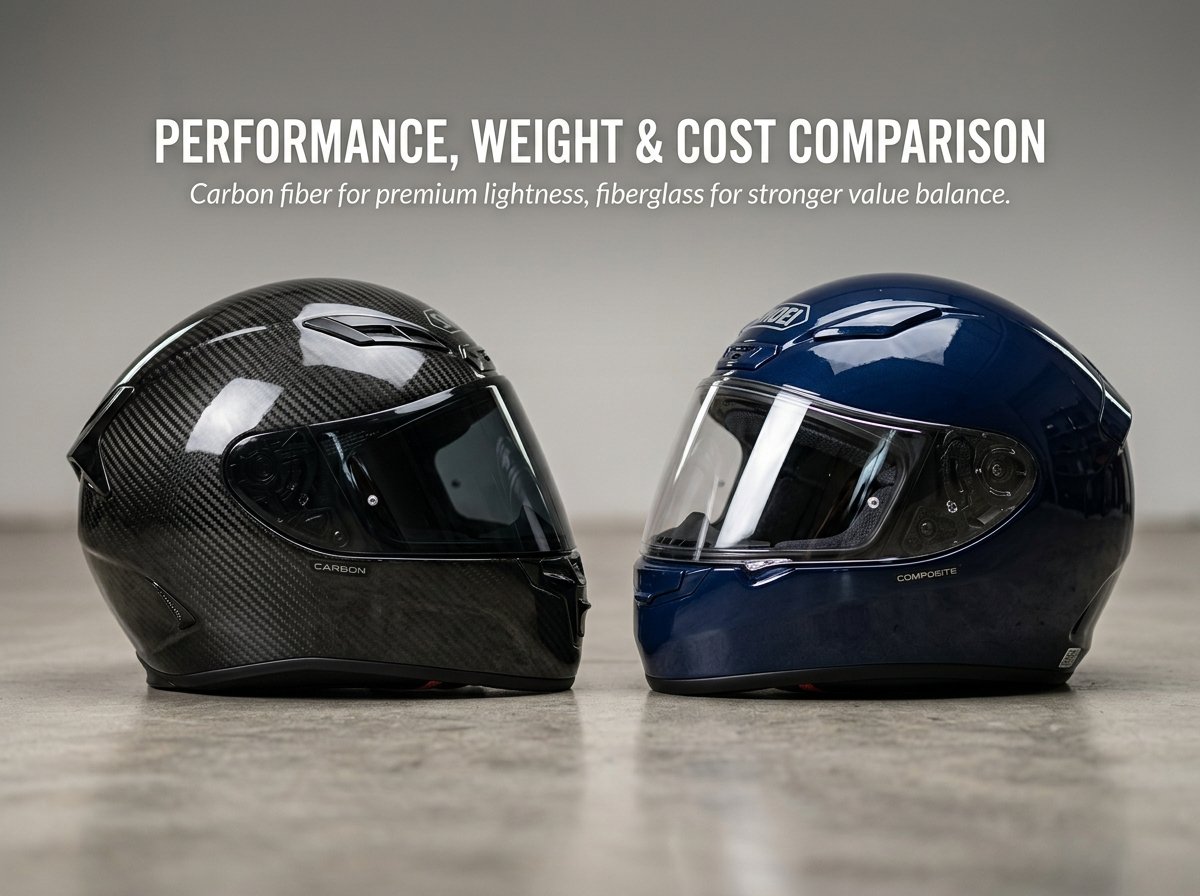
Carbon fiber is known for high stiffness and low weight. That makes it attractive in products where rider fatigue, speed stability, and shell compactness matter. Many positive user comments across the helmet market praise helmets for being so light and comfortable that they are easy to forget during long use. That kind of response is powerful in premium segments.
Fiberglass, however, remains highly competitive because it can deliver a strong protective shell with dependable durability and lower manufacturing cost. This makes it easier to build a well-rounded helmet where budget can also support other important areas like better liners, more fit options, stronger visor mechanisms, and better packaging.
Material comparison at a glance
| Factor | Carbon Fiber | Fiberglass |
|---|---|---|
| Weight | Lower | Moderate |
| Premium image | Very strong | Strong but less exclusive |
| Material cost | Higher | Lower |
| Process complexity | Higher | Moderate |
| Broader market reach | Narrower | Wider |
| Best fit for premium tiers | Excellent | Good |
| Value in mid-range lines | Harder to justify | Very strong |
This matters because riders do not buy shell material in isolation. A lighter carbon helmet can lose market trust if the cheek pads are too aggressive, if the visor scratches easily, or if the wind noise is painful at highway speed. A fiberglass helmet can win strong reviews if it balances comfort, fit, ventilation, and durability well. In real product planning, the best shell is the one that supports the most complete rider experience at the target price.
How Material Choice Impacts Helmet Safety and Durability?
Material choice impacts safety and durability by shaping shell stiffness, structural integrity, long-term wear resistance, and how well the helmet supports consistent performance over time.
Helmet safety comes from a system, not a shell alone. The shell, EPS liner, fit profile, retention system, visor area design, and manufacturing consistency all affect the final result. Carbon fiber can support a strong, rigid shell structure, which helps create a high-end protective platform. Fiberglass also performs well in quality helmet designs and remains widely respected because it offers reliable structural behavior and stable manufacturing results.
Durability matters just as much. Market complaints show that riders quickly lose trust when helmets feel flimsy, when straps fall apart, when padding loses tension, when visor screws loosen, or when surface parts age badly. These problems may not come directly from shell material, but shell choice affects the overall budget, process control, and product expectations. In a high-cost carbon fiber helmet, any weakness in mechanisms or trim parts feels worse because the buyer expects excellence. In a fiberglass helmet, durability still matters deeply, but buyers often judge the product by overall value rather than material prestige alone.
Safety and durability are shaped by the full system
| Engineering area | Carbon Fiber impact | Fiberglass impact |
|---|---|---|
| Shell stiffness | Very strong | Strong |
| Weight-related fatigue | Better control | Good but heavier |
| Cost room for supporting components | Tighter | More flexible |
| Perceived long-term quality | Very high expectation | High but more value-driven |
| Risk if poorly executed | High disappointment | Value disappointment |
For manufacturers, this means material choice should follow program goals. If the project targets a premium halo product, carbon fiber may be the right tool. If the goal is stable quality across more volume and stronger cost efficiency, fiberglass often becomes the smarter base.
Which Material Feels Better in Real Riding Conditions?
Carbon fiber often feels better in long rides because of lower weight, but fiberglass can feel just as good or better when the full helmet has superior fit, quieter aerodynamics, and better internal comfort tuning.
Real riding comfort is where many helmet projects succeed or fail. The market insights are consistent. Riders complain about helmets that are too heavy, too noisy, too hot, too tight at the temples, painful on the forehead, or unstable above certain speeds. They praise helmets that are quiet, comfortable, light, well ventilated, and easy to wear all day.
Carbon fiber helps immediately on the weight side. A lighter shell reduces neck fatigue and improves the first try-on impression. This is especially useful in touring, sport-touring, and modular models, where the structure itself can become heavy. But comfort is never just about grams. A heavier fiberglass shell with better head-shape matching, better pressure distribution, better neck roll sealing, and better visor aerodynamics can outperform a lighter carbon helmet in actual customer satisfaction.
What riders feel first
| Rider feeling | What usually causes it |
|---|---|
| “Very light” | Lower shell weight and better balance |
| “Very quiet” | Good aero control, neck roll seal, visor sealing |
| “Pain after one hour” | Wrong shell shape, poor liner density, bad pressure distribution |
| “Stable at speed” | Balanced shell design and controlled airflow |
| “Feels premium” | Material, finishing, comfort, and detail execution together |
This is why material should never be selected alone. In product development, the rider feels the whole helmet, not the shell spec line.
Which Helmet Material Is Best for Different Market Segments?
Carbon fiber is best for premium, image-driven, and weight-sensitive segments, while fiberglass is often best for upper-mid and broad premium ranges where value balance matters most.
Different markets expect different things from a helmet. In high-end street and sport-touring lines, buyers often respond strongly to lower weight, cleaner shell size, and premium material storytelling. In these segments, carbon fiber fits naturally because the price expectation is already higher and buyers are looking for obvious product advantages.
In broader segments, fiberglass often makes more sense. It allows the product team to keep a strong shell story while leaving room for other features that riders notice right away, such as more comfortable liners, anti-fog visor systems, better cheek pad options, quieter ventilation layouts, and stronger accessory packages.
Material fit by segment
| Segment | Better fit | Reason |
|---|---|---|
| Premium racing / halo street | Carbon Fiber | Lowest weight and strongest prestige value |
| Premium touring | Carbon Fiber or Fiberglass | Depends on weight target and feature package |
| Modular premium value | Fiberglass often stronger | Better cost room for mechanisms and comfort tuning |
| Mid-to-upper street | Fiberglass | Strong value and broader market fit |
| Volume-driven premium entry | Fiberglass | Easier to balance price and performance |
The insights support this approach. Many strong positive reviews praise helmets for being light, comfortable, quiet, and worth the money. Many negative reviews attack helmets for not matching their price through real comfort, durability, or fit. That is why the best material depends on where the product needs to win.
Does Carbon Fiber Always Mean Better Protection?
No. Carbon fiber does not automatically mean better protection. Better protection depends on the total helmet design, certification target, energy management, fit accuracy, and manufacturing consistency.
This is one of the most important points for buyers and product teams. Carbon fiber sounds advanced, but a carbon shell alone is not a guarantee of a safer helmet. A well-engineered fiberglass helmet with strong EPS tuning, excellent fit, and stable production quality can deliver excellent protection and a better real-world ownership experience than a poorly executed carbon model.
The reason is simple. Impact performance depends on controlled energy management. Long-term trust depends on durability. Market approval depends on comfort, noise control, visor reliability, liner life, and quality consistency. If any of those elements fail, the shell material cannot rescue the product.
Better protection comes from balanced engineering
| Area | Why it matters more than material alone |
|---|---|
| EPS design | Controls energy absorption |
| Fit accuracy | Keeps the helmet positioned correctly |
| Retention system | Maintains security in use |
| Production tolerance | Prevents inconsistency from sample to bulk |
| Long-term component durability | Protects product trust over time |
For commercial development, the stronger message is not “carbon is always safer.” The stronger message is that material choice should match the intended product role and be backed by total engineering discipline.
What Should Buyers and Product Teams Prioritize First?
The first priorities should be full-system safety, consistent comfort, weight balance, long-term durability, and price-to-experience fit.
The market feedback gives a very clear roadmap. Riders repeatedly reward helmets that feel quiet, comfortable, lightweight, well ventilated, and well built. They repeatedly reject helmets that are heavy, loud, painful, fog-prone, poorly sealed, or weak in trim durability. These reactions matter more than raw material prestige.
For that reason, shell choice should be treated as one major decision inside a larger product framework.
Best priority order for helmet programs
| Priority | Why it matters |
|---|---|
| Safety system engineering | Protection starts with the full structure |
| Fit and comfort | Poor fit destroys product acceptance fast |
| Weight and balance | Strongly affects fatigue and premium feel |
| Noise and ventilation | Major source of praise or complaint |
| Durability of parts and trim | Protects long-term reviews and returns |
| Material-position match | Keeps product promise aligned with target price |
When the target buyer expects a flagship product with visible premium value, carbon fiber can be the better choice. When the target market wants strong protection, reliable quality, and better cost control across volume, fiberglass often offers the stronger overall business case.
Conclusion
Carbon fiber and fiberglass helmets can both deliver strong protection, but they do so through different strengths. Carbon fiber stands out in lower weight, premium image, and high-end product positioning. It is especially effective in segments where rider fatigue, compact shell appearance, and advanced material storytelling matter. Fiberglass remains highly competitive because it offers reliable structural performance, more accessible cost, and greater flexibility to build a well-balanced helmet around real rider needs.
That balance is important because market feedback is consistent across many platforms. Riders do not reward a helmet only because the shell sounds advanced. They reward helmets that stay comfortable after long wear, control noise at speed, resist fogging in daily use, and maintain a solid feel over time. They criticize helmets that feel heavy, painful, loud, flimsy, or disappointing for the price. Those reactions show that material choice matters most when it supports the complete riding experience.
For product development and commercial planning, the strongest approach is to match shell material to the correct market role. Carbon fiber works best where premium differentiation is the goal and where the rest of the helmet package can fully support the price. Fiberglass works best where protection, durability, and cost balance need to stay strong across broader product lines. The better material is not the one with the stronger headline. It is the one that helps create the most convincing helmet for the intended rider, price level, and use scenario.