
Carbon fiber full face helmets are redefining rider protection by combining lightweight construction, high strength, advanced engineering, and premium comfort. Compared with traditional helmet materials, carbon fiber helps manufacturers create helmets that provide excellent impact performance while reducing weight and improving the overall riding experience.
The development of motorcycle helmets is moving toward higher performance, better comfort, and smarter material applications. Carbon fiber full face helmets represent one of the most advanced directions in modern helmet manufacturing. For brands, distributors, and retailers, understanding carbon fiber technology helps identify premium product opportunities and select manufacturing partners with strong research, development, and production capabilities.
Why are carbon fiber full face helmets becoming more popular?
Riders are increasingly looking for helmets that provide maximum protection without creating unnecessary weight. Carbon fiber full face helmets meet this demand by offering a strong yet lightweight structure.
Traditional helmet materials such as ABS and polycarbonate have been widely used because they provide reliable protection and efficient production. However, premium riders often expect additional benefits, including:
| Customer Demand | Carbon Fiber Advantage |
|---|---|
| Better Protection | High-strength composite structure |
| Lower Weight | Reduced helmet fatigue |
| Premium Design | Advanced appearance and positioning |
| Long-Term Comfort | Less pressure during extended rides |
Carbon fiber is made from thin carbon strands combined with resin to create a strong composite material. Its unique structure provides excellent strength-to-weight performance, making it suitable for high-performance applications.
Full face helmets already provide extensive coverage by protecting the head, cheeks, and chin area. When combined with carbon fiber construction, these helmets can achieve a better balance between safety and comfort.
For brands developing premium motorcycle equipment, carbon fiber helmets create opportunities to target customers who value technology, performance, and advanced design.
However, producing carbon fiber helmets requires more than simply changing materials. The manufacturing process involves specialized knowledge, precise production control, and experienced engineering teams.
Factories with strong development capabilities can help brands create carbon fiber helmets that maintain consistent quality. Material selection, shell structure, molding techniques, and finishing processes must all be carefully managed to achieve reliable results.
How does carbon fiber improve motorcycle helmet protection?
Carbon fiber improves helmet performance through its unique material properties. Its high strength and stiffness allow manufacturers to design protective structures with excellent impact resistance.
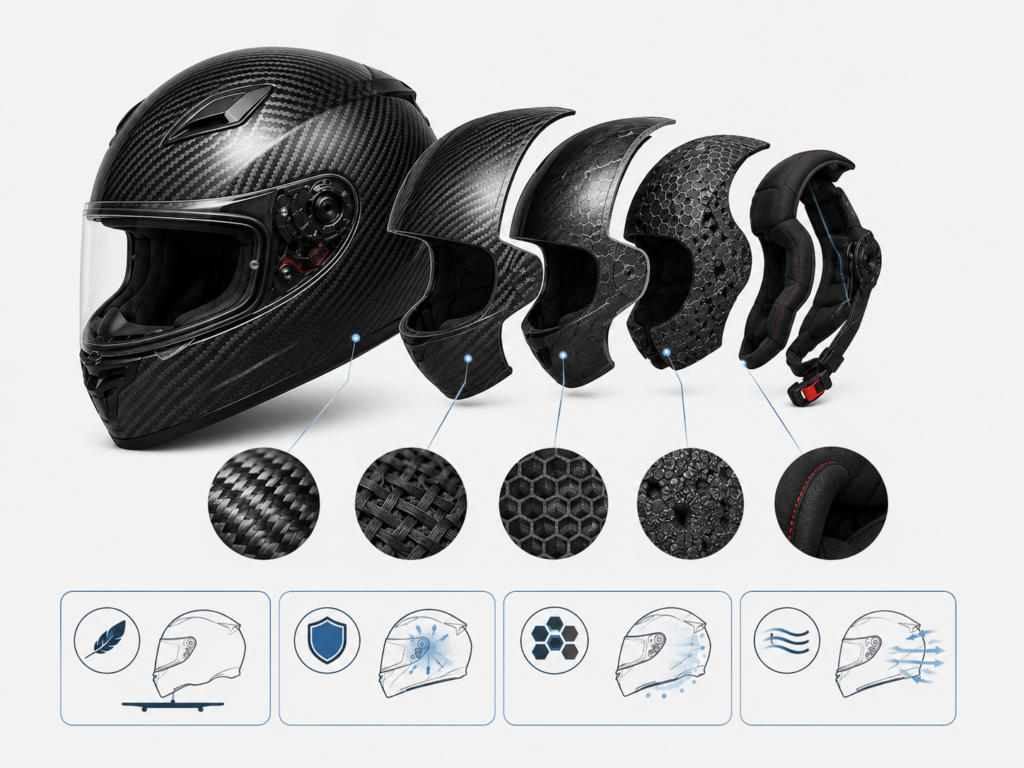
A full face helmet usually contains several layers:
| Helmet Component | Function |
|---|---|
| Carbon Fiber Shell | Provides strong external protection |
| EPS Liner | Absorbs impact energy |
| Inner Padding | Improves comfort and fit |
| Retention System | Keeps helmet securely positioned |
The carbon fiber shell helps distribute impact forces across the helmet surface. This reduces concentrated pressure in specific areas and supports overall protection performance.
The EPS liner remains an essential safety component. Carbon fiber does not replace energy absorption materials; instead, it works together with the inner structure to create a complete protection system.
Advanced helmet development focuses on optimizing the relationship between shell strength, EPS performance, and internal comfort.
For companies purchasing carbon fiber helmets, manufacturing experience is extremely important. Carbon fiber production requires accurate material placement, controlled resin application, and careful quality inspection.
A professional helmet factory understands how different layers work together. It can optimize shell design while ensuring that the final product meets required safety expectations.
Manufacturers with their own engineering teams can also support product improvements, including weight optimization, ventilation adjustments, and structural upgrades.
What makes carbon fiber full face helmets lighter and more comfortable?
Weight reduction is one of the biggest advantages of carbon fiber full face helmets. Riders who spend many hours on motorcycles often experience neck fatigue caused by heavier helmets.
A lighter helmet can provide:
- Reduced neck pressure
- Better comfort during long-distance riding
- Easier daily use
- Improved overall riding experience
Carbon fiber allows manufacturers to maintain strong protection while reducing unnecessary material weight.
However, creating a lightweight helmet is not simply about using less material. Engineers must carefully balance:
| Design Factor | Importance |
|---|---|
| Shell Thickness | Maintains protection strength |
| Material Arrangement | Optimizes weight distribution |
| EPS Design | Supports impact absorption |
| Interior Structure | Improves comfort |
A poorly designed lightweight helmet may reduce safety performance. Professional manufacturing experience is necessary to ensure weight reduction does not compromise protection.
For helmet brands, lightweight carbon fiber models can support premium product positioning. Customers who participate in touring, racing, or frequent riding often recognize the value of reduced weight and advanced materials.
Manufacturers with OEM and ODM capabilities can customize carbon fiber helmet designs based on different market needs. Adjustments can include shell appearance, interior materials, ventilation systems, and product accessories.
This flexibility helps brands create unique premium helmet collections while maintaining stable production quality.
How do carbon fiber helmets improve rider comfort during long rides?
Comfort is a major factor influencing helmet purchasing decisions. A technically advanced helmet must also provide a comfortable experience during real-world use.
Carbon fiber helps improve comfort mainly through weight reduction, but manufacturers also focus on other design elements.
Important comfort features include:
- Ergonomic shell shape
- Advanced ventilation systems
- Removable inner liners
- Moisture-control fabrics
- Improved noise management
Ventilation is especially important for full face helmets because their larger coverage area can increase heat buildup. Manufacturers design airflow channels, intake vents, and exhaust systems to improve air circulation.
The internal padding system also affects comfort. High-quality materials provide better contact with the rider’s head while maintaining support.
For brands, comfort features can create stronger customer loyalty. Riders often compare helmets based on daily experience, not only technical specifications.
Experienced manufacturers understand that comfort is the result of complete product engineering. Shell design, EPS structure, padding materials, and ventilation must work together.
Factories with research and development capabilities can help improve these areas through prototype testing and design adjustments. This creates helmets that offer both advanced protection and better user experience.
Why is manufacturing expertise important for carbon fiber helmet production?
Carbon fiber helmet production requires advanced manufacturing knowledge. Unlike standard plastic helmets, carbon fiber products involve more complex processes and stricter quality requirements.
Important production steps include:
| Production Stage | Key Control Point |
|---|---|
| Material Preparation | Carbon fiber quality and consistency |
| Layer Arrangement | Correct fiber placement |
| Molding Process | Structural accuracy |
| Surface Finishing | Appearance quality |
| Final Inspection | Product reliability |
Small production differences can affect helmet performance and appearance. This makes manufacturing experience especially important.
A reliable carbon fiber helmet manufacturer should have:
- Experienced engineers
- Professional production equipment
- Strict quality management
- Material control systems
- Product testing experience
For brands, working with an experienced factory reduces development risks. A capable manufacturer can provide technical recommendations, improve designs, and maintain stable quality during large production orders.
OEM and ODM support is also valuable for carbon fiber projects. Brands may require unique shell designs, customized graphics, special interior systems, or premium packaging solutions.
Manufacturers with complete development capabilities can support these requirements more effectively.
How can brands choose the right carbon fiber helmet manufacturer?
Selecting a carbon fiber helmet manufacturer requires careful evaluation of technical ability, production experience, and quality management.
Important factors include:
| Evaluation Area | Key Consideration |
|---|---|
| Carbon Fiber Experience | Ability to handle composite materials |
| Certification Knowledge | Understanding market requirements |
| Production Control | Maintaining consistent quality |
| Design Capability | Supporting customized products |
| Communication | Improving project efficiency |
A reliable manufacturer should provide clear information about materials, production processes, testing procedures, and delivery schedules.
Companies should also evaluate whether the factory can support future product development. Premium helmet markets continue to change, and brands need partners who can adapt to new customer expectations.
Manufacturers with factory ownership, professional R&D teams, and OEM/ODM experience can provide stronger long-term support.
They can help transform product concepts into finished carbon fiber full face helmets with reliable safety performance, premium appearance, and consistent quality.
What is the future of carbon fiber full face helmets?
Carbon fiber full face helmets will continue to influence the future direction of premium motorcycle protection. Advances in materials, manufacturing technology, and product design will create helmets that are lighter, stronger, and more comfortable.
Future development may focus on:
- Improved composite materials
- More efficient production methods
- Better impact management systems
- Enhanced comfort features
- More personalized designs
As riders continue to demand higher performance, carbon fiber helmets will remain an important category for premium motorcycle equipment brands.
Companies that work with experienced manufacturers will have better opportunities to develop innovative products and meet changing market expectations.
Conclusion
Carbon fiber full face helmets are redefining rider protection through lightweight strength, advanced design, and improved comfort. Choosing a skilled manufacturing partner helps brands create premium helmets that deliver safety, performance, and long-term market value.