
Carbon motorcycle helmets combine advanced composite materials, lightweight construction, and high-performance protection. For bulk buyers, selecting the right carbon helmet requires careful evaluation of shell materials, safety certifications, comfort features, production capability, and customization options.
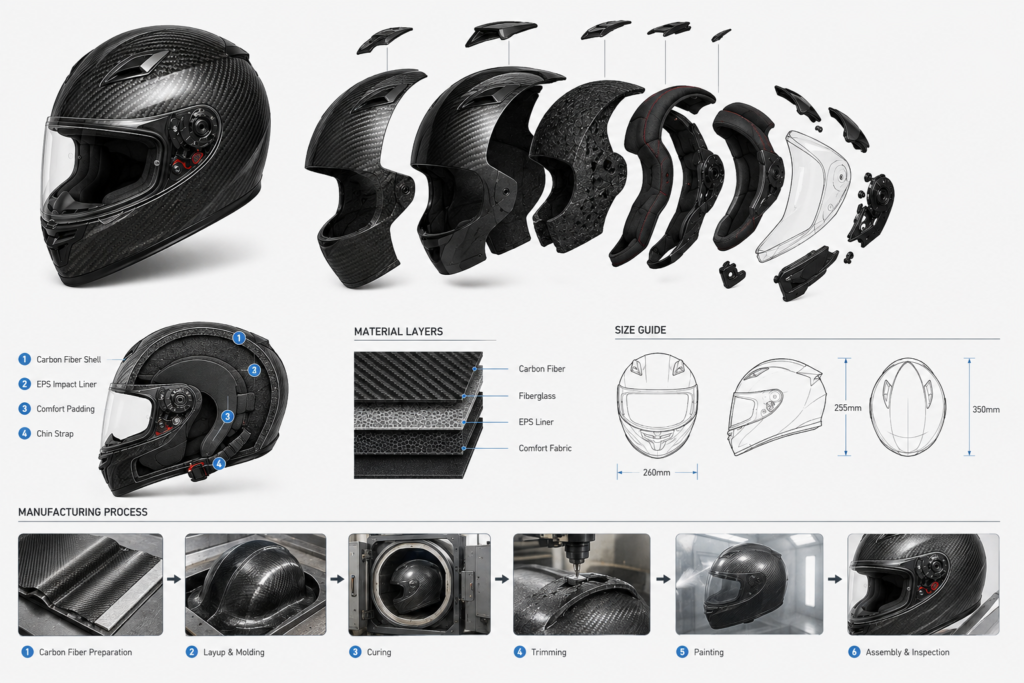
Carbon motorcycle helmets are becoming increasingly popular among premium riders, professional users, and brands looking for high-value protective products. Compared with traditional helmet materials, carbon fiber offers excellent strength-to-weight performance and supports advanced helmet designs. For companies purchasing helmets in large quantities, understanding key specifications helps reduce sourcing risks and ensures better product quality, market acceptance, and long-term supply stability.
What are the key specifications of a carbon motorcycle helmet?
A carbon motorcycle helmet is defined by more than its carbon fiber shell. The complete specification includes materials, safety structure, comfort systems, weight, ventilation, and additional features.
Important specifications include:
| Specification | Details to Evaluate |
|---|---|
| Shell Material | Carbon fiber type, layers, and construction method |
| Safety Standard | DOT, ECE, CE, or other required certifications |
| Weight | Overall helmet weight and balance |
| EPS Structure | Density and impact absorption design |
| Interior System | Padding materials and fitting performance |
| Ventilation | Airflow design and heat management |
| Visor System | Optical quality, anti-fog, and durability |
The outer carbon fiber shell is one of the most important features. Carbon fiber provides high strength while maintaining lower weight compared with many traditional materials. However, the actual performance depends on fiber quality, production techniques, and structural design.
The EPS liner is another critical specification. It absorbs impact energy and works together with the carbon shell to improve protection performance. Different helmet designs may use single-density or multi-density EPS structures depending on safety requirements.
For bulk buyers, specifications should always be reviewed as a complete system rather than individual components. A high-quality shell cannot provide maximum value if other parts, such as the retention system or inner padding, do not meet expectations.
Professional helmet manufacturers provide detailed specifications to help buyers understand product performance. Factories with engineering teams can recommend suitable configurations based on target markets, customer groups, and required certifications.
How does carbon fiber shell construction affect helmet quality?
Carbon fiber shell construction is a major factor that determines the performance and value of a motorcycle helmet. Different manufacturing methods and material combinations can create different levels of strength, weight, and appearance.
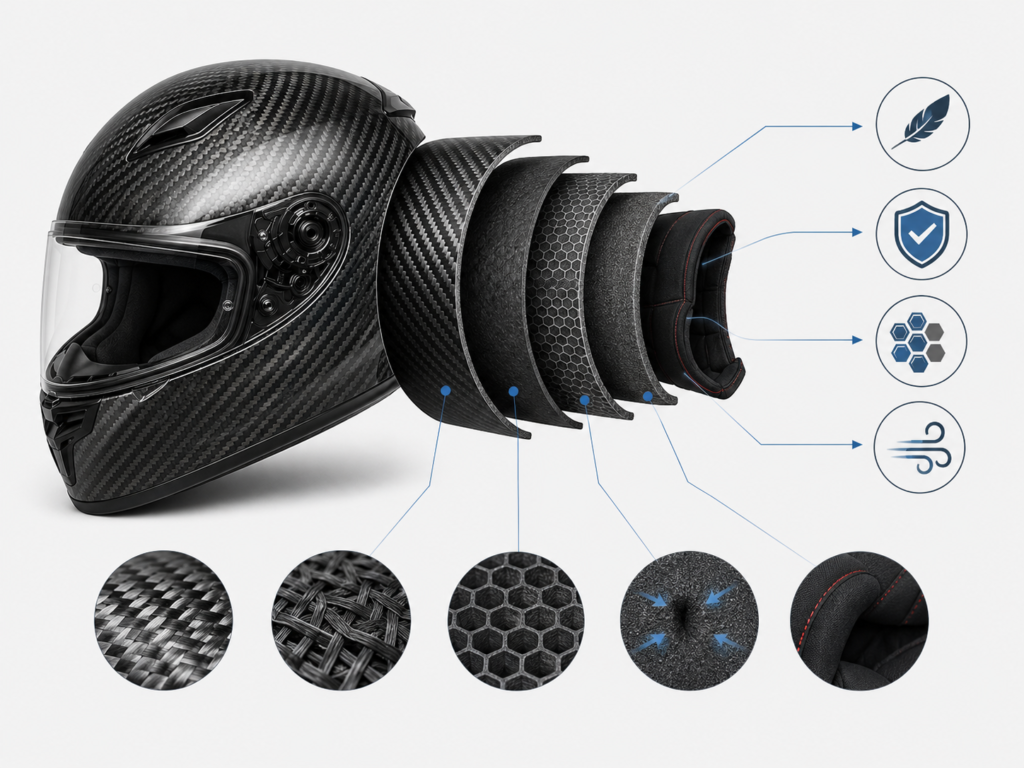
Common carbon fiber construction approaches include:
| Construction Type | Features |
|---|---|
| Full Carbon Shell | Maximum carbon fiber coverage and premium positioning |
| Carbon Composite Shell | Combines carbon fiber with other reinforcement materials |
| Multi-Layer Carbon Structure | Improves strength and impact management |
A well-designed carbon shell uses carefully arranged fiber layers to improve structural performance. The direction and placement of carbon fibers influence how forces are managed during impact.
For bulk buyers, it is important to understand that not all carbon helmets have the same quality level. Some products may use carbon fiber only as a surface layer for appearance, while others use carbon fiber as a key structural material.
Professional manufacturers control:
- Carbon fiber material quality
- Layer arrangement
- Resin application
- Molding temperature
- Surface finishing
These production details directly affect the final helmet performance.
For brands developing premium motorcycle products, choosing a factory with carbon fiber production experience is essential. Experienced manufacturers understand how to balance appearance, strength, weight, and production consistency.
Factories with their own production facilities and technical teams can provide better control over carbon fiber projects. They can support product improvements, customized designs, and stable large-volume production.
Which safety certifications should bulk buyers check?
Safety certification is one of the most important considerations when purchasing carbon motorcycle helmets in bulk. Certifications confirm that helmets meet specific safety requirements for different markets.
Common standards include:
| Certification | Main Market |
|---|---|
| DOT | United States |
| ECE | Europe and many international regions |
| CE | Certain protective equipment markets |
Certification requirements may include testing for:
- Impact resistance
- Retention system strength
- Field of vision
- Shell performance
- Durability
For bulk buyers, certification is not only about receiving documents. The actual production helmets must match the certified design.
Common sourcing risks include:
- Certification documents that do not match products
- Changes between sample and mass production
- Incorrect labels or packaging information
- Uncontrolled material substitutions
A reliable manufacturer maintains strict production control to prevent these issues.
Professional factories understand international compliance requirements and can support buyers with documentation, testing preparation, and production management.
For companies entering new markets, working with a manufacturer experienced in global certifications reduces risks and improves product launch efficiency.
How should bulk buyers evaluate carbon helmet weight and comfort?
Weight is one of the main reasons riders choose carbon motorcycle helmets. A lighter helmet can improve comfort, especially during long-distance riding, touring, or daily motorcycle use.
Important comfort specifications include:
| Feature | Customer Benefit |
|---|---|
| Lightweight Shell | Reduces neck pressure |
| Balanced Weight Distribution | Improves wearing comfort |
| Advanced Padding | Creates better fit |
| Ventilation System | Reduces heat buildup |
A premium carbon helmet should not only be lightweight but also comfortable and stable.
The internal padding system plays an important role in user experience. High-quality liners help create a secure fit while reducing pressure points.
Ventilation is another key specification. Full face helmets provide excellent coverage but require effective airflow management. Manufacturers use intake vents, internal channels, and exhaust openings to improve cooling performance.
For bulk buyers, comfort features directly affect customer satisfaction and market reviews. A helmet with excellent protection but poor comfort may receive negative feedback from end users.
Experienced helmet manufacturers understand the relationship between shell design, EPS structure, padding, and ventilation. They can optimize these elements together to create better-performing products.
OEM and ODM capabilities allow brands to customize comfort features based on customer requirements, including liner materials, padding thickness, and ventilation design.
What customization options are available for carbon motorcycle helmets?
Customization is an important factor for brands purchasing carbon motorcycle helmets. Unique product designs help companies create stronger market positioning and customer recognition.
Common customization options include:
| Custom Area | Available Options |
|---|---|
| Shell Design | Shapes, finishes, and graphics |
| Branding | Logo placement and printing |
| Interior | Padding materials and colors |
| Visor | Lens options and coatings |
| Packaging | Retail boxes and accessories |
For new brands, customized versions of existing models can reduce development time and allow faster market testing.
For established brands, deeper customization can create exclusive helmet collections with unique features.
The customization process usually includes:
- Product requirement confirmation
- Design development
- Prototype creation
- Sample evaluation
- Production approval
- Bulk manufacturing
A manufacturer with strong OEM and ODM experience can make this process more efficient. Professional engineering teams can provide suggestions on materials, structures, and production methods.
Factories with independent design and manufacturing capabilities can also respond faster to changes. This creates better cooperation efficiency and reduces communication problems.
How can bulk buyers choose a reliable carbon helmet manufacturer?
Selecting a carbon motorcycle helmet manufacturer requires evaluating technical ability, production stability, and long-term cooperation potential.
Important evaluation factors include:
| Evaluation Area | What to Check |
|---|---|
| Factory Capability | Production equipment and manufacturing experience |
| Material Knowledge | Carbon fiber handling ability |
| Quality Control | Inspection procedures and consistency |
| Development Support | OEM and ODM capabilities |
| Delivery Ability | Stable production scheduling |
Bulk buyers should look beyond product price. A low-cost supplier may create additional expenses through quality problems, delays, or inconsistent production.
A reliable manufacturer should provide clear specifications, professional communication, and realistic delivery plans.
Factories with their own production lines, experienced engineers, and international market experience can provide stronger support for bulk orders.
They can help with product selection, customization, certification preparation, and production management.
For companies building long-term helmet product lines, a capable manufacturing partner provides more than production. It provides technical support and supply stability that help brands grow.
Conclusion
Carbon motorcycle helmet specifications involve materials, safety standards, comfort features, and manufacturing quality. Bulk buyers can reduce risks and build stronger products by choosing experienced manufacturers with advanced production and customization capabilities.