
Helmet outer shells are one of the most important structural components that influence protection, durability, weight, and product positioning. The three most common materials used in helmet outer shells are ABS, polycarbonate, and fiberglass composite. Each material offers different advantages depending on safety requirements, riding conditions, target customers, and market expectations.
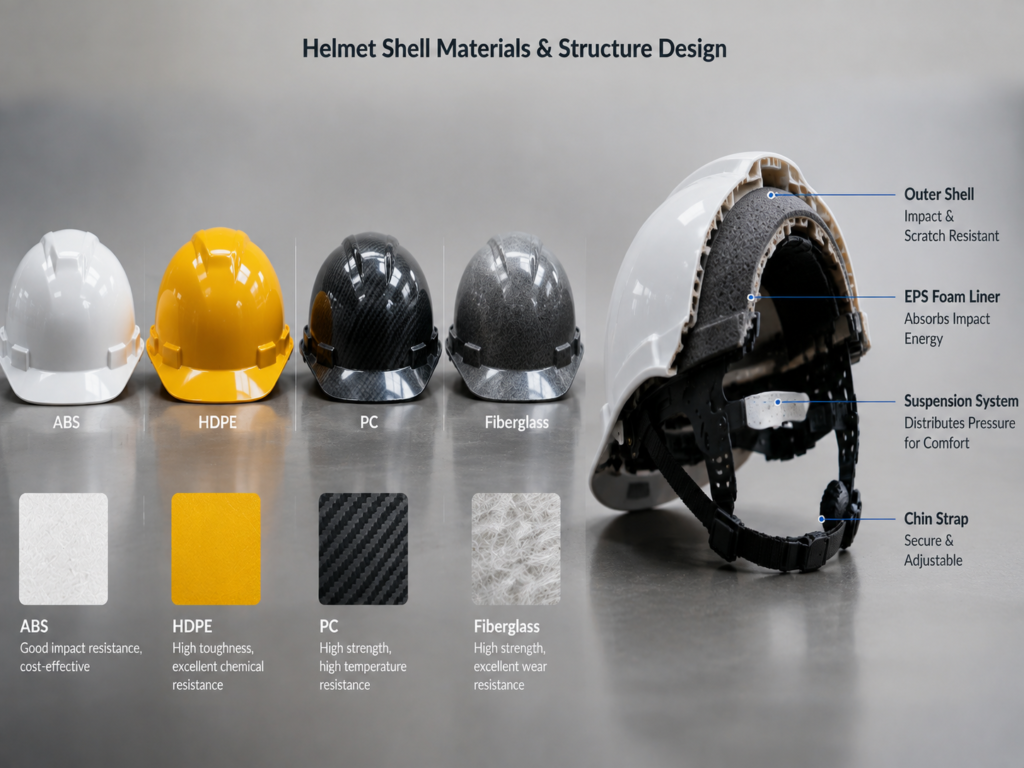
The outer shell is the first protective layer of a helmet. It helps resist external impact, protects the inner energy-absorbing layer, and contributes to the overall appearance of the product. For motorcycle helmets, bicycle helmets, and other protective headgear, selecting the right shell material is an important decision that affects product performance, customer satisfaction, and brand value.
Why is the outer shell material important for helmet performance?
A helmet outer shell does more than create the external shape. It works together with the inner EPS liner and other components to create a complete protection system.
The outer shell helps with:
- Spreading impact forces across a wider area
- Protecting the inner foam structure from damage
- Improving helmet durability during daily use
- Supporting different design styles and finishes
- Creating different product levels for different markets
When selecting helmet products, material choice directly affects several important factors:
| Performance Factor | Material Impact |
|---|---|
| Safety Performance | Determines strength and impact resistance |
| Helmet Weight | Influences riding comfort |
| Production Cost | Affects product pricing strategy |
| Appearance Quality | Supports design and branding |
| Durability | Influences product lifespan |
Different markets have different expectations. Entry-level customers may focus on affordability and basic protection, while premium users often look for lightweight construction, advanced materials, and improved comfort.
For companies developing helmet product lines, understanding shell materials helps create better purchasing decisions. The wrong material choice can lead to problems such as excessive weight, higher production costs, poor market positioning, or customer complaints.
Professional helmet manufacturers usually evaluate shell materials based on the complete product design. Material selection must match the helmet structure, certification requirements, production process, and intended usage environment.
Manufacturers with strong research and development capabilities can recommend suitable materials based on customer needs. This helps brands balance safety, cost, appearance, and production efficiency.
Is ABS plastic a good material for helmet outer shells?
ABS is one of the most widely used materials for helmet outer shells, especially for motorcycle helmets, recreational helmets, and cost-effective protective products. It is popular because it provides a good balance between strength, durability, and production efficiency.
ABS, which stands for Acrylonitrile Butadiene Styrene, is an engineering plastic known for its impact resistance and stable performance. It can be easily molded into different shapes, making it suitable for large-scale helmet production.
Key advantages of ABS shells include:
| Advantage | Description |
|---|---|
| Good Impact Resistance | Provides reliable everyday protection |
| Cost Efficiency | Suitable for competitive price ranges |
| Design Flexibility | Supports various shapes and styles |
| Surface Quality | Allows different colors and finishes |
ABS helmets are commonly used for urban riding, commuting, entry-level motorcycle helmets, and general protective applications. They provide dependable protection while maintaining reasonable production costs.
For brands entering a new market, ABS helmets are often a practical choice because they allow competitive pricing without sacrificing basic safety requirements. They are also suitable for market testing and product expansion.
However, ABS shells are generally heavier than premium composite materials. For customers who prioritize lightweight performance or long-distance riding comfort, other materials may provide better advantages.
A professional helmet factory can improve ABS helmet performance through better mold design, optimized shell thickness, and advanced production control. The quality of the final helmet depends not only on the raw material but also on manufacturing experience.
Factories with their own production facilities and quality inspection systems can maintain better consistency in shell thickness, surface finish, and overall structure. This helps reduce production risks and ensures that large-volume orders match approved samples.
How does polycarbonate improve helmet shell performance?
Polycarbonate is another common helmet shell material known for its excellent strength, lightweight properties, and impact resistance. It is widely used in motorcycle helmets, bicycle helmets, and premium protective equipment.
Polycarbonate is a thermoplastic material with strong mechanical performance. Compared with many traditional plastics, it provides better impact resistance while allowing manufacturers to create thinner and lighter shell structures.
Important features of polycarbonate shells include:
| Feature | Benefit |
|---|---|
| High Impact Resistance | Helps improve protection performance |
| Lightweight Structure | Creates better wearing comfort |
| Good Transparency Options | Supports visor and design applications |
| Processing Flexibility | Allows complex shapes |
For riders who spend long hours wearing helmets, weight reduction is an important factor. A lighter helmet can reduce neck fatigue and improve the overall user experience.
Polycarbonate also supports modern helmet designs because it can be molded into aerodynamic shapes and detailed structures. This makes it suitable for brands that want to combine safety, comfort, and attractive appearance.
For purchasing teams, material consistency is a key concern. Even high-quality polycarbonate requires strict manufacturing control. Problems with material mixing, molding temperature, or production conditions can affect the final product.
Experienced helmet manufacturers understand how to control these production factors. They use stable material sources, professional molding processes, and inspection systems to maintain consistent quality.
For companies requiring customized helmet designs, manufacturers with OEM and ODM experience can provide additional support. They can help adjust shell designs, develop new appearances, and combine material advantages with specific market needs.
Fiberglass composite is commonly used in higher-performance helmets where lightweight construction and advanced protection are important. It is especially popular in premium motorcycle helmets, racing helmets, and professional-level protective products.
Fiberglass composite combines glass fibers with resin materials to create a strong and lightweight structure. Compared with traditional plastic shells, fiberglass offers improved strength-to-weight performance.
Main benefits include:
| Benefit | Description |
|---|---|
| Lightweight Design | Reduces overall helmet weight |
| Strong Structure | Supports high-performance applications |
| Premium Positioning | Creates higher-value products |
| Design Flexibility | Allows advanced engineering solutions |
Premium customers often expect more than basic protection. They look for better comfort, improved materials, and advanced product features. Fiberglass composite helps brands create products with stronger market differentiation.
However, composite materials usually require more advanced manufacturing processes. Production may involve more complex steps, higher material costs, and stricter quality control.
This is why choosing an experienced manufacturer is especially important for composite helmet projects. The factory must understand material handling, production techniques, and inspection requirements.
Manufacturers with professional engineering teams can support product development from early design stages. They can optimize shell structures, control production quality, and ensure that the final helmet meets expected performance standards.
For brands targeting premium markets, fiberglass composite helmets can provide stronger product value. With proper manufacturing support, these helmets can combine safety performance, comfort, and attractive design.
How should companies choose the right helmet shell material?
Choosing the right shell material depends on product goals, target customers, market requirements, and budget considerations. There is no single material that is perfect for every helmet category.
A simple comparison:
| Material | Best For | Main Advantage |
|---|---|---|
| ABS | Entry-level and everyday helmets | Cost balance and durability |
| Polycarbonate | Mid-range and performance helmets | Lightweight and strong |
| Fiberglass Composite | Premium helmets | High strength-to-weight ratio |
Companies should consider:
- Required safety certifications
- Target selling price
- Customer usage environment
- Desired product weight
- Brand positioning
- Production quantity requirements
A reliable helmet manufacturer should provide professional recommendations instead of simply offering the cheapest material option. The right solution depends on balancing safety, comfort, appearance, and commercial goals.
Factories with complete manufacturing capabilities, experienced design teams, and OEM/ODM support can help companies develop helmets that match their market strategy. From material selection to final production, every detail affects product success.
Strong production experience also helps avoid common problems such as inconsistent shell quality, delayed delivery, and differences between samples and mass production.
Conclusion
ABS, polycarbonate, and fiberglass composite are three common helmet shell materials with different advantages. Selecting the right material and working with an experienced manufacturer helps create safer, more reliable, and market-ready helmet products.