Choosing the right safety helmet requires careful evaluation of protection standards, material quality, comfort, design, and supplier reliability. A suitable helmet should provide certified safety performance, consistent production quality, and the right features for the intended riding or working environment.
A helmet is more than a protective product. It represents safety responsibility, brand reputation, and customer trust. For companies sourcing helmets for motorcycles, cycling, outdoor sports, or protective equipment markets, selecting the right manufacturing partner and product specification is a key step toward long-term market success.
What safety standards should be checked before choosing a helmet?
Poor helmet quality can create serious safety risks and damage market reputation. The right certification and testing process help ensure every helmet meets required protection levels.
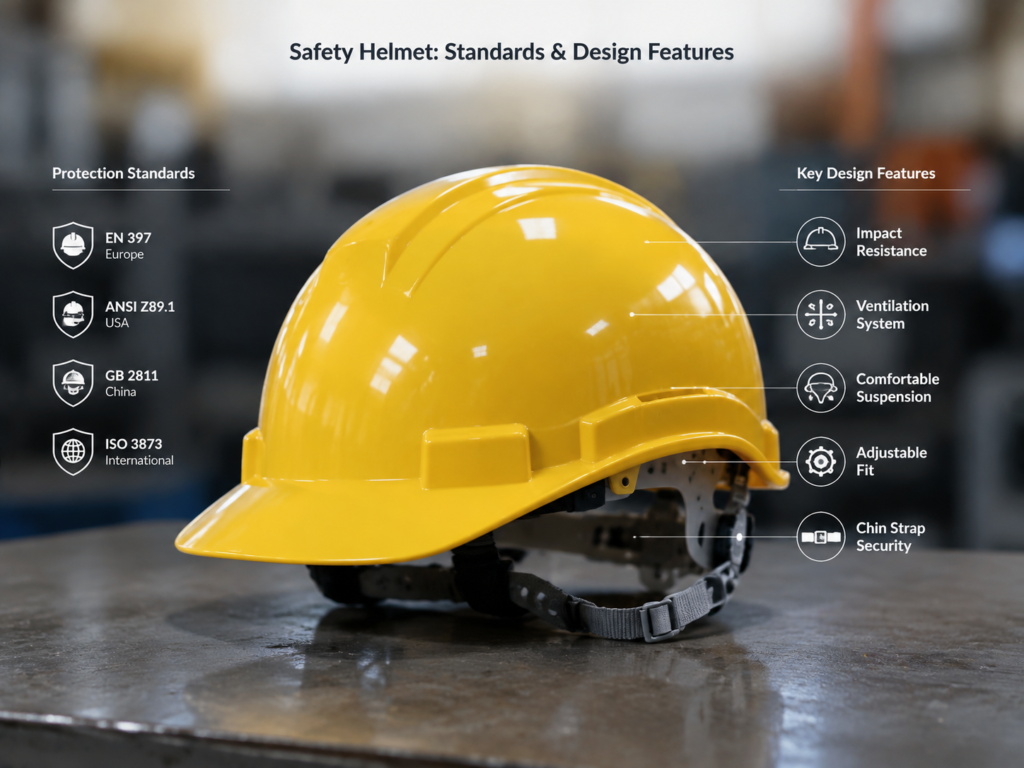
A reliable safety helmet should comply with the regulations of the target market. Common standards include DOT for the United States, ECE for many international markets, CPSC for bicycle helmets, and CE requirements for certain regions. These certifications are not simply documents. They represent testing procedures covering impact resistance, retention systems, durability, and product performance.
Before purchasing helmets, professional buyers usually review several important factors:
| Safety Factor | Key Evaluation |
|---|---|
| Certification | Valid approval for the target market |
| Impact Protection | Shell strength and energy absorption |
| Retention System | Chin strap and buckle reliability |
| Testing Process | Consistent quality inspection before shipment |
| Product Matching | Delivered products should match tested samples |
A professional helmet manufacturer should understand different market requirements and maintain strict production control. Many purchasing problems happen when certification documents do not match the actual products shipped. This creates risks during customs inspection, retail sales, and customer use.
Experienced factories focus on controlling every production stage, from raw material selection to final inspection. Advanced production management helps ensure that mass production helmets maintain the same quality as approved samples. This reduces customer complaints and protects brand reputation in competitive markets.
How do helmet materials affect safety and riding comfort?
Helmet materials directly influence protection performance, weight, durability, and user experience. Selecting the right material combination helps create products that balance safety and comfort.
Modern helmets usually combine several layers. The outer shell provides impact resistance and protects against external forces. The inner EPS foam layer absorbs impact energy and reduces the force transferred to the head. The inner padding improves comfort and helps achieve a secure fit.
Common material considerations include:
- ABS or polycarbonate shell materials for daily protection helmets
- Fiberglass composite materials for stronger performance requirements
- EPS density optimization for better impact absorption
- Comfortable removable liners for long-term use
- Anti-scratch and anti-fog lens solutions for better visibility
For brands and distributors, material selection affects both product positioning and customer satisfaction. A lightweight helmet with good ventilation can create a stronger market advantage, especially in motorcycle and cycling categories where users care about long riding comfort.
Manufacturers with their own design and research teams can help optimize helmet structures according to different market needs. Instead of offering only standard products, experienced factories can support customized shell designs, interior adjustments, ventilation improvements, and accessory development. This allows brands to create products that match their target customers while maintaining safety requirements.
How can buyers ensure helmet quality stays consistent during mass production?
Many helmet purchasing problems happen after sample approval. A sample may look excellent, but large-scale production quality can become inconsistent without strict manufacturing control.
Quality consistency depends on many details, including shell shape, paint finish, liner installation, buckle strength, logo printing, and packaging accuracy. Small differences between production batches can lead to customer complaints and increased after-sales costs.
A professional quality control system usually includes:
| Production Stage | Quality Check |
|---|---|
| Raw Materials | Material inspection before production |
| Mold Process | Shape and structure accuracy |
| Assembly | Component installation control |
| Appearance Check | Paint, logo, and surface inspection |
| Final Testing | Safety and functional inspection |
For helmet buyers, production stability is often more important than the lowest purchase price. A cheaper product may create higher costs if defects, returns, or replacement requests appear after shipment.
Factories with long-term export experience usually build detailed inspection systems to reduce these risks. They understand that the approved sample must represent the final shipment. Production records, quality checks, and experienced workers all contribute to stable results.
A factory with OEM and ODM experience can also provide better control during product development. From early design discussions to final production, every detail can be managed more efficiently. This creates a smoother purchasing process and supports long-term brand growth.
Why are OEM and ODM capabilities important for helmet brands?
Many helmet companies need products that stand out in their local markets. Standard products may be suitable for basic sales, but customized solutions help create stronger brand recognition.
OEM and ODM services allow companies to customize different parts of a helmet, including:
- Brand logo and color design
- Shell appearance
- Interior comfort features
- Lens options
- Packaging design
- Accessories and product combinations
For new brands, existing helmet models with customized colors and packaging can reduce development time and help test the market faster. For established brands, deeper customization can create unique product lines that support higher value positioning.
The product development process usually includes design confirmation, prototype creation, sample testing, modification, and mass production. A factory with in-house engineering and mold development capability can respond faster during this process.
Strong OEM/ODM support also reduces communication problems. Buyers do not need to manage multiple suppliers for design, production, and packaging. A complete manufacturing solution improves efficiency and helps control product quality from the beginning.
Experienced helmet factories often work with international customers across different markets. This experience helps them understand requirements related to packaging, labeling, certification, and consumer preferences. It allows customized helmet projects to move from concept to finished product more smoothly.
How do delivery time and supply chain ability influence helmet purchasing decisions?
Late delivery can create major problems for helmet brands, especially before seasonal sales periods or new product launches. Reliable production planning is essential for maintaining market availability.
Helmet businesses often prepare inventory before important sales seasons, including spring and summer riding periods, holiday promotions, and outdoor sports events. Delayed shipments may result in missed sales opportunities and unhappy distributors.
A dependable supplier should provide:
| Supply Chain Ability | Importance |
|---|---|
| Clear production schedule | Better inventory planning |
| Stable material supply | Reduced production delays |
| Fast sample development | Faster product launch |
| Flexible production support | Easier market testing |
| Quick problem response | Lower business risk |
Strong factories focus on communication throughout the entire order process. Clear quotations, realistic delivery dates, and regular updates help purchasing teams make better decisions.
Companies looking for long-term suppliers usually prefer manufacturers that can support both small trial orders and larger repeat purchases. Flexible production capacity allows brands to test new products before committing to larger volumes.
A factory with experienced export operations can also help manage packaging requirements, shipping preparation, and documentation. This reduces unnecessary delays and creates a more reliable purchasing experience.
What makes a helmet manufacturer a reliable long-term partner?
Choosing a helmet supplier is not only about finding a product. It is about finding a manufacturing partner that can support continuous business growth.
A reliable manufacturer usually demonstrates:
- Strong understanding of safety standards
- Stable production capacity
- Professional quality control
- Fast communication
- Flexible customization support
- Experience serving international markets
The first cooperation stage often includes product selection, certification review, sample evaluation, and small order testing. During this process, response speed and problem-solving ability reveal the supplier’s real capability.
Long-term cooperation depends on trust and consistency. Buyers need confidence that future shipments will maintain the same quality level as the first order. They also need support when market demands change and new product ideas appear.
Factories with independent production facilities, experienced engineering teams, and OEM/ODM development capability can provide more complete solutions. They are able to support brands from product ideas to finished helmets while maintaining safety and quality standards.
A strong manufacturing partner helps reduce purchasing risks and allows companies to focus on marketing, sales channels, and customer relationships.
Conclusion
The right safety helmet combines certified protection, reliable quality, comfortable design, and strong manufacturing support. Choosing an experienced helmet supplier helps build safer products and stronger brands.