
Choosing the right bike helmet has become far more complicated than it was several years ago. Modern cyclists are no longer comparing only helmet colors, ventilation systems, or aerodynamic designs. Today, one of the biggest discussions in the cycling industry is the difference between MIPS and non-MIPS bike helmets.
Many riders see the word “MIPS” on premium cycling helmets but do not fully understand what it actually means, how it works, or whether it is worth the higher price.
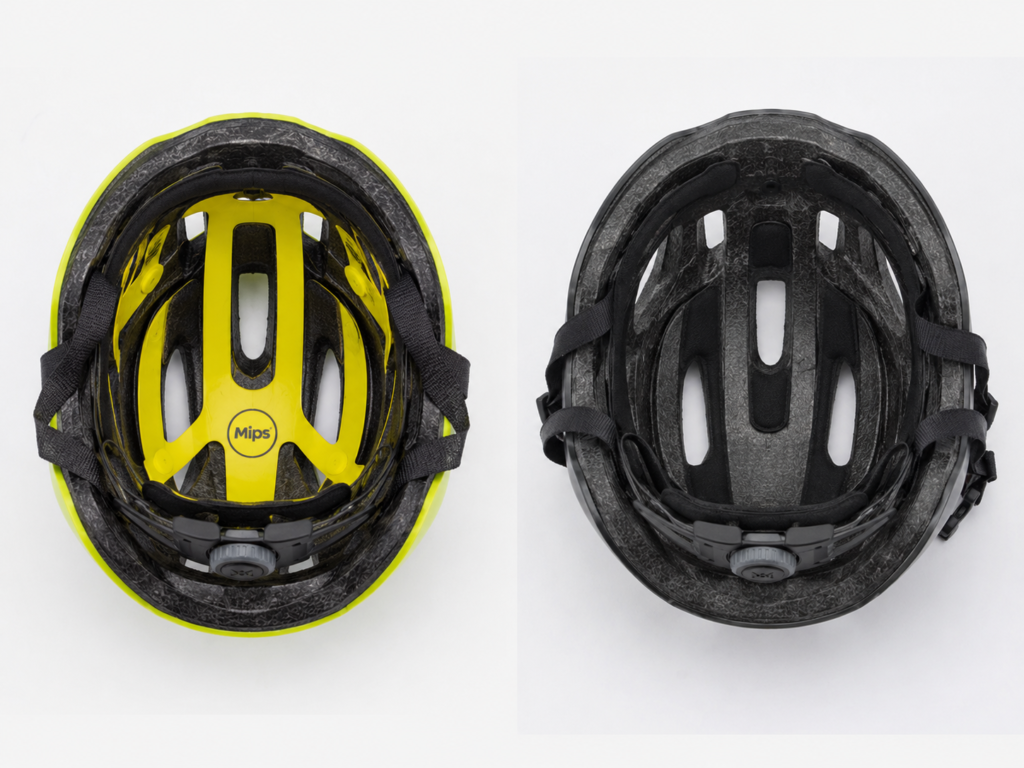
At the same time, many non-MIPS helmets still meet official bicycle helmet safety standards and continue performing well in normal riding situations. This creates confusion for consumers trying to decide which type of helmet provides better protection and better long-term value.
The reality is that both MIPS and non-MIPS bike helmets are designed to improve rider safety, but they approach impact protection differently.
This guide explains what MIPS technology is, how MIPS helmets work, the difference between rotational and direct impacts, how non-MIPS helmets are constructed, and which type of cycling helmet may be better depending on riding style, budget, and performance expectations.
What Is MIPS in a Bike Helmet?
MIPS stands for Multi-directional Impact Protection System.
It is a helmet safety technology designed to reduce rotational motion transferred to the brain during certain angled impacts.
Traditional bicycle helmets mainly focus on reducing direct impact force. However, many real-world cycling accidents involve angled crashes rather than perfectly straight impacts.
During an angled crash, the rider’s head may rotate suddenly after hitting the ground or another surface. This rotational movement can increase strain on the brain.
MIPS technology was developed to help reduce this rotational energy during impact.
How MIPS Technology Works
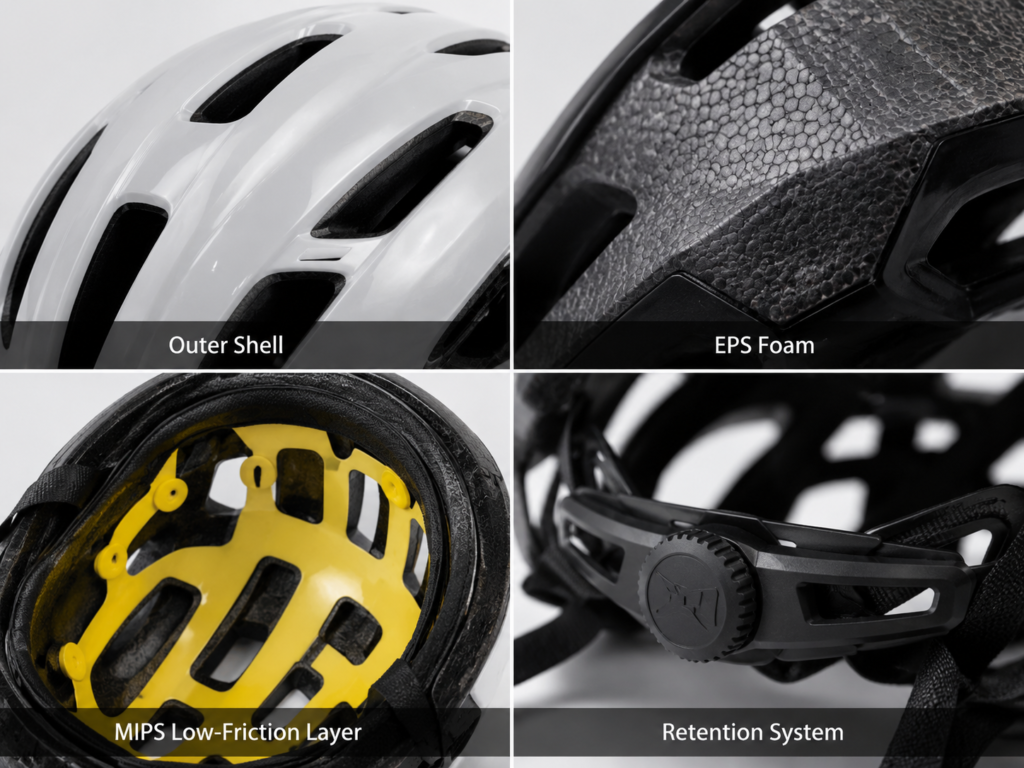
A MIPS bike helmet usually includes a low-friction internal layer positioned between the rider’s head and the helmet shell.
During certain impacts, this layer allows a small amount of controlled movement inside the helmet.
This movement helps redirect part of the rotational energy instead of transferring all of it directly to the head.
Basic MIPS Helmet Structure
| Helmet Component | Function |
|---|---|
| Outer Shell | Initial impact protection |
| EPS Foam | Energy absorption |
| MIPS Low-Friction Layer | Rotational impact management |
| Retention System | Helmet stability and fit |
The movement inside a MIPS helmet is very small, usually only a few millimeters, but it is designed to help reduce rotational forces during angled crashes.
What Is a Non-MIPS Bike Helmet?
A non-MIPS bike helmet is a traditional cycling helmet without a rotational impact management layer.
These helmets still use standard protective construction methods, including:
- EPS impact foam
- Polycarbonate shell
- Adjustable fit systems
- Ventilation structures
- Retention straps
Many non-MIPS helmets fully meet major safety certifications such as:
| Certification | Market |
|---|---|
| CPSC | United States |
| EN1078 | Europe |
| ASTM | International |
This means non-MIPS helmets still provide strong protection against many common cycling impacts.
In fact, millions of cyclists safely use non-MIPS helmets every day for:
- Road cycling
- Mountain biking
- Urban commuting
- BMX riding
- Recreational cycling
The main difference is that non-MIPS helmets primarily focus on direct impact absorption rather than additional rotational impact management.
Why Rotational Impact Protection Matters
Traditional helmet testing mainly focused on direct vertical impacts.
However, many real-world cycling accidents occur at angles.
For example:
- Sliding across pavement
- Side crashes
- Cornering accidents
- Mountain bike falls
- E-bike collisions
- Urban commuting crashes
In these situations, the head may rotate suddenly during impact.
This rotational motion creates different stress compared with direct straight-line force.
MIPS helmet technology was developed specifically to help address this type of rotational movement.
Direct Impact vs Rotational Impact
| Impact Type | Description |
|---|---|
| Direct Impact | Straight-line force directly into the helmet |
| Rotational Impact | Angled force causing head rotation |
Modern helmet manufacturers increasingly focus on rotational impact research because many cycling accidents involve both direct and rotational movement simultaneously.
Do MIPS Helmets Make Cycling Safer?
This is one of the most common questions riders ask.
The answer is more complicated than simple marketing claims.
MIPS technology is designed to improve rotational impact management during certain crashes. Many laboratory tests show that MIPS systems can help reduce rotational motion under specific testing conditions.
However, no helmet technology can completely prevent concussion or serious injury.
Helmet safety depends on multiple factors, including:
- Impact angle
- Crash speed
- Helmet fit
- Riding conditions
- Helmet construction quality
- Rider behavior
A poorly fitted MIPS helmet may perform worse than a properly fitted high-quality non-MIPS helmet.
This is why professional cycling helmet manufacturers emphasize:
- Correct helmet sizing
- Proper adjustment
- Safety certification
- Quality construction
rather than relying on one technology feature alone.
Why MIPS Helmets Usually Cost More
MIPS bike helmets are generally more expensive because they require additional licensing, engineering, materials, and production steps.
Manufacturers must integrate the MIPS low-friction layer carefully into the helmet structure while maintaining:
- Ventilation efficiency
- Weight balance
- Structural stability
- Comfort systems
- Aerodynamic performance
This increases manufacturing complexity and production cost.
Factors That Increase MIPS Helmet Pricing
| Cost Factor | Reason |
|---|---|
| MIPS Licensing | Technology licensing fees |
| Additional Components | Extra internal layer |
| Engineering Development | Structural integration |
| Manufacturing Complexity | More assembly steps |
Because of this, MIPS helmets are often positioned as premium cycling helmets in the market.
MIPS vs Non-MIPS Helmet Weight and Comfort
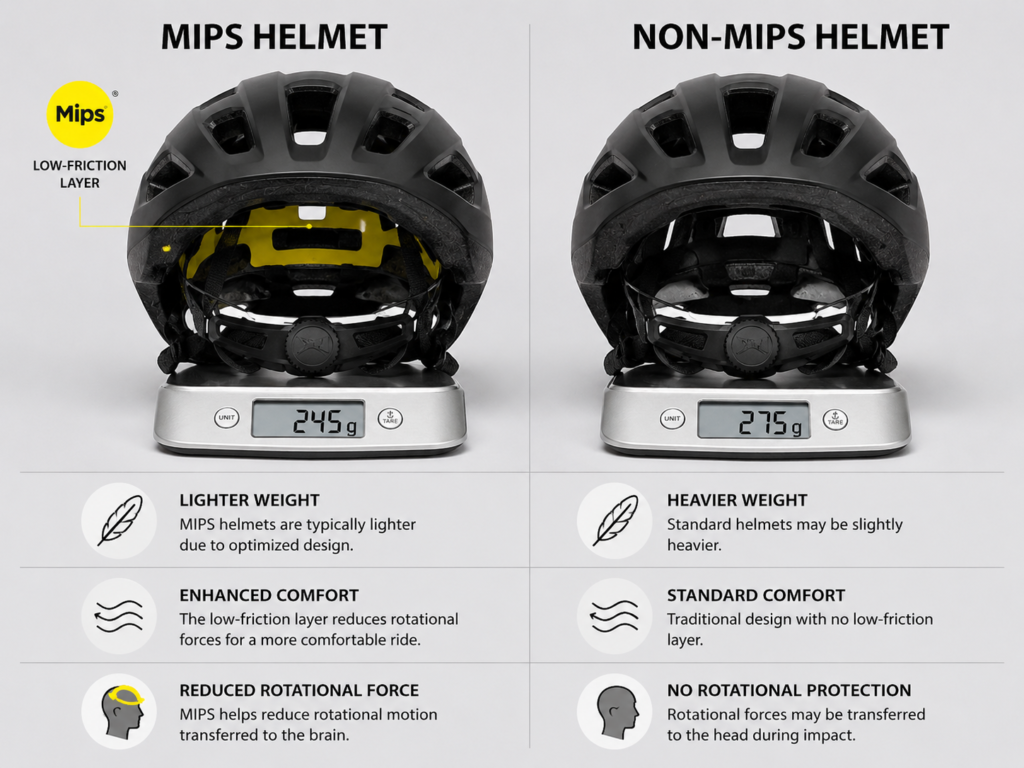
One concern many riders have is whether MIPS helmets feel heavier or less comfortable.
Modern helmet manufacturers have improved MIPS integration significantly over the years.
Early MIPS helmets sometimes felt:
- Slightly heavier
- Less ventilated
- More restrictive
However, modern lightweight MIPS bike helmets now use advanced in-mold helmet construction and improved airflow systems to reduce these differences.
Still, some riders prefer non-MIPS helmets because they may feel:
- Simpler
- Slightly lighter
- Better ventilated
- Less expensive
Comfort preferences often depend on riding style and personal fit.
MIPS vs Non-MIPS for Different Types of Cycling
Different riding categories create different safety priorities.
Road Cycling
Road cyclists often prioritize:
- Lightweight helmets
- Aerodynamics
- Ventilation
- Long-distance comfort
MIPS road cycling helmets are now extremely common in premium road helmet markets.
Mountain Bike Helmets
Mountain biking involves:
- Technical terrain
- Side impacts
- Off-angle crashes
- Higher rotational movement risk
Because of this, MIPS mountain bike helmets have become especially popular among trail and enduro riders.
Urban Commuter Helmets
Urban cycling helmets focus more on:
- Daily comfort
- Visibility
- Lightweight structure
- City commuting safety
Both MIPS and non-MIPS commuter helmets remain popular depending on budget and riding conditions.
Kids Bike Helmets
Parents increasingly prefer MIPS kids bike helmets because child safety has become a major purchasing priority.
However, proper fit remains more important than technology alone.
Helmet Fit Matters More Than Most Riders Realize
Even the most advanced cycling helmet performs poorly if it does not fit correctly.
A helmet should:
- Sit level on the head
- Cover the forehead properly
- Stay stable during movement
- Avoid excessive side movement
- Feel secure without pressure points
Common Helmet Fit Problems
| Problem | Safety Risk |
|---|---|
| Loose fit | Helmet movement during impact |
| Helmet tilted backward | Reduced forehead protection |
| Loose chin straps | Reduced stability |
| Oversized helmet | Poor impact positioning |
Professional bike helmet manufacturers focus heavily on adjustable fit systems because proper fit directly affects protection performance.
How Modern Bike Helmets Are Manufactured
Both MIPS and non-MIPS bike helmets typically use advanced helmet manufacturing methods.
Modern cycling helmets commonly include:
- EPS impact foam
- Polycarbonate outer shells
- In-mold construction
- Ventilation channels
- Adjustable retention systems
- Lightweight shell engineering
In-Mold Helmet Construction
Most premium cycling helmets use in-mold technology.
This process bonds the outer shell directly to the EPS foam during production, helping improve:
- Weight reduction
- Structural strength
- Aerodynamic performance
- Ventilation design
Professional OEM bike helmet manufacturers spend significant time balancing safety, comfort, ventilation, and lightweight performance during development.
Why More Brands Offer MIPS Helmets Today
The bicycle helmet market has become increasingly competitive.
Modern consumers now expect:
- Better impact protection
- Lightweight construction
- Improved ventilation
- Aerodynamic design
- Advanced safety technology
- Premium appearance
Because of this, more cycling helmet brands now offer MIPS helmet options across:
- Road cycling helmets
- Mountain bike helmets
- Urban commuter helmets
- Kids bicycle helmets
- E-bike helmets
At the same time, high-quality non-MIPS helmets still remain extremely popular because they often provide excellent protection, comfort, and affordability.
Should You Choose a MIPS or Non-MIPS Bike Helmet?
There is no single correct answer for every rider.
The best choice depends on:
- Riding style
- Budget
- Safety preferences
- Comfort priorities
- Helmet fit
- Riding environment
Riders Who Often Prefer MIPS Helmets
- Mountain bikers
- Performance road cyclists
- Parents buying kids helmets
- Riders wanting additional safety technology
Riders Who Often Prefer Non-MIPS Helmets
- Budget-conscious cyclists
- Casual riders
- Recreational commuters
- Riders prioritizing lightweight simplicity
Both helmet types can provide strong protection when properly designed and certified.
Future Trends in Cycling Helmet Safety
The cycling helmet industry continues evolving quickly.
Modern helmet manufacturers increasingly focus on:
- Rotational impact management
- Smart helmet technology
- Lightweight materials
- Better ventilation systems
- Sustainable materials
- Improved aerodynamic performance
- Integrated safety lighting
As helmet safety research continues improving, both MIPS and non-MIPS helmets will likely continue evolving through better materials, construction methods, and impact testing standards.
FAQ
Conclusion
The difference between MIPS and non-MIPS bike helmets mainly comes down to rotational impact management. MIPS helmets include an additional low-friction layer designed to help reduce rotational forces during certain angled crashes, while non-MIPS helmets focus primarily on traditional direct impact absorption.
Both helmet types can provide strong rider protection when properly certified, well-constructed, and correctly fitted.
Choosing the best bike helmet depends on riding style, comfort preference, safety priorities, and budget rather than marketing claims alone.
Modern cycling helmets continue becoming safer, lighter, more comfortable, and more advanced as helmet technology evolves across the global cycling industry.
For brands, retailers, and distributors looking for OEM bike helmets, custom cycling helmets, MIPS-compatible helmet manufacturing, or private label bicycle helmet production, working with an experienced helmet manufacturer is essential for product quality, safety compliance, and long-term market competitiveness.
If you are looking for professional custom bike helmet manufacturing solutions, feel free to contact us for OEM helmet development, private label production, and cycling helmet product support.