
Carbon fiber helmet shells are made through a precise process of material cutting, layer placement, mold forming, curing, trimming, finishing, and inspection. The process is more complex than standard shell production, but it helps create lighter, stronger, and more premium helmet shells when every step is tightly controlled.
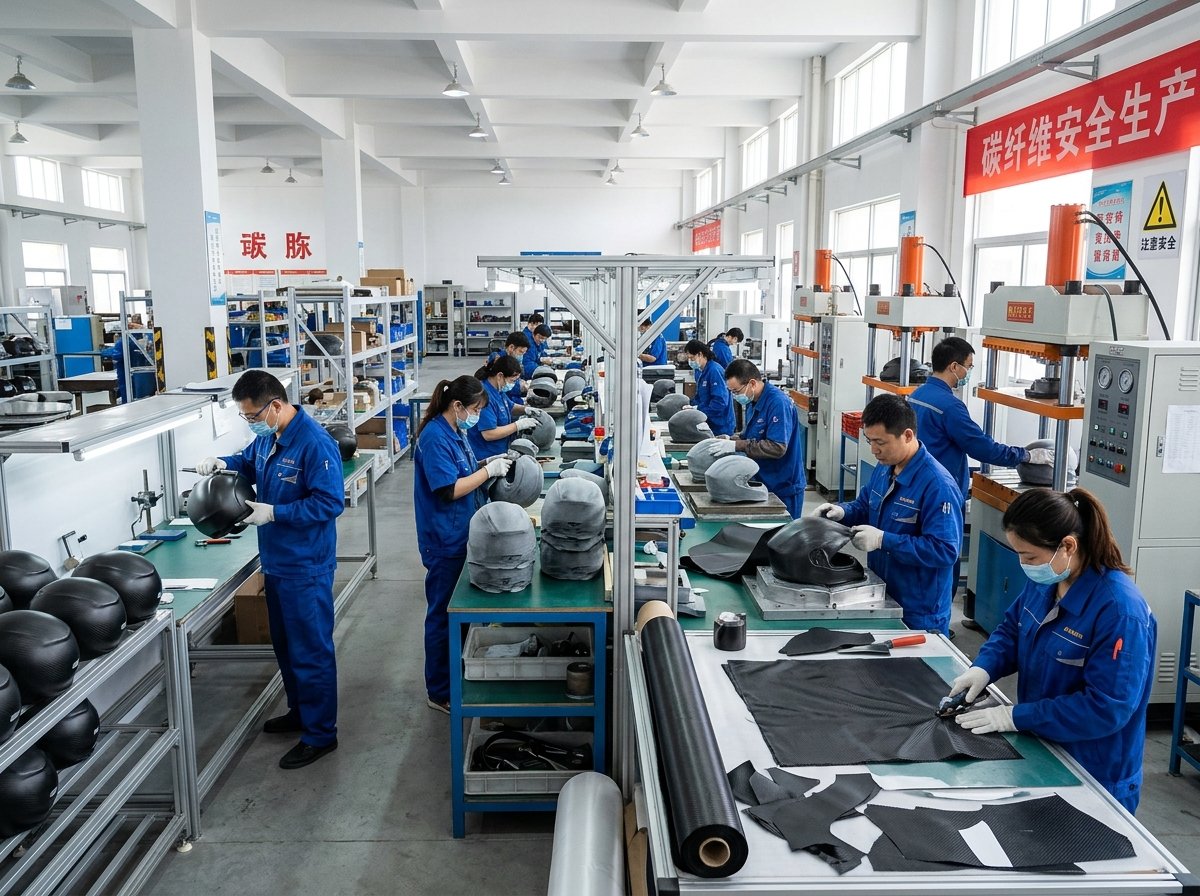
Carbon fiber has become one of the most talked-about materials in premium motorcycle helmets. The reason is clear. Riders often praise helmets that feel light, stable, comfortable, and well built. They often complain when a helmet feels heavy, bulky, noisy, tiring after one hour, or disappointing for the price. That makes carbon fiber more than a material story. It becomes a manufacturing story. A carbon fiber shell can support lower weight and a more refined product image, but only if the factory controls layering, curing, trimming, and finishing with real discipline. If the process is weak, the shell may still look premium, but the final helmet may fail to deliver the comfort, consistency, and value that the market expects.
Why Is the Carbon Fiber Shell Process Different from Other Helmet Shell Production?
The carbon fiber shell process is different because it depends on layered composite construction, curing control, and more manual precision than common plastic shell manufacturing.
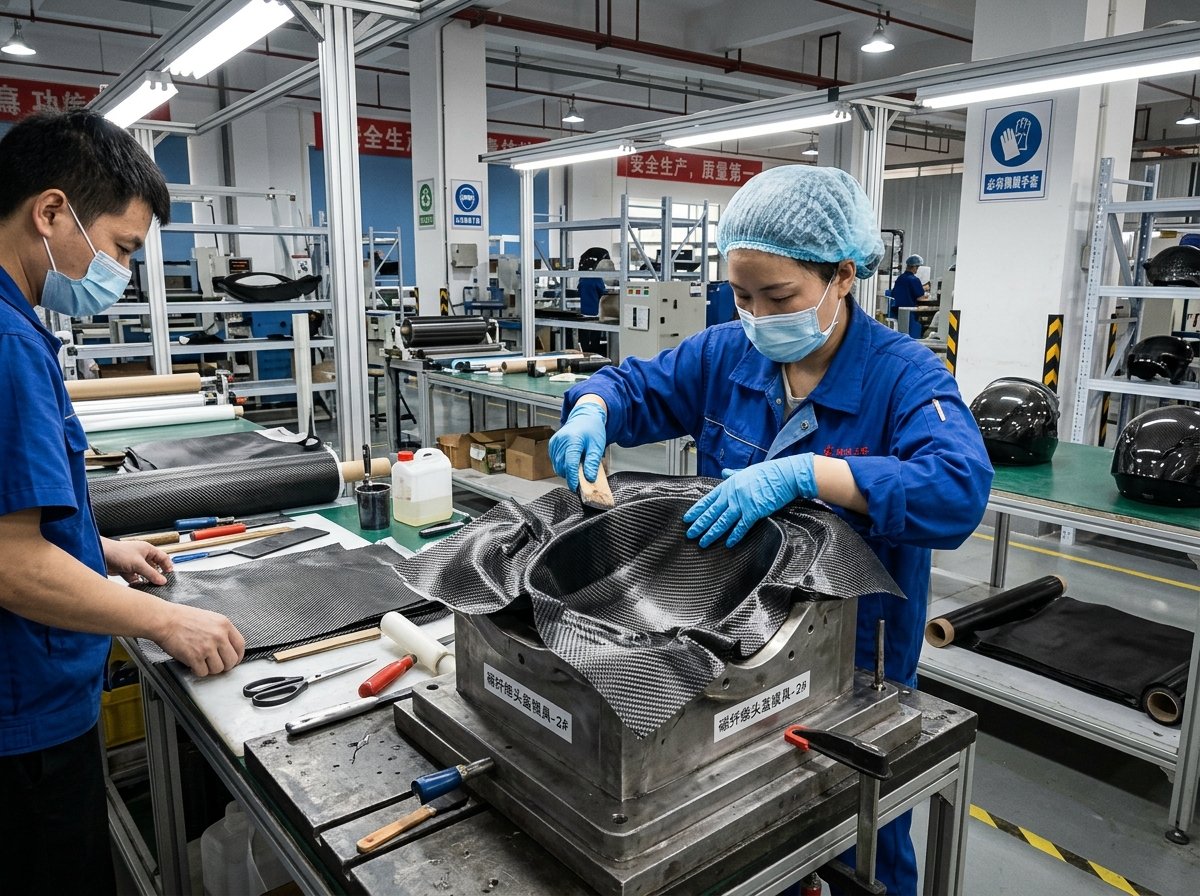
A standard thermoplastic shell is usually made through injection molding. That method is efficient for larger production runs and lower-cost products. Carbon fiber is different. It is built layer by layer. Each fabric piece must be placed in the correct position, with the right overlap, angle, and coverage. The shell is then formed in a mold and cured under controlled conditions.
This matters because the shell is not just an outer surface. It is the base structure of the helmet. In premium models, riders expect a carbon fiber shell to deliver lower weight, a more compact feel, and stronger perceived quality. Many market insights show that positive reviews often mention light weight, comfort, and premium build quality together. Negative reviews, on the other hand, often attack helmets that feel too heavy, too noisy, or not worth the money. Carbon fiber shell production plays a direct role in how easily a helmet can avoid those complaints.
Main differences from standard shell production
| Production area | Carbon fiber shell | Standard plastic shell |
|---|---|---|
| Core method | Layered composite build | Injection molding |
| Labor input | High | Lower |
| Process control need | Very high | High |
| Weight advantage | Strong | Limited |
| Premium positioning | Strong | More limited |
This is why carbon fiber shell manufacturing is usually reserved for premium or flagship helmet lines where the process cost can be justified by the final product value.
Carbon Fiber Helmet Shell Manufacturing Process Explained?
The carbon fiber helmet shell manufacturing process usually includes material preparation, layer cutting, hand layup, mold forming, curing, demolding, trimming, finishing, and quality inspection.
Although exact details vary by factory and shell design, the process usually follows a clear sequence.
1. Material preparation
Carbon fiber fabric is selected based on the target shell structure, weight goal, and product positioning. Some factories use only carbon fiber. Others use mixed composite systems to balance cost and performance.
2. Cutting the fiber layers
The material is cut into planned shapes that match different shell zones. These pieces are not random. Each part is designed to reinforce a specific area of the shell. Precision matters here because poor cutting or unstable patterns can create waste, inconsistent thickness, or weak local coverage.
3. Layer placement in the mold
The cut layers are placed into the shell mold by sequence. This is one of the most important stages in the entire process. The way the layers overlap, bend, and follow the shell geometry affects final shell balance, thickness consistency, and structural feel.
4. Resin system and forming
The material is combined with the resin system and shaped inside the mold. Depending on the process, the shell may be compressed or vacuum-assisted before curing.
5. Curing
The formed shell is cured under controlled temperature and time conditions. This stage sets the structure and strongly affects shell stability and final performance.
6. Demolding and rough inspection
After curing, the shell is removed from the mold and checked for major defects such as air pockets, shape distortion, or surface inconsistency.
7. Trimming and machining
The shell edges, visor opening, vent locations, and hardware areas are trimmed and machined. Accuracy here matters because poor trimming can later cause visor sealing problems, noise, or poor assembly alignment.
8. Surface finishing and coating
The shell may be sanded, clear-coated, painted, or decorated depending on the product concept. In exposed carbon designs, finishing quality becomes even more important because the material pattern is part of the visual value.
9. Final shell inspection
Before shell assembly moves forward, the shell is checked for finish, dimensions, weight, and visible defects.
Key Techniques in Carbon Fiber Layering and Curing?
The key techniques are accurate layer orientation, balanced overlap, mold conformity, resin control, and stable curing conditions, because these directly shape shell strength, weight, and consistency.
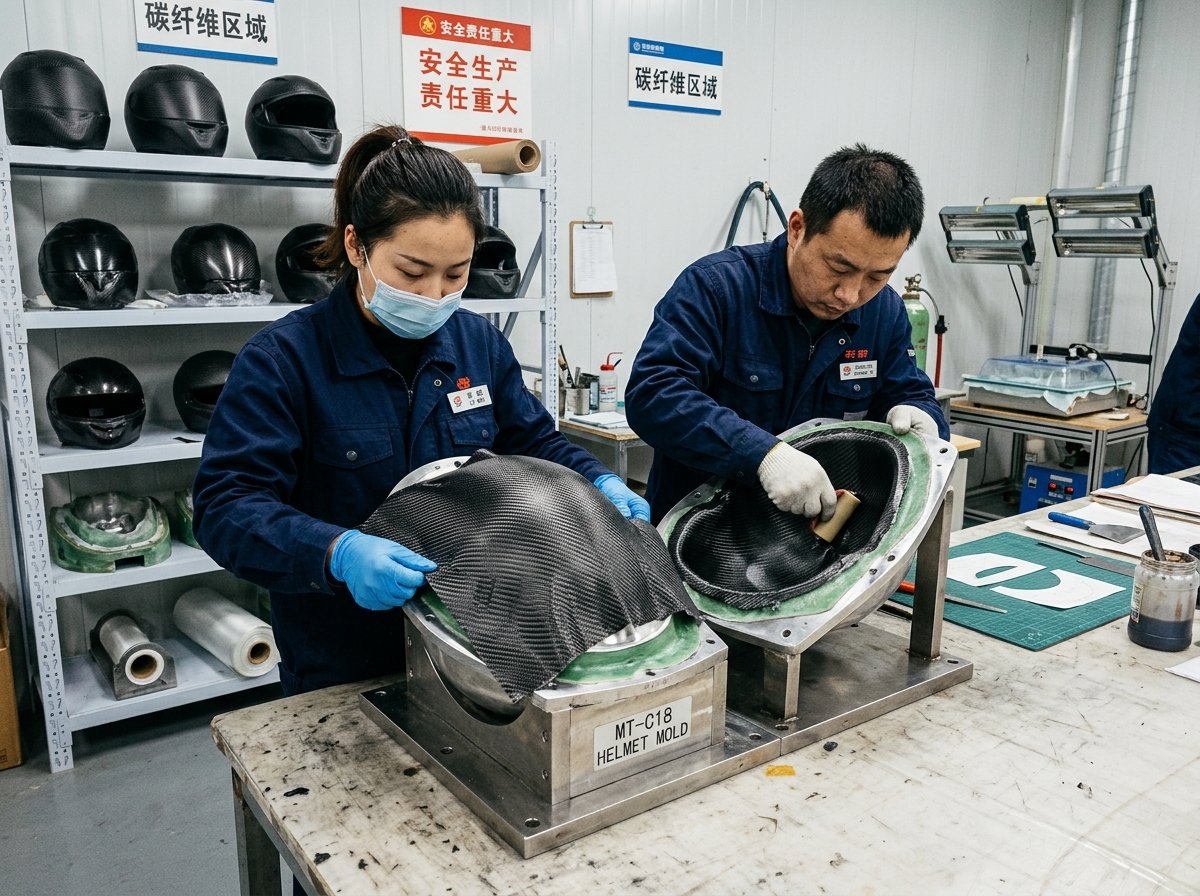
Layering is where much of the shell’s value is built. Carbon fiber shells are not strong just because carbon fabric is present. They are strong because the material is placed correctly and cured correctly. This is an important distinction. A premium material can still produce a weak result if the process is sloppy.
Good layering starts with a planned layup schedule. Different zones of the shell need different support. Areas around visor pivots, vent openings, and shell edges often need careful reinforcement. If the layers bunch, wrinkle, or shift, the shell may lose consistency. That can affect not only structure, but also shell weight and appearance.
Curing is just as important. If curing conditions are unstable, the shell may not achieve the intended stiffness, finish quality, or long-term dimensional stability.
Layering and curing priorities
| Technique | Why it matters |
|---|---|
| Correct layer orientation | Helps control shell strength and stiffness |
| Even overlap control | Prevents weak zones and thickness variation |
| Good mold conformity | Reduces wrinkles and poor surface quality |
| Stable resin distribution | Supports shell consistency |
| Controlled curing cycle | Protects shell shape and final quality |
This stage also has commercial importance. Many riders buying premium helmets expect visible precision. If the carbon weave looks uneven, the finish looks cheap, or the shell feels inconsistent across sizes, the premium story becomes weaker very fast.
How Does Shell Manufacturing Affect Helmet Performance?
Shell manufacturing affects weight, shell balance, noise behavior, finish quality, and the factory’s ability to build a premium helmet that feels worth the price.
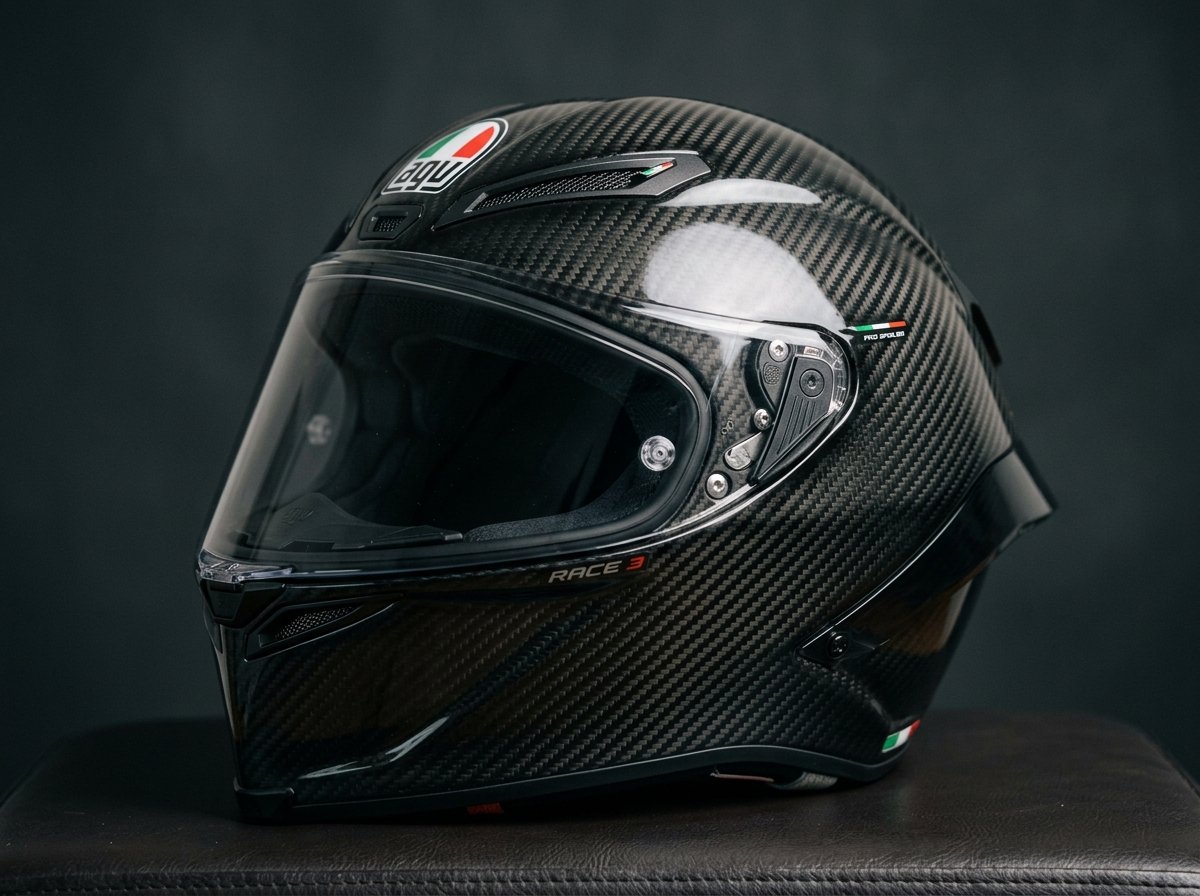
A helmet shell does not work alone. The finished helmet still depends on EPS, liners, visor systems, strap geometry, and assembly quality. Still, shell manufacturing shapes many of the traits riders feel first. A well-made carbon shell can reduce overall weight and help the helmet feel less tiring during long rides. It can also support a more compact shell profile, which reduces the bulky look that some riders dislike.
The market feedback behind premium helmets is very clear. Riders often praise helmets that are light, comfortable, quiet, and stable. They often criticize helmets that feel heavy, noisy, or disappointing compared with their price tag. Carbon fiber shell production can help on the weight and premium-perception side, but it must be matched with strong follow-up engineering.
What shell manufacturing influences most
| Shell result | Rider impact |
|---|---|
| Lower shell weight | Less neck fatigue |
| Better shell consistency | Stronger premium feel |
| More accurate trimming | Better visor fit and sealing |
| Better surface finish | Higher perceived value |
| Better dimensional control | Easier assembly and lower defect risk |
This is why carbon fiber shell production should never be treated as only a materials exercise. It is part of the full helmet experience.
What Are the Main Cost and Production Challenges of Carbon Fiber Helmets?
The main challenges are high material cost, labor intensity, process sensitivity, slower throughput, and tighter quality-control demands.
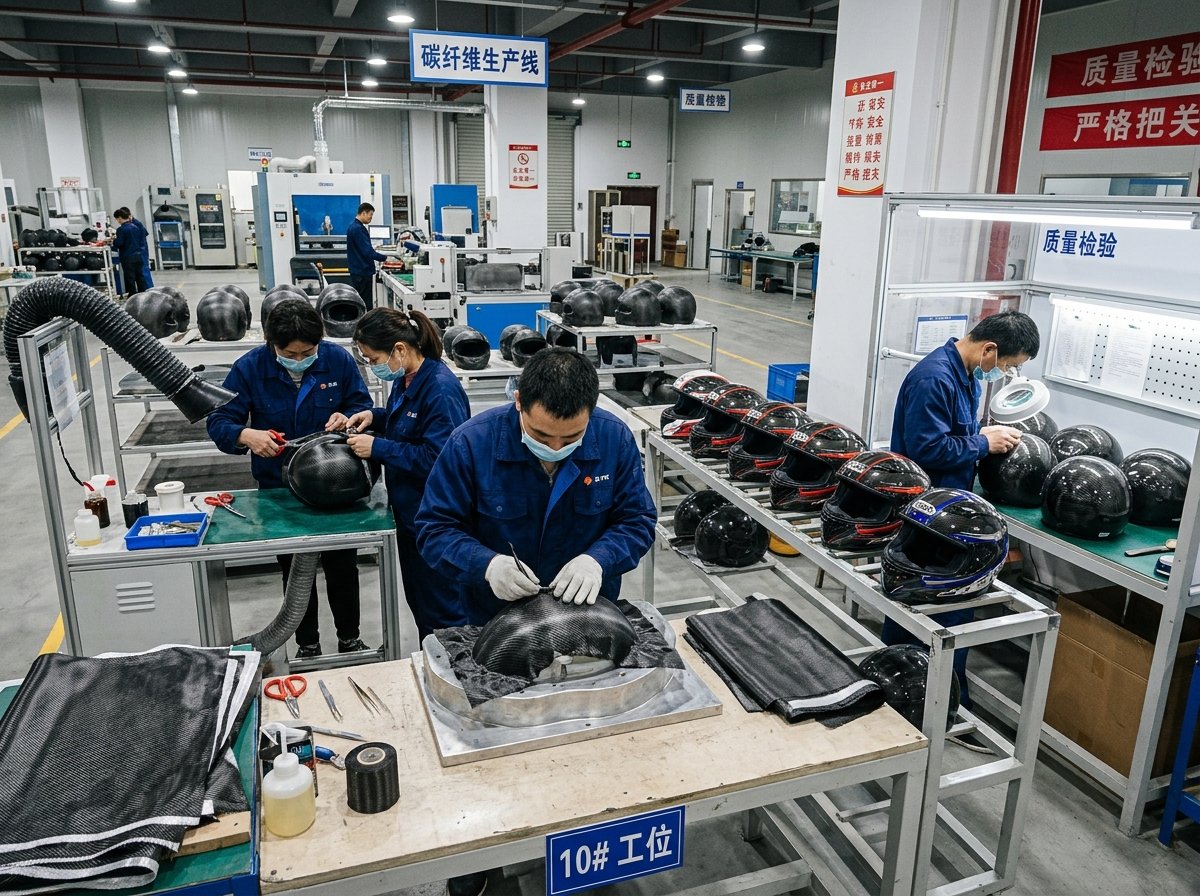
Carbon fiber helmets are expensive for a reason. The shell process takes more time, more skilled labor, and more quality monitoring than simpler shell methods. Each layer must be cut and placed with care. Curing needs control. Trimming must be accurate. Finishing needs to match premium customer expectations.
This creates several production challenges. First, material waste is more costly. Second, output speed is slower. Third, consistency is harder to maintain across large production runs. Fourth, cosmetic standards are much more demanding when the shell pattern is visible. In exposed carbon models, even small flaws can become obvious to the customer.
Core production challenges
| Challenge | Production effect | Market effect |
|---|---|---|
| High material cost | Higher shell cost | Higher retail price pressure |
| Manual layup | Slower production speed | Longer lead-time risk |
| Tight curing control | Higher process sensitivity | Greater consistency pressure |
| Cosmetic demands | More finishing scrutiny | Premium buyers expect perfection |
| Trimming precision | More skilled labor needed | Poor fit can create complaints |
These challenges explain why some premium helmets still disappoint the market. If the shell is expensive but the visor leaks, the liner creates pain points, or the hardware feels weak, customers quickly question the price.
Why Is Quality Control So Important in Carbon Fiber Shell Production?
Quality control is critical because carbon fiber shells can lose their premium advantage quickly if layer placement, curing, trimming, or finishing are inconsistent.
In carbon fiber production, quality control must start early. It should not wait until the shell is finished. The fabric, cutting patterns, layup order, mold condition, curing cycle, shell dimensions, and trim accuracy all need checking. If the factory relies only on final appearance inspection, many deeper problems may be missed.
This is especially important because premium helmet customers are highly sensitive to detail. The supplied market insights repeatedly show that riders criticize products that feel flimsy, fail too early, or do not match their premium price. In carbon fiber helmets, the buyer expects more. Better weight. Better finish. Better overall confidence.
Key carbon shell QC points
| QC point | Why it matters |
|---|---|
| Layer placement check | Prevents structural inconsistency |
| Curing record control | Supports stable shell performance |
| Shell weight check | Confirms target build accuracy |
| Trim accuracy inspection | Prevents later assembly issues |
| Surface finish review | Protects premium visual value |
A good carbon fiber shell process is not only about making the shell light. It is about making the shell repeatable, clean, and ready for a complete premium helmet.
How Should Carbon Fiber Shell Production Be Positioned in the Market?
It should be positioned where low weight, premium feel, and stronger product image matter enough to support the added process cost.
Carbon fiber shell production makes the most sense in product lines where customers can feel and value the difference. That usually means premium street, sport-touring, racing, high-end modular, and flagship halo models. In these segments, riders are more willing to pay for lower weight and a more advanced construction story.
Still, the shell alone is not enough. The helmet must also solve the common pain points seen across the market: noise, fogging, pressure points, poor liner life, visor scratches, and weak moving parts. When those issues remain, carbon fiber becomes only a headline, not a full advantage.
Best-fit segments for carbon fiber shell production
| Segment | Why carbon fiber fits |
|---|---|
| Premium sport | Weight and performance image matter |
| Touring premium | Lower fatigue supports long-distance comfort |
| Flagship modular | Weight reduction helps offset mechanism weight |
| Halo products | Strong material story supports brand image |
Factories that want success in this area need to treat carbon fiber shell production as a full-system premium program, not just a shell upgrade.
Conclusion
Carbon fiber helmet shell manufacturing is a precise and demanding process built around careful material cutting, controlled layer placement, stable curing, accurate trimming, and premium finishing. It offers real advantages, especially in weight reduction, shell refinement, and high-end product positioning. That is why carbon fiber remains one of the strongest shell materials for premium motorcycle helmet programs.
At the same time, the process brings real challenges. It costs more, takes more labor, moves more slowly through production, and demands tighter quality control at every stage. These challenges are not small. They directly affect lead time, consistency, cosmetic quality, and final product value. A carbon fiber shell only creates real market strength when the factory can manage those pressures well.
The market insights behind premium helmets make the lesson very clear. Riders reward helmets that feel light, comfortable, stable, and worth the money. They reject products that look premium on paper but fail in daily use through noise, discomfort, weak durability, or poor finish quality. That is why the best carbon fiber shell process is not only about advanced material. It is about disciplined manufacturing that supports the full helmet experience from the first impression to long-term use.