
Carbon fiber motorcycle helmets stand out because they combine high strength, low weight, and premium safety performance in one shell. In commercial product lines, they offer clear value in impact control, comfort, and brand positioning, but they also come with cost, process, and market-fit limits.

Carbon fiber helmets attract attention for a simple reason. Riders want a helmet that feels light on the head, stays stable at speed, and still inspires confidence in protection. Market feedback shows that the strongest positive reactions often center on comfort, quietness, light weight, and long-ride wearability. At the same time, the most repeated complaints in the helmet market still focus on wind noise, pressure points, fogging, visor durability, and poor long-term comfort. That makes carbon fiber more than a material choice. It becomes part of a full product strategy.
Why Are Carbon Fiber Motorcycle Helmets Seen as Premium?
Carbon fiber helmets are seen as premium because the material supports lower weight, better stiffness, and a stronger performance image than many standard shell materials.

Carbon fiber has a strong reputation in performance equipment because it delivers a rare mix of strength and lightness. In helmet design, that matters immediately. Riders can feel weight before anything else. Many positive reviews across helmet categories praise products as “light,” “comfortable,” and easy to wear all day. Many negative reviews do the opposite. They complain that helmets feel heavy, bulky, tiring, or unstable above moderate speed. This gap matters in premium segments.
For a factory, carbon fiber is not only about using expensive material. It is about turning that material into a product experience that riders notice in the first minute and still appreciate after hours on the road. A lighter shell can reduce neck fatigue. A stiffer structure can help hold shape consistency. A more compact shell can also improve the visual profile, which matters in high-end retail.
Why premium buyers respond to carbon fiber
| Driver | What riders feel | Why it matters commercially |
|---|---|---|
| Lower weight | Less neck strain | Stronger premium value perception |
| Better stiffness | More solid feel | Better product confidence |
| Smaller shell appearance | Less bulky look | More attractive shelf appeal |
| Performance image | More advanced product identity | Supports higher selling price |
Still, premium positioning only works when the rest of the helmet matches the shell story. If the liner creates forehead pain, if the visor scratches easily, or if the helmet is loud at highway speed, the carbon fiber shell alone will not protect the product from negative reviews.
How Carbon Fiber Improves Impact Resistance in Helmet Design?
Carbon fiber helps helmet design by offering high stiffness and strong structural support, which can improve shell integrity and energy management when paired with the right EPS layout and internal engineering.
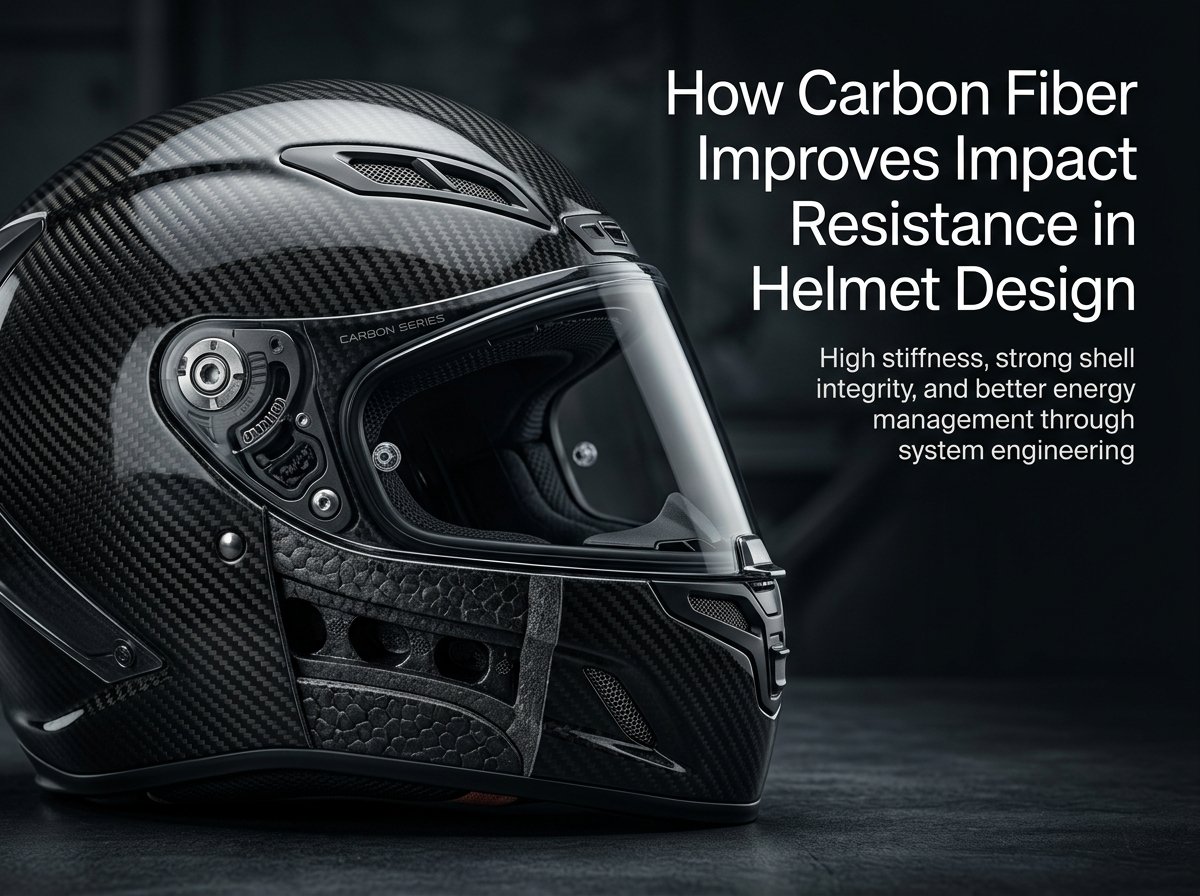
Impact resistance in a motorcycle helmet does not come from one part alone. It comes from the shell, the EPS liner, the fit system, and the way those parts work together. Carbon fiber helps because it creates a rigid, high-strength shell that can distribute force effectively across the helmet structure. That gives engineers more control over how the helmet performs under impact and how the internal energy-absorbing layers do their job.
This is important in commercial development because riders do not only buy a certification label. They buy the feeling of security. Reviews show that positive comments often mention helmets as safe, stable, and secure when these qualities come together with comfort and low weight. On the negative side, users quickly lose trust when the product feels flimsy, when parts fail early, or when the helmet seems poorly built.
A factory that develops carbon fiber helmets well should focus on system engineering, not material marketing alone.
Key design factors behind real impact performance
| Design factor | Common risk if ignored | Factory development focus |
|---|---|---|
| Carbon shell layup | Uneven strength or excess weight | Controlled layer schedule and orientation |
| EPS density mapping | Poor energy management | Multi-zone EPS tuning |
| Shell-to-liner fit | Inconsistent performance | Tight process tolerance control |
| Structural detail areas | Weak points near vents or visor pivots | Reinforced local engineering |
This is where commercial value is built. A well-engineered carbon fiber helmet gives a brand stronger technical storytelling, but it also reduces the risk of market disappointment caused by weak build quality or inconsistent feel.
What Are the Main Advantages of Carbon Fiber Helmets in Commercial Applications?
The main advantages are lower weight, premium market appeal, stronger perceived quality, and better support for high-end product positioning.
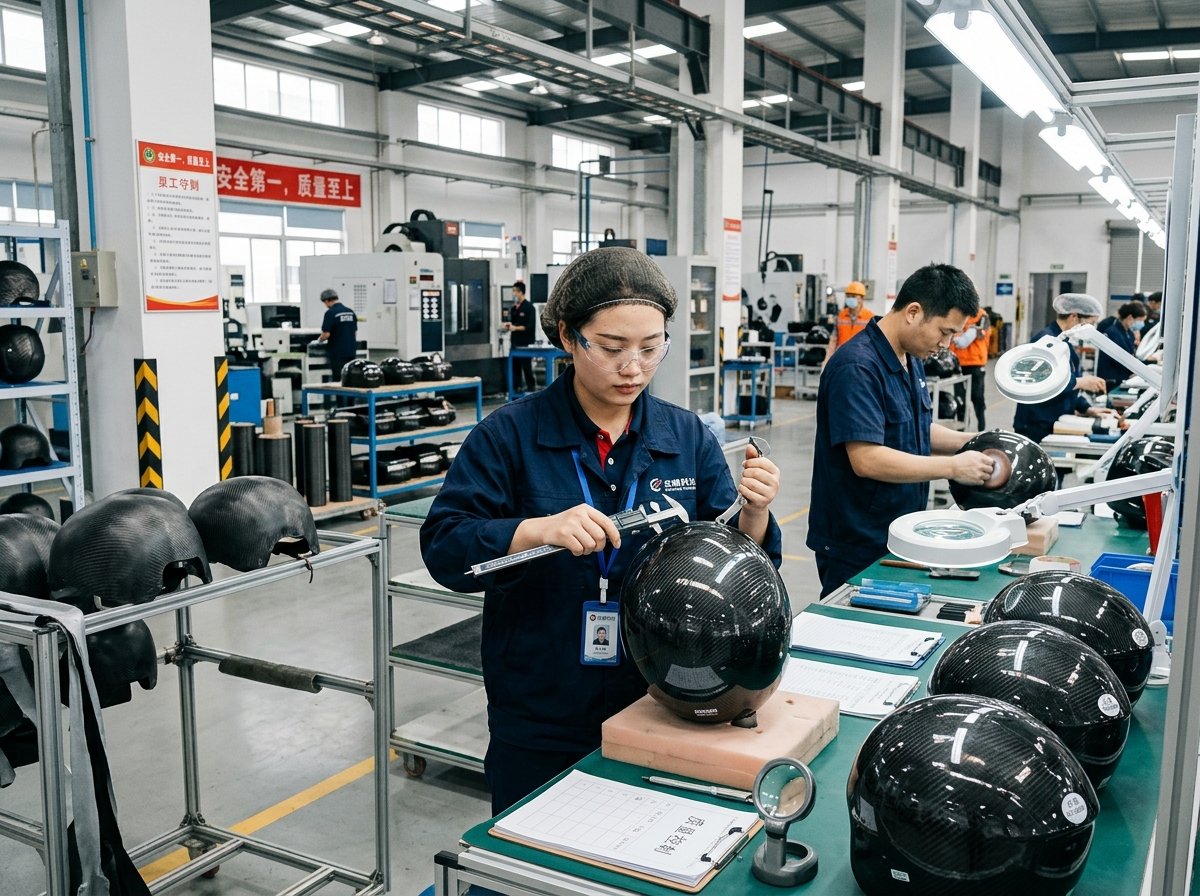
Commercial success depends on more than laboratory performance. It depends on how clearly the product solves known market pain points. The insights show repeated complaints about heavy helmets, neck wobble at speed, long-term discomfort, and products that feel bulky or tiring. Carbon fiber helps address these areas because it supports lighter shell construction and better balance.
That creates several direct product advantages. First, lighter weight improves first impressions during try-on. Second, lighter shells support better long-distance comfort. Third, premium material helps justify a higher price tier when combined with features like better visors, quieter aerodynamics, stronger fit systems, and cleaner finishing. Fourth, carbon fiber models create a halo effect for the rest of a helmet range.
Strong commercial advantages
| Advantage | Market relevance | Product line benefit |
|---|---|---|
| Lightweight feel | Directly linked to comfort feedback | Easier premium selling |
| Premium appearance | Supports higher-end branding | Better differentiation |
| Compact shell potential | Reduces bulky look complaints | Improved visual acceptance |
| Technical story | Helps dealers explain value | Stronger channel confidence |
For factories, the best path is not to treat carbon fiber as a standalone hero. The shell should sit inside a complete product package: stable visor mechanism, durable liners, good cheek pad options, controlled wind noise, anti-fog performance, and clear quality consistency from sample to bulk production.
What Limitations Do Carbon Fiber Helmets Still Have?
Carbon fiber helmets still face limits in cost, process complexity, retail accessibility, and the fact that shell material alone cannot solve fit, noise, fogging, or comfort problems.

Carbon fiber is strong, but it is not magic. One of the biggest mistakes in helmet development is assuming that a premium shell automatically creates a premium riding experience. Market complaints say otherwise. Riders complain when straps dig into the neck, when cheek pads are too aggressive, when visors fog despite anti-fog claims, or when helmets become noisy above mid-range speed. None of these issues disappear just because the shell uses carbon fiber.
The second limit is cost. Carbon fiber materials, layup control, finishing, and quality inspection all require tighter process management. That pushes up unit cost and makes commercial planning more demanding. Not every market segment will accept the price jump.
Main commercial limits
| Limitation | Commercial impact | Factory response |
|---|---|---|
| Higher material and process cost | Narrower target audience | Use carbon fiber in clear premium tiers |
| More complex manufacturing | Greater consistency pressure | Tight QC and trained production teams |
| Shell story can be oversold | Customer disappointment risk | Match shell with real comfort and feature value |
| Fit still matters most | Poor reviews despite premium material | Expand shell shape and pad options |
The most successful carbon fiber programs are honest about these limits. They position carbon fiber where customers can feel the difference and where the full helmet package supports the price.
Market Demand for Carbon Fiber Helmets in Premium Segments?
Demand is strongest in premium segments where riders value lower weight, advanced design, stronger comfort over long use, and a product image that feels worth the price.
Premium demand is driven by rider expectations that are now very clear. Positive feedback across the market repeats the same language: quiet, comfortable, lightweight, stable, well built, worth every penny. Negative feedback is just as clear: too noisy, too heavy, painful after an hour, fogs too fast, visor leaks, pads wear down, parts feel cheap. This gap creates a real opening for carbon fiber helmets, especially in touring, sport-touring, performance street, and premium modular segments.
Riders in these segments are more willing to pay when the benefits are obvious. Low weight helps on long rides. Better shell balance supports stability. Premium construction helps build trust. Compact shell size improves the visual feel. This is why carbon fiber works especially well in categories where fatigue reduction and product image both matter.
Where premium demand is strongest
| Segment | Why carbon fiber fits | What buyers expect |
|---|---|---|
| Touring | Long hours demand comfort | Quiet, stable, low fatigue |
| Sport-touring | Balance of speed and comfort | Light, aerodynamic, refined |
| Premium modular | Heavy structure needs weight control | Convenience without bulk |
| High-end street | Style and performance both matter | Premium build and strong identity |
For factories and helmet brands, demand is strongest when carbon fiber is tied to real product gains, not only visual appeal. Buyers in premium segments compare details closely. They notice liner quality, visor mechanism feel, shell finish, and long-wear comfort as much as shell material itself.
How Should Carbon Fiber Helmets Be Developed for Better Market Acceptance?
They should be developed as complete rider-focused systems, with equal attention to weight, fit, noise control, visor performance, liner durability, and long-term comfort.
The insight patterns are useful because they show exactly where products win and lose. Positive reactions come from helmets that feel light, fit well, stay comfortable, ventilate properly, and offer practical details like easy visor changes or reliable integrated features. Negative reactions come from products that create pressure points, fog up in traffic, leak in rain, become painfully loud, or lose liner performance over time.
That means the development path for a carbon fiber helmet should include more than shell engineering.
Priorities that improve market acceptance
| Development area | Why it matters |
|---|---|
| Shell weight and balance | Reduces neck fatigue and improves first impression |
| Fit matrix and pad options | Prevents pressure points and sizing complaints |
| Neck roll and aero control | Reduces wind noise and turbulence |
| Visor seal and anti-fog system | Solves one of the most repeated user complaints |
| Liner durability | Prevents comfort decline and rising noise over time |
| Mechanism reliability | Protects premium product reputation |
A carbon fiber helmet earns its place in the market when it solves visible rider problems better than standard alternatives. That is the real strength behind the material. It is not only strong in structure. It is strong when product engineering, comfort tuning, and commercial positioning all move in the same direction.
Conclusion
Carbon fiber motorcycle helmets have earned their place in the premium market because they solve several important rider concerns at the same time. They reduce weight, improve wearing comfort, support a more compact and technical shell design, and strengthen the product image in higher-value segments. In categories where riders care about long-distance comfort, speed stability, and refined finishing, carbon fiber gives manufacturers a clear advantage.
At the same time, commercial success does not come from shell material alone. Market feedback makes that very clear. Riders do not judge a helmet only by what it is made of. They judge it by how it feels after one hour, how it behaves at speed, whether it fogs in traffic, whether it creates pressure points, and whether the visor, liner, and strap system still feel reliable after repeated use. That is why carbon fiber should be treated as one part of a complete helmet system, not as a shortcut to premium positioning.
For manufacturers serving higher-end helmet programs, the strongest opportunity is to combine carbon fiber shell engineering with better fit development, more stable aerodynamics, stronger visor sealing, improved anti-fog airflow, and more durable comfort materials. When these elements work together, the result is not only a lighter helmet. It is a more competitive product, a more convincing premium offer, and a helmet that is much more likely to earn long-term customer trust in the market.