
Reliable helmet padding plays an important role in safety, comfort, and product quality. The right helmet padding should provide proper fit, impact support, moisture control, and long-term durability while matching the requirements of different helmet markets.
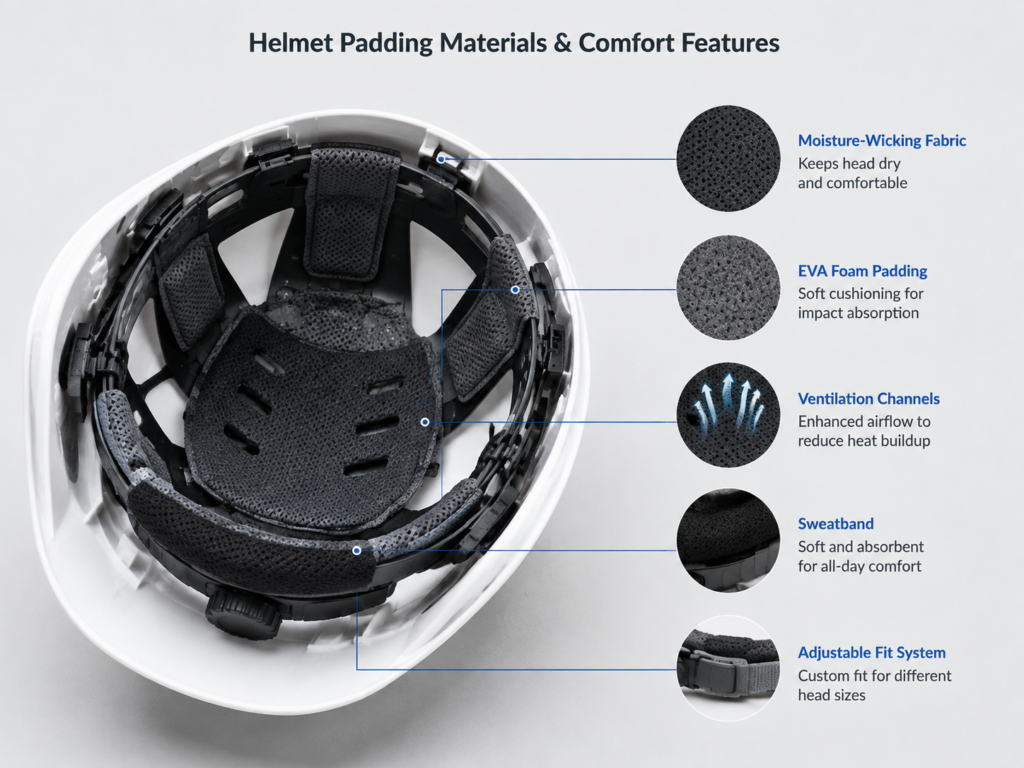
Helmet padding is often considered a small component, but it directly affects the user experience. For motorcycle helmets, bicycle helmets, outdoor sports helmets, and protective headgear, padding quality can influence comfort, customer satisfaction, and brand reputation. Selecting the right padding supplier requires careful attention to materials, production ability, customization options, and quality control.
Why is helmet padding quality important for helmet performance?
Poor padding can reduce comfort, affect helmet fitting, and create negative customer experiences. High-quality padding improves the overall performance of a helmet by creating better support between the helmet structure and the user’s head.
Helmet padding has several important functions:
- Improving wearing comfort during long-term use
- Helping the helmet stay stable during movement
- Reducing pressure points
- Supporting moisture management
- Improving product value and user satisfaction
Although the outer shell and impact liner receive most attention during safety discussions, the padding system is also an important part of helmet design. A well-designed padding structure helps distribute pressure evenly and creates a more comfortable wearing experience.
For helmet brands and distributors, padding quality can directly influence customer reviews and repeat purchases. A helmet may meet safety requirements, but uncomfortable padding can still cause users to stop using the product or choose another brand.
Professional helmet manufacturers usually evaluate padding from several areas:
| Padding Factor | Key Consideration |
|---|---|
| Material Quality | Softness, durability, and skin comfort |
| Shape Design | Proper fit for different head sizes |
| Breathability | Airflow and moisture control |
| Washability | Easy cleaning and maintenance |
| Attachment System | Secure installation and replacement |
Experienced factories understand that padding is not only a comfort accessory. It is part of the complete helmet development process. Through proper material selection, structure design, and production control, manufacturers can create padding solutions that improve both safety perception and market competitiveness.
What materials are commonly used for helmet padding?
Helmet padding materials determine comfort, durability, and product positioning. Different helmet categories require different padding solutions based on usage conditions and customer expectations.
Common helmet padding materials include:
| Material | Features | Typical Applications |
|---|---|---|
| Polyester Fabric | Soft feel and cost-effective | Standard helmets |
| Mesh Fabric | Better airflow and moisture control | Sports helmets |
| Memory Foam | Improved comfort and pressure reduction | Premium helmets |
| Moisture-Wicking Fabric | Helps reduce sweat buildup | Motorcycle and cycling helmets |
| Removable Cushion Systems | Easy cleaning and replacement | High-value helmet products |
The inner padding usually combines fabric covers with foam layers. The fabric provides direct contact with the user, while the foam creates cushioning and shape support. The combination must be carefully balanced because overly soft padding may lose support, while overly hard padding may reduce comfort.
For buyers, selecting padding materials requires considering the target market and product position. A premium motorcycle helmet may require advanced breathable materials and removable liner systems. A children’s helmet may focus more on softness, easy cleaning, and secure fitting.
Manufacturers with strong product development capabilities can recommend suitable materials based on market needs. Instead of using the same padding design for every product, experienced teams can adjust thickness, fabric selection, ventilation areas, and internal structure.
This approach helps brands create helmets that better match customer expectations while maintaining production efficiency and stable quality.
How can buyers evaluate helmet padding suppliers before cooperation?
Choosing the right padding supplier requires more than checking product samples. A reliable supplier should demonstrate stable manufacturing ability, consistent quality, and strong technical support.
Many purchasing problems happen when the sample quality is good but mass production does not maintain the same standard. Differences in fabric color, foam density, stitching quality, or padding shape can affect the final helmet experience.
Before selecting a supplier, buyers should review:
| Evaluation Area | Questions to Consider |
|---|---|
| Manufacturing Experience | Does the supplier understand helmet applications? |
| Production Control | Are materials and finished products inspected? |
| Customization Ability | Can designs match different helmet models? |
| Sample Accuracy | Does the sample represent mass production quality? |
| Delivery Ability | Can orders be completed on schedule? |
A professional supplier should provide clear information about materials, production processes, and quality inspection methods. Transparent communication helps reduce risks during product development.
Factories with complete helmet production experience have an advantage because padding design is closely connected with the helmet structure. The padding must match the shell shape, EPS liner, ventilation system, and retention design.
When the padding supplier understands the complete helmet manufacturing process, problems can be identified earlier. This reduces modification time and improves production efficiency.
Strong manufacturers also support OEM and ODM projects by helping customers develop customized padding solutions. Whether changing fabric colors, adjusting comfort levels, creating removable liners, or developing unique internal structures, professional support helps brands create differentiated products.
How does helmet padding design affect user comfort and market response?
Helmet comfort has become an important buying factor. Customers expect helmets to provide protection without creating pressure, heat, or discomfort during use.
A well-designed padding system focuses on several areas:
- Head shape compatibility
- Pressure distribution
- Ventilation support
- Sweat management
- Easy maintenance
Different regions and customer groups may have different preferences. Some markets prefer lightweight designs with maximum airflow, while others focus on premium comfort and luxury materials.
Helmet brands need to understand these differences when developing products. A universal padding design may not always provide the best experience for every customer group.
Modern helmet development often uses improved design methods to optimize internal space and comfort. Engineers evaluate padding thickness, contact points, and material performance to create better fitting systems.
For manufacturing partners, product design capability is especially valuable. A factory with research and development experience can help improve padding structures during the early design stage instead of only producing existing models.
This creates advantages for brands that want unique products. Customized padding designs can become part of product differentiation and help create stronger customer loyalty.
How can quality control improve helmet padding consistency?
Consistent padding quality is essential for maintaining brand trust. Even small differences between production batches can affect customer satisfaction and increase after-sales problems.
Quality control for helmet padding usually includes:
| Production Stage | Inspection Focus |
|---|---|
| Material Incoming Check | Fabric and foam quality |
| Cutting Process | Size accuracy |
| Sewing Process | Stitch strength and appearance |
| Assembly | Correct installation |
| Final Inspection | Comfort and appearance |
A professional factory controls the entire production process instead of checking only finished products. Early quality control helps prevent problems before shipment.
For helmet companies, stable quality means fewer complaints, fewer returns, and stronger market confidence. This is especially important for products sold through retail stores, online platforms, and distribution networks where customer feedback directly affects sales performance.
Manufacturers with their own production facilities and quality systems can provide better consistency compared with suppliers that only manage external production. Internal control allows faster problem solving and better coordination between design, production, and inspection teams.
Reliable suppliers also maintain production records and improve processes based on previous projects. This continuous improvement helps create better products for long-term cooperation.
What should companies consider when choosing a helmet padding partner?
A suitable helmet padding partner should provide more than materials. The best suppliers offer technical knowledge, customization support, stable production, and reliable communication.
Important selection factors include:
- Experience with helmet applications
- Understanding of international market requirements
- Ability to support OEM and ODM projects
- Strong quality management
- Flexible production capability
- Fast response during product development
The right partner helps companies reduce development risks and improve product quality. From material selection to final production, every step influences the success of a helmet product.
Manufacturers with complete factory resources, professional design teams, and international project experience can provide stronger support for brands seeking reliable helmet solutions. They can help transform product ideas into finished helmets with comfortable, durable, and market-ready padding systems.
Conclusion
Reliable helmet padding improves comfort, product value, and customer satisfaction. Choosing a capable manufacturer with strong quality control and customization support helps create safer and more competitive helmet products.