Choosing the right kids bike helmet is one of the most important decisions parents can make for child safety. Many parents focus heavily on choosing the right bicycle, but underestimate how important a properly designed helmet is during everyday riding.
A low-quality or poorly fitted helmet may fail to provide proper head protection during accidents, sudden falls, or road impacts. Children are naturally active and unpredictable while riding, especially when learning balance, turning, braking, or riding at higher speeds. Because of this, a high-quality bicycle helmet becomes essential for reducing injury risk and improving riding confidence.
Modern kids bike helmets are designed with far more advanced safety features than before. Today’s products focus not only on impact protection, but also on lightweight comfort, ventilation, adjustable fit systems, durable materials, aerodynamic shape, and long-term wearability.
This guide explains how to choose the best kids bike helmet, what safety features matter most, how helmet sizing works, which materials provide better protection, and how parents can select safer and more comfortable helmets for different riding situations.
Why a Proper Kids Bike Helmet Matters
Many parents assume that any bicycle helmet is good enough for children. In reality, helmet quality and fit directly affect protection performance during accidents.
Children often experience:
- Sudden falls
- Side impacts
- Low-speed crashes
- Balance loss
- Road surface collisions
- Playground riding accidents
A properly designed kids cycling helmet helps absorb impact energy and reduce direct force on the head during these situations.
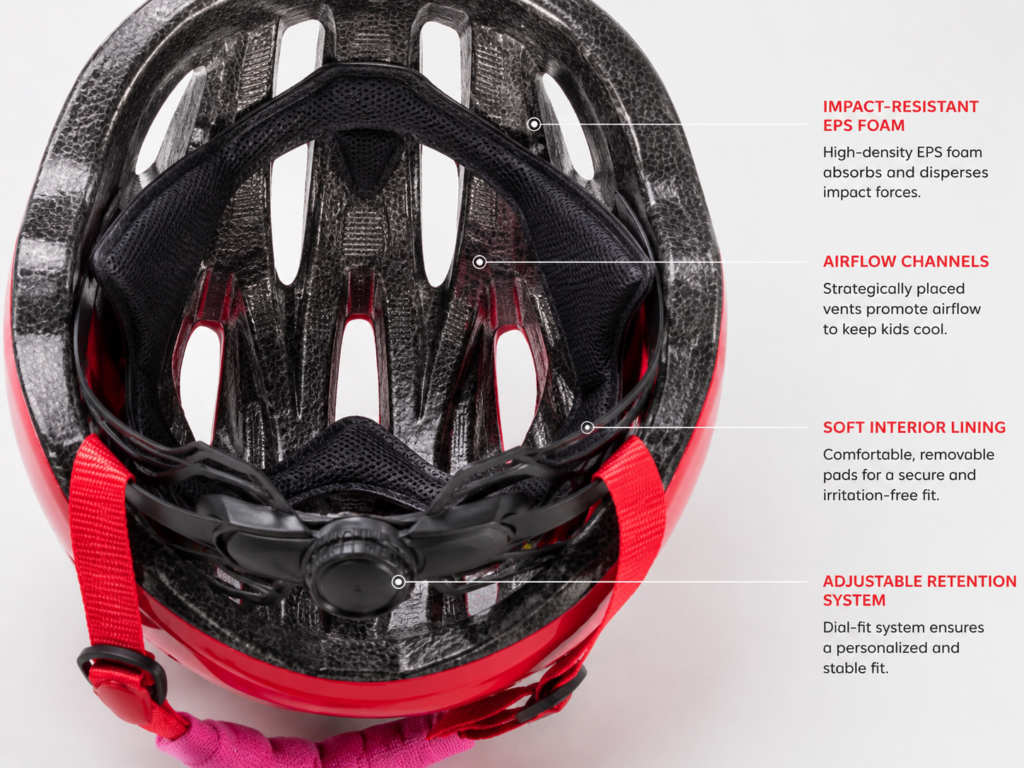
Modern child bike helmets are engineered using impact-resistant EPS foam, reinforced outer shells, adjustable retention systems, and improved ventilation channels to improve both protection and comfort.
Helmet fit is equally important. Even a high-quality helmet may provide poor protection if it moves excessively during riding or sits incorrectly on the head.
Because children continue growing, parents should regularly check helmet sizing and adjustment systems to ensure proper fit over time.
Understanding Kids Bike Helmet Safety Standards
Safety certification is one of the first things parents should check before buying a helmet.
Professional bicycle helmets are tested under strict impact and structural standards to ensure reliable protection during crashes.
Common Helmet Safety Certifications
| Certification | Region | Main Focus |
|---|---|---|
| CPSC | United States | Bicycle helmet impact protection |
| EN1078 | Europe | Cycling & skate helmet safety |
| ASTM | International | Sports helmet testing |
| CE Certification | European market | Product compliance & safety |
Certified helmets undergo testing for:
- Impact absorption
- Strap strength
- Retention stability
- Coverage protection
- Structural durability
Parents should avoid uncertified helmets because low-quality products may fail during accidents.
A certified kids bicycle helmet provides significantly better protection and long-term reliability.
Choosing the Correct Helmet Size for Kids
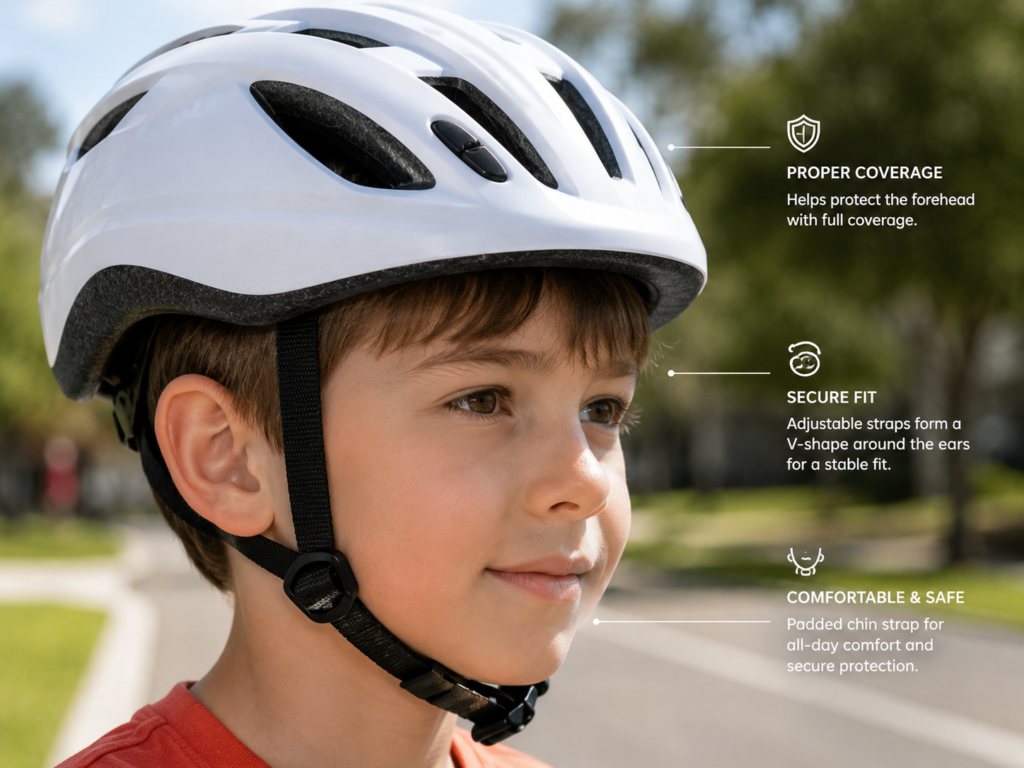
Helmet sizing is one of the most important factors in child helmet safety.
A helmet that is too loose may shift during impact, while a helmet that is too tight becomes uncomfortable and discourages children from wearing it properly.
How to Measure a Child’s Head
Use a soft measuring tape to measure around the widest part of the child’s head, usually about 1–2 cm above the eyebrows.
Most kids bike helmets are categorized into:
| Helmet Size | Head Circumference |
|---|---|
| Toddler | 44–50 cm |
| Small Kids | 48–54 cm |
| Youth | 52–58 cm |
Always check the manufacturer’s sizing chart because sizing may vary slightly between brands.
Signs of Proper Helmet Fit
A properly fitted helmet should:
- Sit level on the head
- Cover the forehead correctly
- Stay stable during movement
- Not slide backward or sideways
- Feel secure without excessive pressure
Most modern adjustable kids bike helmets now include dial-fit systems and adjustable chin straps to improve comfort and long-term usability.
Why Lightweight Helmet Design Matters for Children
Children are more sensitive to helmet weight than adults.
A heavy helmet may create:
- Neck discomfort
- Poor posture
- Riding fatigue
- Reduced willingness to wear the helmet
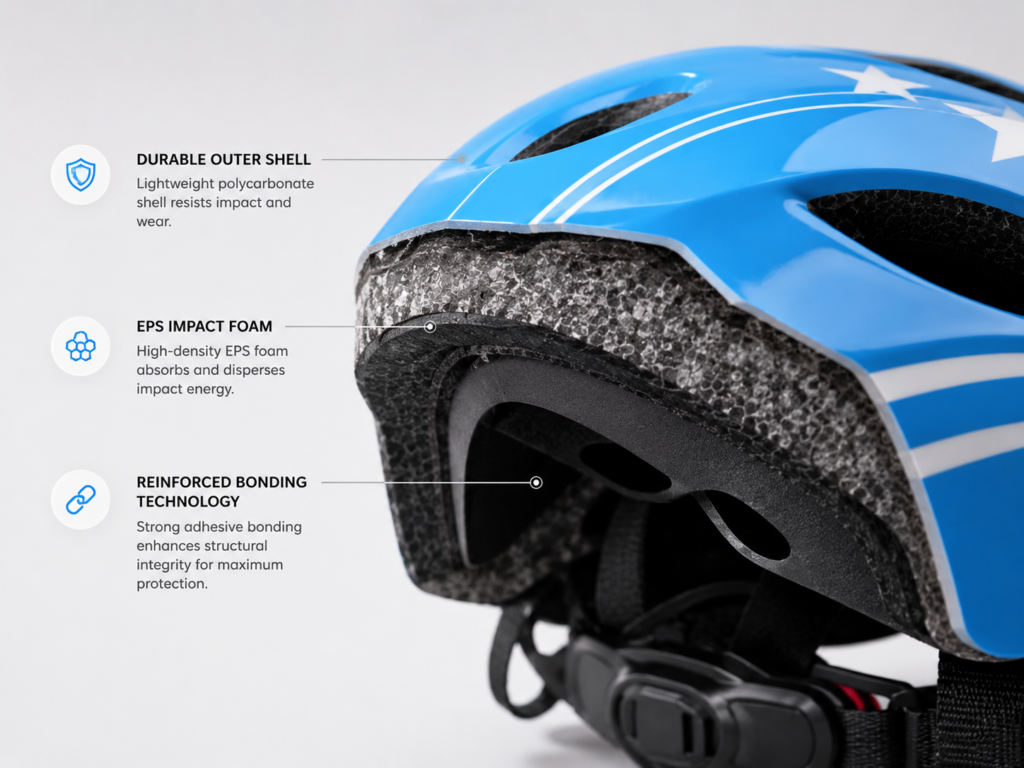
This is why lightweight kids bicycle helmets have become increasingly popular.
Modern in-mold helmet construction combines:
- Lightweight polycarbonate shells
- EPS impact foam
- Reinforced structural bonding
to reduce overall helmet weight while maintaining strong impact protection.
Lightweight helmet design improves comfort during:
- School commuting
- Family cycling
- Mountain biking
- Balance bike riding
- Long-distance riding
Comfort directly affects whether children consistently wear helmets properly.
Ventilation and Breathability Improve Comfort
Children often become uncomfortable quickly during outdoor activities, especially in warm weather.
Poor ventilation may cause:
- Excessive sweating
- Heat buildup
- Discomfort
- Reduced helmet use compliance
Modern kids cycling helmets therefore include advanced airflow systems and ventilation channels.
Features That Improve Helmet Ventilation
Many premium kids bike helmets now include:
- Multiple air vents
- Internal airflow channels
- Breathable padding
- Moisture-control liners
- Lightweight shell structure
Better airflow helps improve comfort during:
- Summer riding
- Long-distance cycling
- BMX riding
- Outdoor sports activities
Parents should balance ventilation with protection coverage because extremely large vents may reduce protective coverage in some designs.
Materials Used in Kids Bike Helmet Manufacturing
Helmet material quality directly affects safety performance, durability, and comfort.
Modern bicycle helmets typically combine several specialized materials together.
Common Helmet Materials
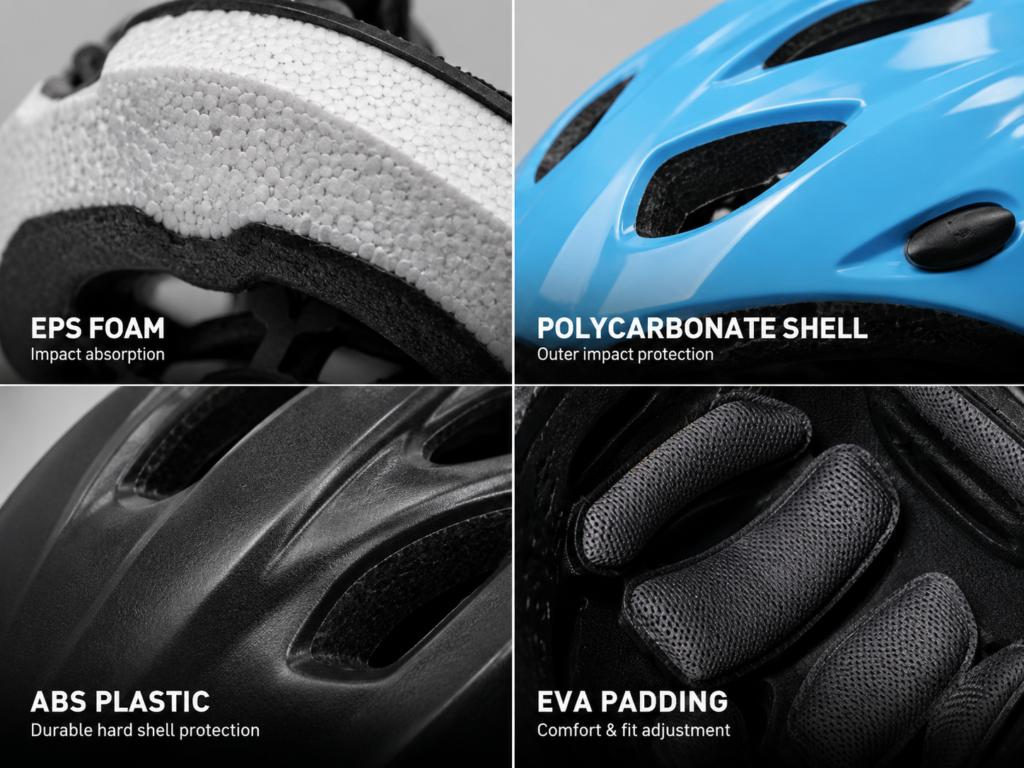
| Material | Function |
|---|---|
| EPS Foam | Impact absorption |
| Polycarbonate Shell | Outer impact protection |
| ABS Plastic | Durable hard shell protection |
| EVA Padding | Comfort & fit adjustment |
| Nylon Straps | Retention system support |
EPS foam is one of the most important helmet materials because it absorbs impact energy during crashes.
Polycarbonate shells improve external durability and help distribute impact force across the helmet surface.
Premium kids bike helmet manufacturers carefully optimize material thickness, density, and shell structure to improve both safety and lightweight performance.
Why Adjustable Fit Systems Matter
Children grow quickly, which is why adjustable helmet systems have become an important feature in modern kids bike helmets.
Adjustable systems improve:
- Long-term usability
- Fit accuracy
- Riding comfort
- Helmet stability
Common Adjustable Features
Modern adjustable kids bike helmets often include:
- Rear dial-fit systems
- Adjustable chin straps
- Side strap sliders
- Removable padding sets
These features allow parents to fine-tune helmet fit as children grow.
A secure fit improves both comfort and protection performance during riding.
Different Types of Kids Bike Helmets
Different riding activities require different helmet styles.
Road Cycling Helmets
Road cycling helmets focus on:
- Lightweight construction
- Aerodynamics
- Ventilation
- Long-distance comfort
Mountain Bike Helmets
Kids mountain bike helmets usually provide:
- Extended rear head coverage
- Stronger shell protection
- Visors for trail riding
- Better impact coverage
Toddler Bike Helmets
Toddler helmets prioritize:
- Lightweight comfort
- Simple adjustment systems
- Full coverage protection
- Stability for balance bike use
BMX & Skate Style Helmets
These helmets often use:
- Hard-shell ABS construction
- Rounded profile design
- Multi-sport protection
The best helmet depends on the child’s riding environment and activity type.
Why Helmet Construction Quality Matters
Two helmets may look very similar online while performing very differently during real-world use.
Professional kids bike helmet manufacturers focus heavily on:
- Impact testing
- Foam density
- Shell bonding
- Strap reinforcement
- Ventilation engineering
- Weight balance
- Structural durability
Cheap helmets often reduce production cost by lowering foam quality or simplifying construction.
This may reduce protection performance during accidents.
Parents should prioritize certified helmets from experienced bicycle helmet manufacturers rather than choosing products based only on price or appearance.
Common Mistakes Parents Make When Buying Kids Bike Helmets
Many parents unintentionally choose helmets that do not provide the best protection or comfort.
Common Buying Mistakes
| Mistake | Why It Causes Problems |
|---|---|
| Buying oversized helmets | Poor stability during crashes |
| Ignoring safety certifications | Reduced protection reliability |
| Choosing heavy helmets | Lower comfort & reduced usage |
| Prioritizing appearance only | Safety features overlooked |
| Loose chin strap adjustment | Helmet movement during impact |
The safest helmet is the one children wear correctly and consistently.
Comfort, lightweight design, ventilation, and proper fit all play major roles in long-term helmet use.
Why More Brands Invest in Custom Kids Bike Helmets
The bicycle helmet market has become increasingly competitive in recent years.
Modern consumers now expect:
- Better safety performance
- Lightweight construction
- Stylish appearance
- Better ventilation
- Adjustable fit systems
- Eco-friendly materials
- Custom branding options
Because of this, many sports brands now work with custom bike helmet manufacturers to develop:
- Private label bike helmets
- OEM bicycle helmets
- Custom kids bike helmets
- Lightweight cycling helmets
- Mountain bike helmets
- Urban commuter helmets
Professional helmet manufacturing now involves advanced safety engineering, material testing, mold development, and strict quality control standards.
Future Trends in Kids Bike Helmet Design
The kids helmet industry continues evolving quickly as safety expectations increase.
Modern bicycle helmet trends include:
- Lighter helmet structures
- Improved ventilation systems
- Better impact absorption technology
- Eco-friendly materials
- Integrated LED safety lights
- Smart helmet technology
- Enhanced aerodynamic design
- More adjustable fit systems
Parents increasingly prioritize both safety and comfort when choosing helmets for children.
As a result, manufacturers continue developing more advanced helmet designs focused on long-term usability and improved protection performance.
Conclusion
Choosing the best kids bike helmet involves much more than selecting a colorful design or matching a bicycle style. A high-quality helmet should provide certified impact protection, lightweight comfort, adjustable fit, proper ventilation, and durable long-term performance.
Helmet sizing, material quality, shell construction, ventilation design, and retention systems all directly affect riding safety and comfort for children.
As cycling continues growing worldwide, modern kids bike helmets are becoming more advanced, lightweight, and safety-focused than ever before.
For brands, retailers, and distributors looking for professional OEM bike helmets, custom kids bike helmets, lightweight cycling helmets, or private label bicycle helmet manufacturing, working with an experienced helmet manufacturer is essential for ensuring product quality, safety compliance, and long-term market competitiveness.
If you are looking for reliable custom bike helmet manufacturing solutions, feel free to contact us for product development, OEM services, and professional helmet production support.